
Pharma Quality Impact Calculator
The article highlights how India's pharmaceutical industry is shifting from low-cost generics to high-quality, innovative drugs. Quality standards directly impact export revenue and market access. Use this calculator to estimate the economic impact of quality improvements.
India is already the pharmaceutical manufacturing powerhouse of the world, supplying over 50% of global vaccine demand and 20% of all generic medicines. But what comes next? The future of pharmacy in India isn’t just about making more pills-it’s about redefining how medicines are made, regulated, and delivered. The country is at a turning point: rising domestic demand, stricter global standards, and new tech are forcing a transformation. This isn’t a slow evolution. It’s a high-stakes overhaul.
From Copycat to Creator
For decades, Indian pharma thrived by copying off-patent drugs. Companies like Sun Pharma, Dr. Reddy’s, and Cipla became global leaders by producing affordable generics. But that model is fading. Patents are expiring faster than ever, and countries like the U.S. and EU now demand more than just low cost-they want proof of quality, consistency, and innovation. The days of cheap, low-quality generics are ending. India’s next big advantage? Becoming a source of novel drugs, not just copies.
That shift is already happening. In 2025, Indian firms filed over 1,200 new drug applications with the U.S. FDA, a 40% jump from 2020. Startups are developing first-in-class therapies for diabetes, cancer, and rare diseases. A Hyderabad-based company recently launched a new oral treatment for non-alcoholic fatty liver disease-the first of its kind approved outside the U.S. These aren’t just tweaks. They’re breakthroughs. And they’re being made in India.
The Rise of API Self-Reliance
One of the biggest weaknesses in India’s pharma system has always been its dependence on China for Active Pharmaceutical Ingredients (APIs). Over 70% of APIs used in Indian medicines used to come from China. That left the entire supply chain vulnerable-especially during the pandemic when border closures and shipping delays caused massive shortages.
Today, that’s changing fast. The Indian government launched the Production Linked Incentive (PLI) scheme in 2020, offering billions in subsidies to companies that build API manufacturing units locally. By 2025, domestic API production had grown by 68%. Companies like Aurobindo Pharma and Divi’s Labs have built massive new facilities in Telangana and Andhra Pradesh. One plant in Gujarat now produces 12,000 metric tons of antibiotics annually-enough to supply half of India’s needs.
This isn’t just about national security. It’s about control. When you make your own APIs, you control cost, quality, and timing. And that means Indian pharma can finally compete on innovation, not just price.
Digital Prescription Systems and AI in Dispensing
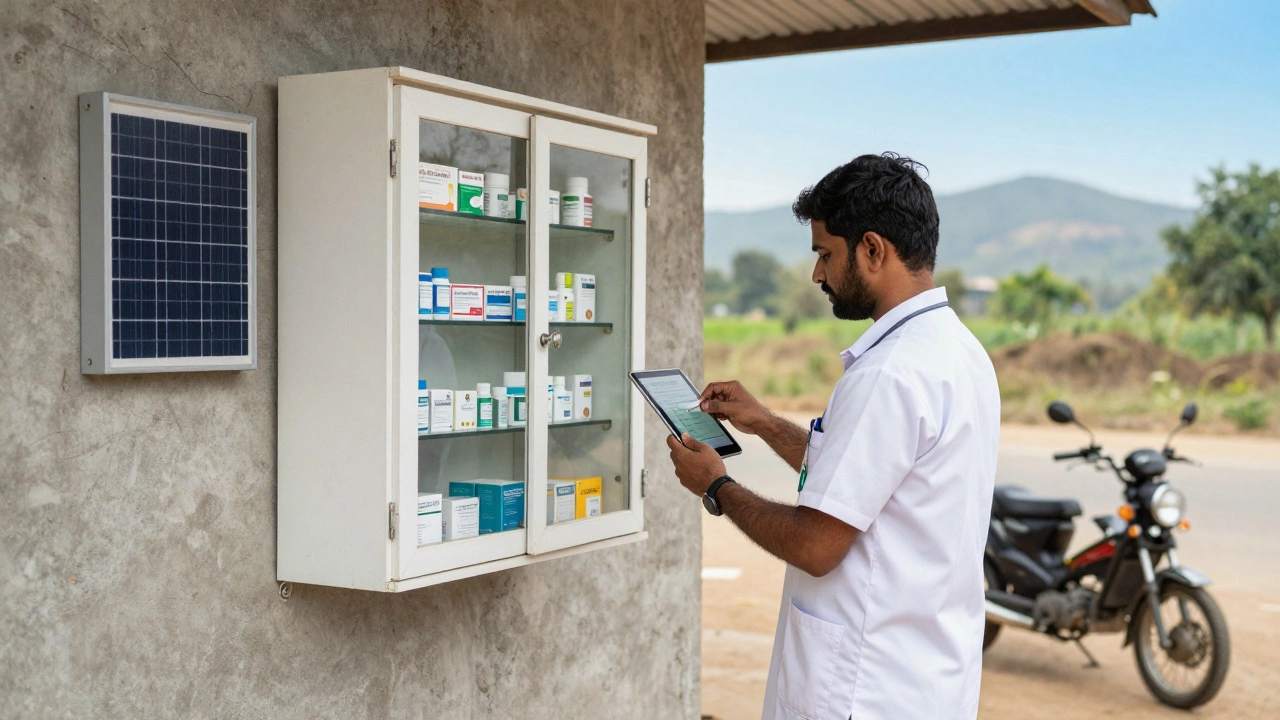
Imagine a rural clinic where a doctor scans a patient’s ID, and within seconds, the right medicine is automatically dispensed from a smart cabinet. No paper prescriptions. No pharmacy errors. No stockouts. That’s not science fiction-it’s happening in 300+ government health centers across Maharashtra and Tamil Nadu.
The National Digital Health Mission (NDHM) is connecting clinics, pharmacies, and hospitals through a unified digital system. Over 500 million health IDs have been created since 2021. Pharmacies now use AI-powered inventory tools that predict demand based on local disease patterns, weather, and seasonal trends. In Odisha, a pilot program reduced medicine waste by 42% in just one year.
AI is also helping pharmacists. A new app called MedAI, used by over 12,000 community pharmacies, flags dangerous drug interactions before a prescription is filled. It’s trained on 80 million real-world Indian patient records. That kind of data isn’t available anywhere else in the world. India’s scale is becoming its advantage.
Regulatory Pressure and Global Standards
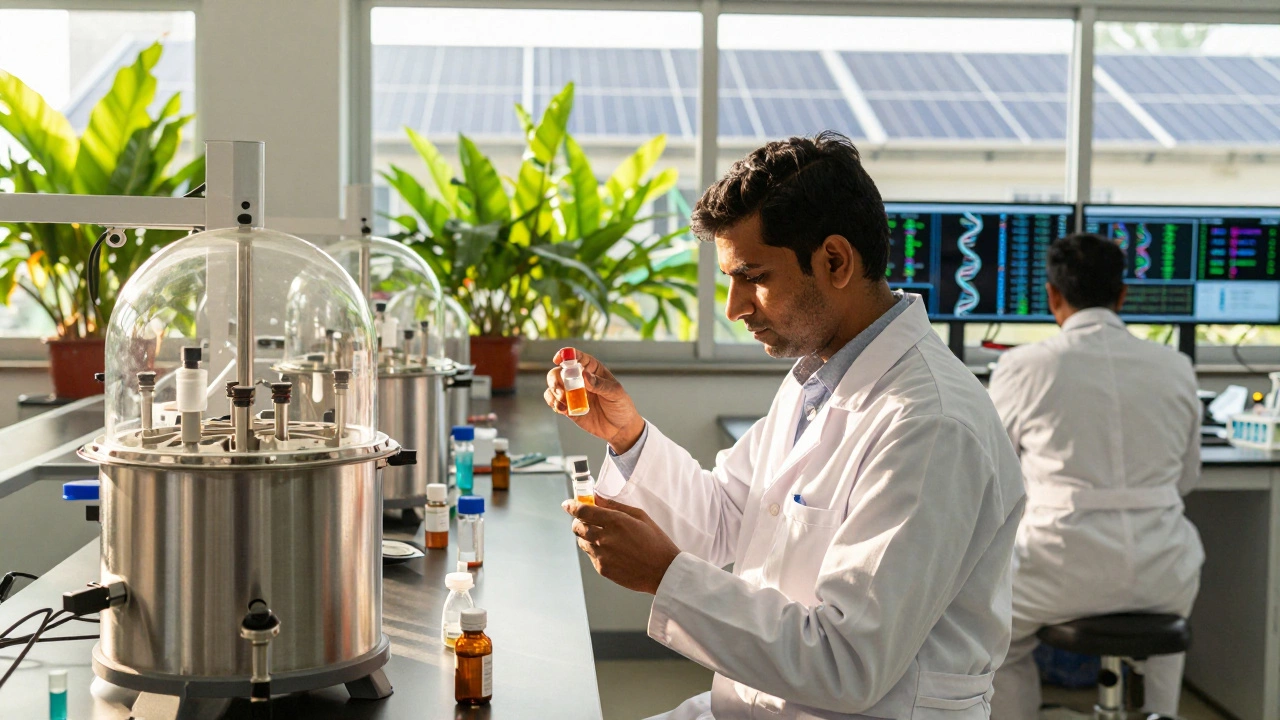
India’s drug regulators-the CDSCO and state drug controllers-are under more pressure than ever. The U.S. FDA has issued over 150 warning letters to Indian manufacturing sites since 2020, citing poor sanitation, data manipulation, and unverified testing. These aren’t minor issues. They’re deal-breakers.
But the response has been surprisingly strong. The number of WHO-GMP certified plants in India jumped from 180 in 2020 to over 320 in 2025. Companies are now hiring ex-FDA inspectors to train their teams. One facility in Chennai now has 17 quality control checkpoints per batch-more than many U.S. plants. The cost? Higher. But the payoff? Trust.
Pharmaceutical exports to the U.S. and EU have grown 35% since 2022-not because prices dropped, but because quality improved. India is no longer seen as the cheap option. It’s becoming the reliable one.
Expanding Access Through Rural Pharma Hubs
India still has 600 million people living in villages. For decades, getting medicine to them meant long drives, broken supply chains, and expired stock. Now, a new model is taking root: decentralized micro-pharmacies.
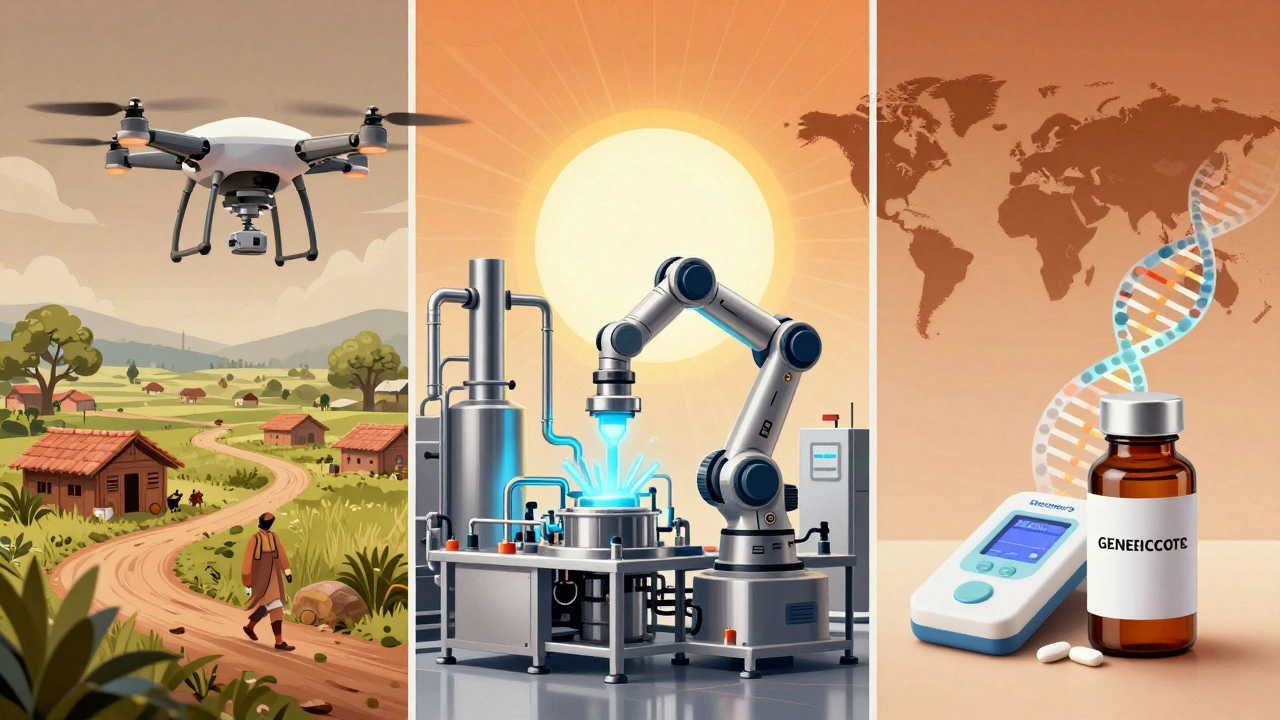
These are small, solar-powered units run by trained local health workers. They stock 30 essential medicines-antibiotics, insulin, asthma inhalers, and hypertension drugs-delivered weekly by drone or electric cargo bikes. Each unit has a tablet that connects to a central AI system that monitors usage and alerts when restocking is needed.
Over 2,500 of these hubs are now live in states like Bihar, Jharkhand, and Chhattisgarh. In one village in Madhya Pradesh, child mortality from pneumonia dropped by 58% in 18 months after the micro-pharmacy opened. This isn’t charity. It’s smart business. When you bring medicine to the people who need it most, you build loyalty, trust, and long-term demand.
The Next 10 Years: What’s Coming
Here’s what you can expect in the next decade:
- Biologics and biosimilars: India will become a top-3 global producer of biosimilars (copycat biologics like insulin and cancer drugs) by 2030.
- Personalized medicine: Genetic testing kits will be sold alongside common drugs in pharmacies, helping tailor doses based on DNA.
- Green manufacturing: Solar-powered plants, zero-waste water systems, and biodegradable packaging will become mandatory for all new facilities.
- Export diversification: India will ship more drugs to Africa, Latin America, and Southeast Asia-not just the U.S. and Europe.
- AI-driven clinical trials: Indian startups are using AI to recruit patients and predict trial outcomes, cutting development time by up to 40%.
The future of pharmacy in India won’t be about making more pills. It’ll be about making better ones-faster, safer, smarter, and more accessible. The country has the talent, the scale, and the urgency. Now it just needs to keep moving.
Is India still the world’s largest producer of generic drugs?
Yes. India produces over 20% of all generic medicines consumed globally. It supplies more than 50% of the U.S. demand for generic drugs and 40% of the EU’s. Even with rising competition from China and Vietnam, India’s scale, regulatory compliance, and cost efficiency keep it in the lead.
Why is API production important for India’s pharma future?
APIs are the active ingredients in medicines. For years, India imported over 70% of its APIs from China, making its entire drug supply chain vulnerable to geopolitical shocks. By building domestic API plants, India reduces import dependency, cuts costs, improves quality control, and gains leverage in global negotiations. It’s the foundation for moving beyond generics into innovation.
Are Indian drug companies becoming innovative, not just copycat?
Absolutely. While generics still dominate revenue, Indian firms are now leading in novel drug development. Companies like Biocon, Aurobindo, and Sun Pharma have over 150 new chemical entities in clinical trials. One drug developed by a Pune startup for a rare liver disease received FDA fast-track approval in 2024. India is no longer just the world’s pharmacy-it’s becoming its research lab.
How is AI changing pharmacy operations in India?
AI is transforming inventory, prescribing, and patient safety. AI tools predict medicine demand down to the village level, reducing waste by up to 40%. Apps like MedAI flag dangerous drug interactions using 80 million Indian patient records. Digital prescriptions are cutting errors by 60%. In rural areas, AI-powered drones deliver medicines to remote clinics, ensuring no stockouts.
What’s the biggest challenge facing India’s pharmaceutical industry?
The biggest challenge is keeping up with global regulatory standards while expanding access domestically. High-quality manufacturing is expensive. Many small players can’t afford the upgrades needed for FDA or EMA compliance. At the same time, millions in rural India still lack reliable access to basic medicines. Bridging that gap-without sacrificing quality-is the defining task for the next decade.