Steel Standards: What You Need to Know About Global and Indian Manufacturing Rules
When you hear steel standards, official rules that define the composition, strength, and testing methods for steel products. Also known as steel specifications, they’re the invisible backbone of every bridge, car frame, and factory machine built today. These aren’t suggestions—they’re legal requirements enforced by governments and industries worldwide. In India, where steel production hit over 120 million tons in 2023, following the right standards isn’t optional. It’s how you stay competitive, safe, and export-ready.
Indian steel manufacturing, the process of producing steel within India under national and international quality guidelines follows a mix of Indian Standards (IS), ASTM (U.S.), and EN (European) codes. For example, IS 2062 governs structural steel used in buildings, while ASTM A36 is common in machinery parts exported to North America. The difference between meeting these and ignoring them? One keeps your product in the market. The other gets it rejected at customs or causes a structural failure. Companies that cut corners on steel quality, the measurable properties like tensile strength, carbon content, and impact resistance that determine steel’s real-world performance don’t just lose money—they risk lives.
What’s driving change today? Green steel initiatives, digital testing tools, and stricter global supply chain rules. India’s new production-linked incentive (PLI) scheme pushes manufacturers to upgrade from old furnaces to modern electric arc ones—only those meeting exact steel specifications, detailed technical documents that list exact chemical ranges, tolerances, and testing procedures for each steel grade qualify. That’s why a small steel mill in Gujarat can now export to Germany, while one stuck with outdated testing methods gets locked out.
You’ll find posts here that break down exactly which standards apply to which products—from rebar for construction to seamless pipes for oil rigs. You’ll see how Indian mills compare to global giants like ArcelorMittal. You’ll learn why a single percentage point of carbon can make or break a batch. And you’ll get real examples of what happens when standards are ignored—no fluff, no theory, just what works and what doesn’t in today’s steel game.
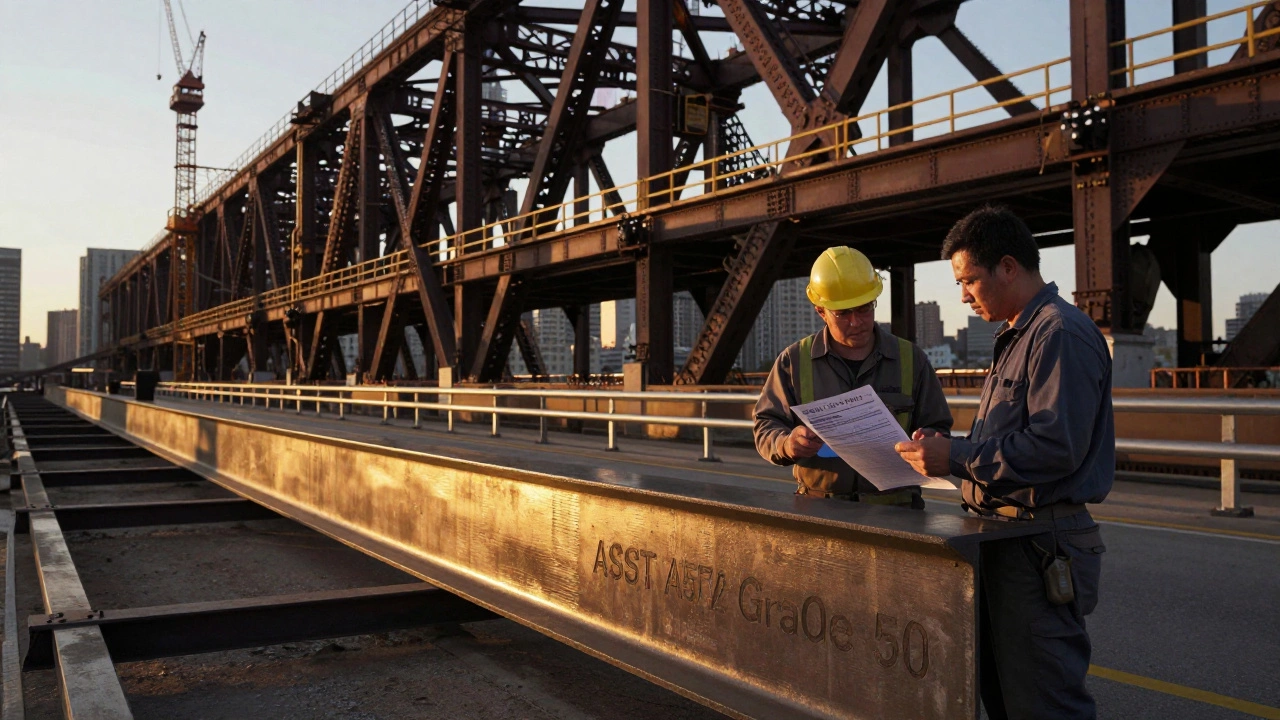

Why American Steel Is Often Preferred Over Chinese Steel in Critical Applications
American steel outperforms Chinese steel in critical applications due to stricter standards, better traceability, and consistent quality control - making it the safer, more reliable choice for infrastructure, medical devices, and heavy machinery.