
Food Safety & 5S Readiness Assessment
Answer these 5 questions honestly to determine where your facility stands on the 5S journey. This tool highlights specific areas for improvement based on the article's methodology.
Your Assessment Result
Actionable Recommendations:
Why Your Food Plant Needs More Than Just Cleaning
You walk into a busy food processing facility. The air smells like fresh dough or roasted coffee. Machines hum with steady rhythm. But look closer. Is there oil on the floor near the conveyor belt? Are raw ingredients stored too close to finished products? Is the cleaning schedule posted clearly, or is it buried in a drawer?
In the world of food processing, chaos isn’t just messy-it’s dangerous. One misplaced container can lead to cross-contamination. One unclear label can cause an allergen mix-up. And one forgotten maintenance task can shut down your entire line for days.
This is where the 5S methodology comes in. It’s not just a tidying exercise. It’s a proven system used by top manufacturers worldwide to boost safety, quality, and efficiency. Originally developed in Japan for automotive plants, 5S has been adapted perfectly for food environments where hygiene and precision are non-negotiable.
If you’re running a food plant-whether you make snacks, beverages, dairy, or frozen meals-you need 5S. Not because it looks good on paper, but because it keeps your product safe, your team focused, and your costs low.
Let’s break down what each ‘S’ means in practice, how to implement it without disrupting production, and why so many facilities fail at step five (and how you won’t).
The Five Steps Explained for Food Plants
The 5S framework consists of five Japanese terms that translate to English words starting with ‘S’. Each step builds on the last. Skip one, and the whole system weakens. Here’s what they mean in a real-world food processing context:
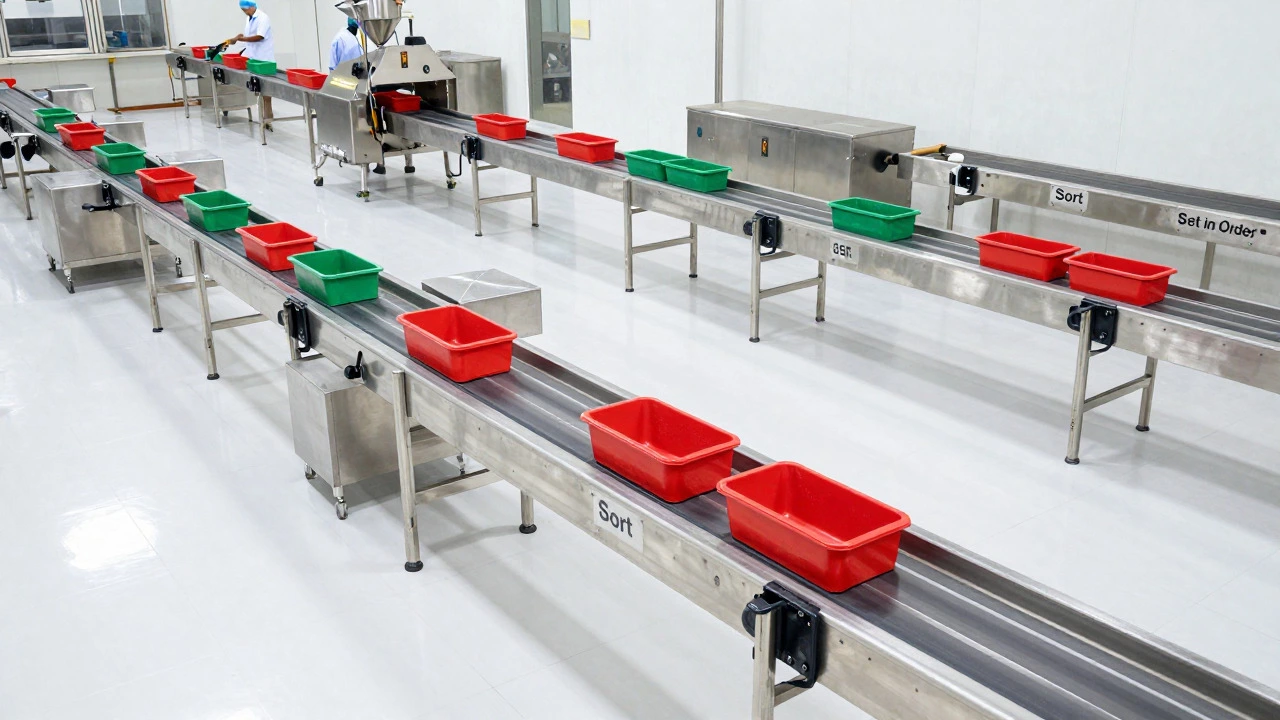
- Sort (Seiri): Remove everything unnecessary from your workspace. In food plants, this means clearing out expired labels, broken tools, unused packaging materials, and obsolete SOPs. If it doesn’t belong in that area right now, it goes.
- Set in Order (Seiton): Organize what remains so every item has a designated place. Think shadow boards for knives, color-coded bins for allergens, and labeled storage zones for raw vs. cooked goods. Visual cues reduce errors.
- Shine (Seiso): Clean thoroughly-and inspect while you clean. This isn’t just sweeping floors. It’s wiping down equipment surfaces, checking for leaks, verifying temperature logs, and ensuring no residue hides under machinery. Cleaning becomes inspection.
- Standardize (Seiketsu): Create consistent rules so everyone does things the same way. Develop checklists, photos of “correct” setups, and daily routines. Make sure new hires learn the standard-not guesswork.
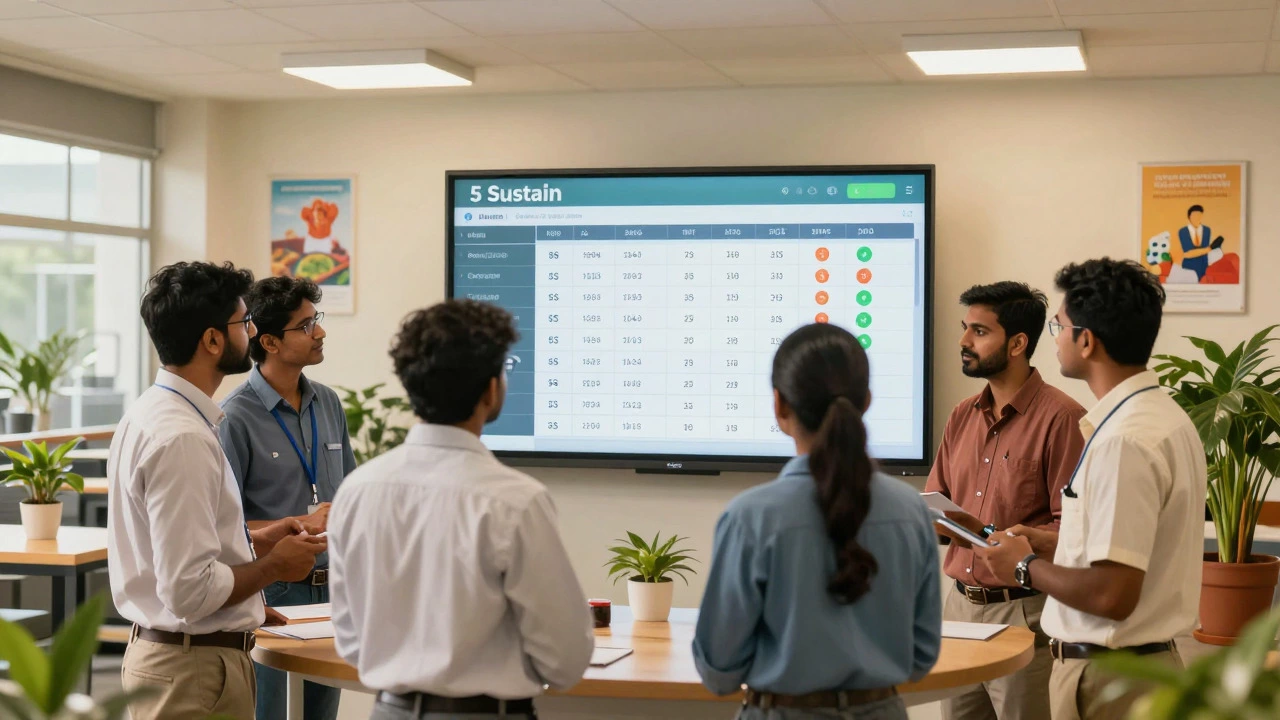
- Sustain (Shitsuke): Keep the discipline alive through training, audits, and leadership support. Without this, 5S fades back into old habits within months.
Each step addresses a specific pain point in food operations. Let’s dig deeper into how they work together.
Step 1: Sort - Clear the Clutter Before You Can See the Problem
Most food plants start 5S wrong. They jump straight to cleaning or labeling before removing waste. That’s like painting over mold. You have to clear the space first.
In sorting, ask yourself: Does this item serve a purpose here today? If not, remove it. Common culprits include:
- Old recipe cards taped to walls
- Broken thermometers sitting on counters
- Empty chemical containers waiting to be recycled
- Unused pallets stacked against walls
- Duplicate forms cluttering desks
A practical tip: Use red tags. Attach them to questionable items. After a set period (say, two weeks), if nothing happens, dispose of or relocate those items. This forces accountability.
For example, a snack manufacturer in Manchester removed 30% of its warehouse inventory during Sort phase. Turns out, half the stock was outdated or mislabeled. Freed-up space meant better airflow around dryers and easier access to fire exits.
Step 2: Set in Order - Make Mistakes Harder to Commit
Once you’ve sorted, organize what stays. The goal? Anyone should find any tool or ingredient in under 30 seconds. No searching. No guessing.
Use visual management techniques:
- Color-code zones: Red for allergens, green for ready-to-eat areas, blue for cleaning supplies.
- Outline shapes on shelves for boxes and containers.
- Label all drawers, cabinets, and machines with large, waterproof stickers.
- Create pictorial guides showing correct setup for each shift.
Imagine a bottling line worker who needs sanitizer. Instead of wandering aisles, they see a bright yellow bin marked “Sanitizer - Line 3” with an arrow pointing directly to it. Time saved = fewer distractions = lower risk of error.
Also consider workflow logic. Place frequently used items closest to point-of-use. Store heavy items at waist height to prevent strain. Group related tasks spatially-like placing weighing scales next to mixing stations.
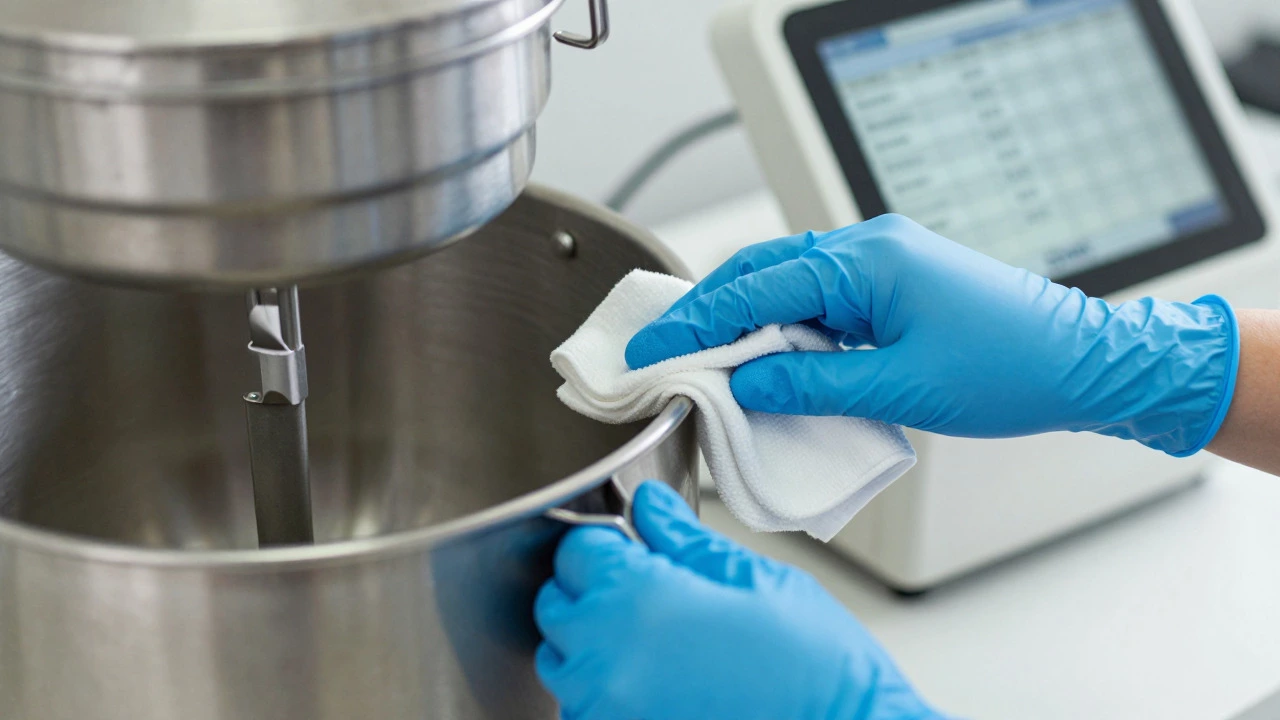
Step 3: Shine - Turn Cleaning Into Inspection
Many teams treat Shine as janitorial duty. Wrong mindset. In 5S, shining means inspecting as you clean. When you wipe down a mixer, check for cracks in seals. When you mop the floor, note any grease buildup indicating leaky valves.
Develop a cleaning checklist tied to equipment function. Example:
- Wipe exterior surfaces with approved disinfectant.
- Check gaskets for wear.
- Verify drain lines are clear.
- Record ambient temperature near unit.
- Sign off digitally via tablet app.
This turns routine chores into proactive maintenance. Over time, patterns emerge. Maybe certain machines always show moisture after night shifts. Or maybe some zones consistently fail sanitation checks. These insights drive improvements beyond surface-level cleanliness.
Pro tip: Involve operators in designing their own cleaning protocols. They know best where dirt accumulates and which steps take longest. Their input increases buy-in and accuracy.
Step 4: Standardize - Lock In Good Habits With Clear Rules
Without standards, individual preferences rule. One person leaves doors open; another closes them tightly. One writes notes on sticky pads; another remembers verbally. Chaos returns quickly.
Standardization solves this by creating uniform procedures across shifts, departments, and even locations. Key elements:
- Visual work instructions posted at eye level.
- Daily huddings reviewing previous day’s issues.
- Photo documentation of ideal states (“this is how it should look”).
- Cross-training so backup staff understand expectations.
- Regular updates based on feedback and incidents.
Take labeling again. Instead of allowing handwritten tags, mandate printed barcodes linked to batch records. Everyone scans instead of reading scribbles. Errors drop dramatically.
Another example: Define exact sequence for startup/shutdown procedures. Step 1: Power off main switch. Step 2: Flush lines with water. Step 3: Apply sanitizing solution. Step 4: Wait X minutes. Step 5: Rinse. Step 6: Log completion. Repeatable results every time.
Step 5: Sustain - Don’t Let Discipline Fade Away
This is where most efforts die. Initial enthusiasm wanes. Audits become box-checking exercises. Managers stop reinforcing behaviors. Within six months, clutter returns, labels peel off, and shortcuts creep back in.
Sustaining requires culture change backed by leadership commitment. Strategies include:
- Monthly 5S audits scored publicly (not punitively).
- Recognition programs rewarding teams maintaining high scores.
- New hire orientation including hands-on 5S walkthroughs.
- Leadership walking the floor weekly asking questions like “What helped you stay organized today?”
- Continuous improvement suggestions welcomed and acted upon.
Consider gamification. Award points for finding hidden hazards or proposing smarter layouts. Display leaderboards. Celebrate small wins. People respond positively when effort feels valued.
Remember: Sustainability isn’t about perfection. It’s about progress. Even imperfect adherence beats total abandonment.
How 5S Supports Food Safety Standards Like HACCP
If you operate in regulated markets, you likely follow HACCP principles. Hazard Analysis Critical Control Points focuses on identifying risks and controlling them systematically. Guess what? 5S makes implementing HACCP far easier.
Here’s how they connect:
| HACCP Principle | Supported By Which 5S Step? | Practical Application |
|---|---|---|
| Identify Hazards | Sort & Shine | Removing obsolete materials reduces contamination sources. Inspecting during cleaning reveals potential biological/chemical threats early. |
| Determine CCPs | Set in Order | Clear zoning prevents mixing of raw/cooked foods. Color-coding helps identify critical handling points instantly. |
| Establish Limits | Standardize | Defined parameters for temps, times, concentrations ensure consistency. Checklists enforce limits daily. |
| Monitor CCPs | Shine & Standardize | Routine inspections built into cleaning schedules catch deviations before they escalate. |
| Corrective Actions | Sustain | Ongoing review culture ensures problems get fixed permanently, not temporarily patched. |
In short, 5S creates the foundation upon which robust food safety systems thrive. Clean, organized workplaces naturally support stricter controls.
Common Pitfalls When Implementing 5S in Food Environments
Even well-intentioned initiatives stumble. Avoid these traps:
- Treating 5S as one-time project: It must be embedded into daily operations, not launched then abandoned.
- Ignoring employee involvement: Top-down mandates fail. Engage frontline workers early-they’ll spot practical obstacles managers miss.
- Focusing only on aesthetics: Pretty paint jobs don’t matter if underlying processes remain chaotic. Prioritize functionality over appearance.
- Neglecting sustainment metrics: Track audit scores, incident rates, downtime hours. Measure impact quantitatively.
- Applying generic templates blindly: Customize approaches to fit unique challenges of your product type, volume, and layout.
One bakery chain tried rolling out identical 5S posters across all branches regardless of size or output. Smaller outlets found instructions overwhelming. Larger ones needed more granular detail. Tailoring made all the difference.
Real Results From Real Facilities
Data speaks louder than theory. Consider these outcomes reported by companies adopting 5S rigorously:
- A dairy processor reduced changeover time by 40% after organizing toolkits and prepping ingredients ahead of runs.
- An organic juice brand cut microbial contamination events by 65% following enhanced Shine practices integrated with lab testing.
- A meat packing plant decreased slip/fall accidents by 78% thanks to improved floor marking and spill response protocols.
- A confectionery factory lowered scrap rates by 22% once standardized recipes eliminated variation between batches.
These aren’t hypothetical benefits. They reflect measurable gains achieved through disciplined execution of 5S principles tailored specifically for food contexts.
Getting Started Today: Your Action Plan
Ready to bring order to your operation? Follow this simple roadmap:
- Pick one pilot area-ideally small enough to manage but visible enough to inspire others.
- Gather cross-functional team members representing different roles.
Start small. Win big. Build confidence. Expand gradually.
Is 5S suitable for small-scale food producers?
Absolutely. While large corporations often showcase polished implementations, smaller operations benefit immensely too. Start with basic sorting and labeling. As capacity grows, layer additional sophistication. Scalability is inherent to 5S design.
How long does it take to fully implement 5S?
Full maturity typically takes 6-12 months depending on complexity and engagement levels. However, noticeable improvements occur within weeks of initiating Sort and Set phases. Early wins build credibility for continued investment.
Can 5S replace traditional GMP training?
No-but it complements it beautifully. Good Manufacturing Practices cover broad regulatory requirements. 5S provides structural support enabling consistent adherence to those standards. Together, they form powerful synergy.
What role does technology play in modern 5S?
Digital tools enhance tracking, communication, and analysis. Mobile apps allow instant photo uploads of non-conformances. Cloud-based dashboards display real-time performance metrics. Automation aids repetitive tasks freeing humans for higher-value activities.
How do I measure success of 5S initiative?
Track leading indicators such as audit compliance percentages, defect reduction trends, cycle time variations, and employee participation rates. Lagging indicators include cost savings, accident frequency drops, and customer complaint decreases. Combine both perspectives for balanced view.