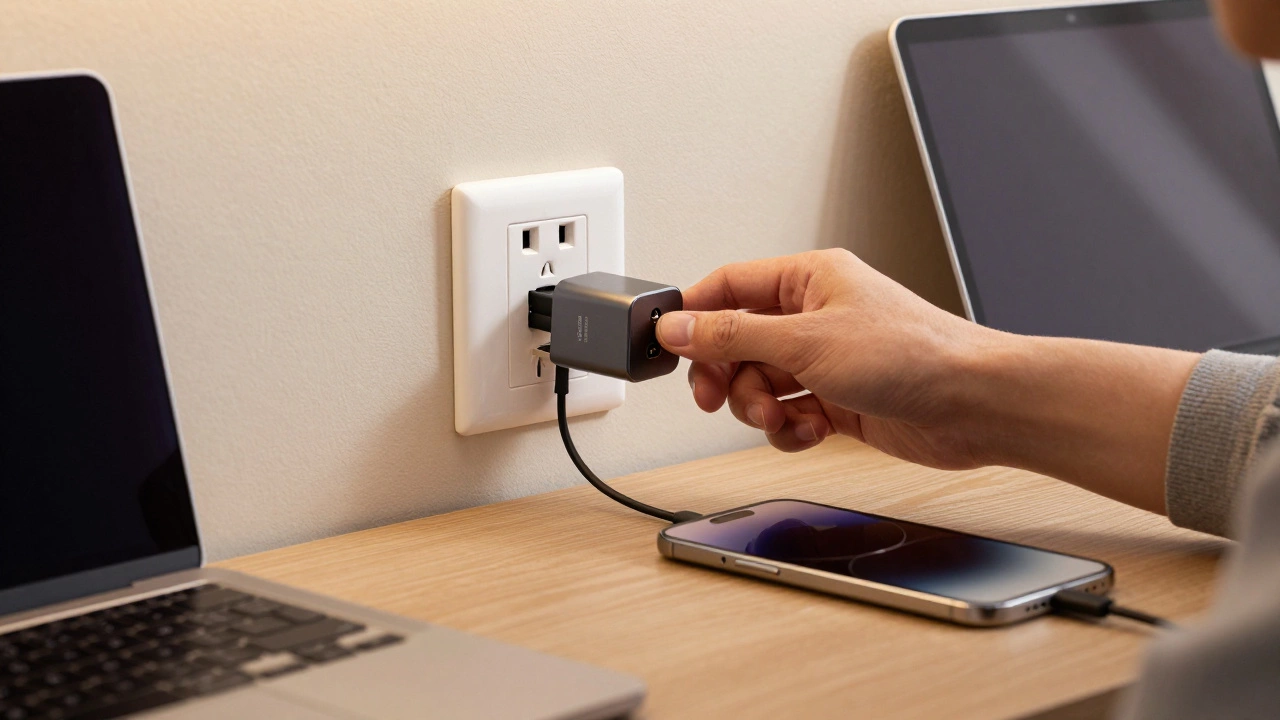

Indian Electronics Compatibility Checker
Check Your Device
How It Works
Enter your device's voltage specifications (usually on the charger or device label) to see if it's safe for US use.
Most modern electronics support 100-240V and work globally. Devices with heating elements or motors often require specific voltage.
Examples: Phones and laptops typically work. Electric kettles and irons usually don't.
Ever bought a phone, charger, or hair dryer in India and wondered if it’ll actually work when you plug it in back home in the US? You’re not alone. Thousands of Indians living abroad, students returning from the US, or travelers bringing gadgets face this exact question. The answer isn’t a simple yes or no-it depends on voltage, plug shape, and whether the device is built to handle international power. Let’s cut through the confusion.
What’s the voltage difference between India and the US?
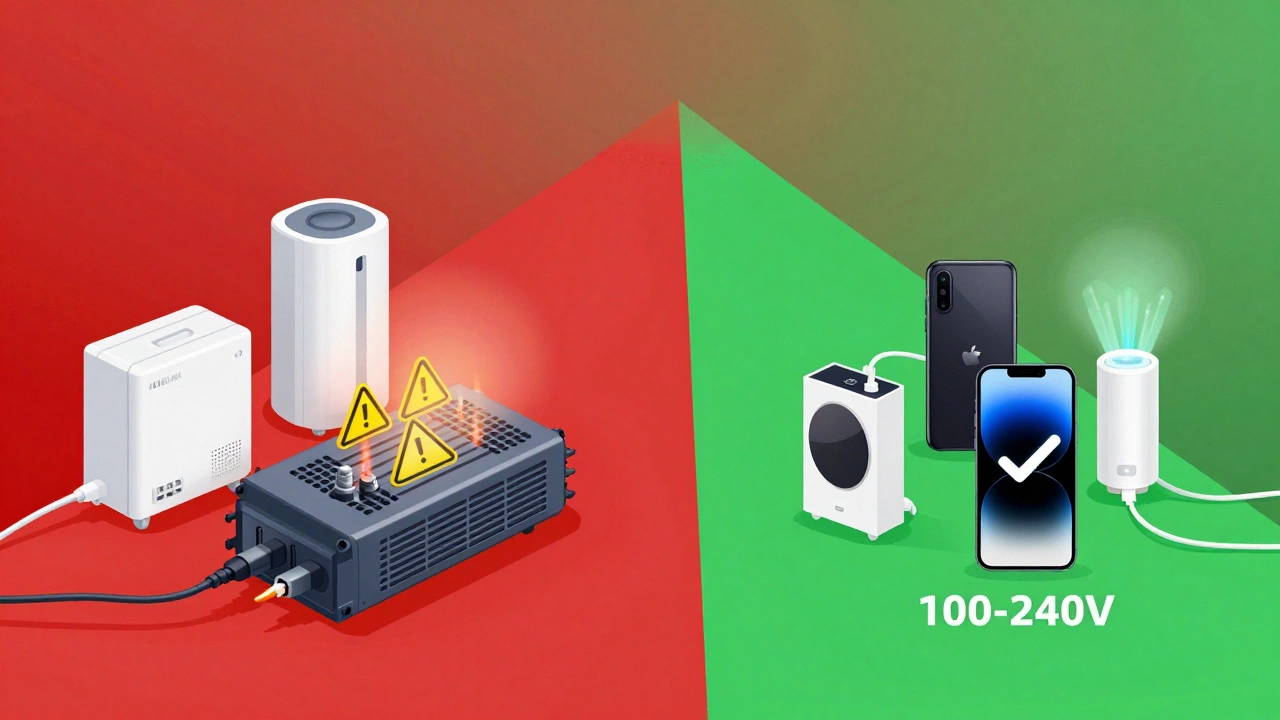
India uses 230 volts at 50 Hz. The US runs on 120 volts at 60 Hz. That’s more than double the voltage. If you plug a device made only for 230V into a US outlet, it might fry. If you plug a 120V device into an Indian outlet, it could overheat or catch fire. Most modern electronics-phones, laptops, tablets-are designed to handle both. Check the label on the charger. If it says Input: 100-240V, you’re golden. No adapter needed. But if it says only 230V or 220-240V, don’t risk it.
Do Indian plugs fit into US outlets?
Not even close. India uses Type C, D, and M plugs. Type C has two round pins. Type D has three thick round pins in a triangle. Type M is similar but larger. The US uses Type A and B: two flat parallel pins, sometimes with a grounding pin. You can’t physically force an Indian plug into a US socket. Even if you could, it wouldn’t work. You’ll need a physical adapter. But here’s the catch: an adapter only changes the shape-it doesn’t change voltage. So if your device isn’t dual-voltage, an adapter alone won’t save it.
What Indian electronics actually work in the US?
Most consumer electronics made after 2015 are built for global markets. Your iPhone, Samsung Galaxy, OnePlus, or Xiaomi phone? All support 100-240V. The same goes for MacBook chargers, iPad adapters, and most USB-C power bricks. These are designed for international travelers. But older gadgets? Non-branded items? Budget electronics? Those are the risky ones.
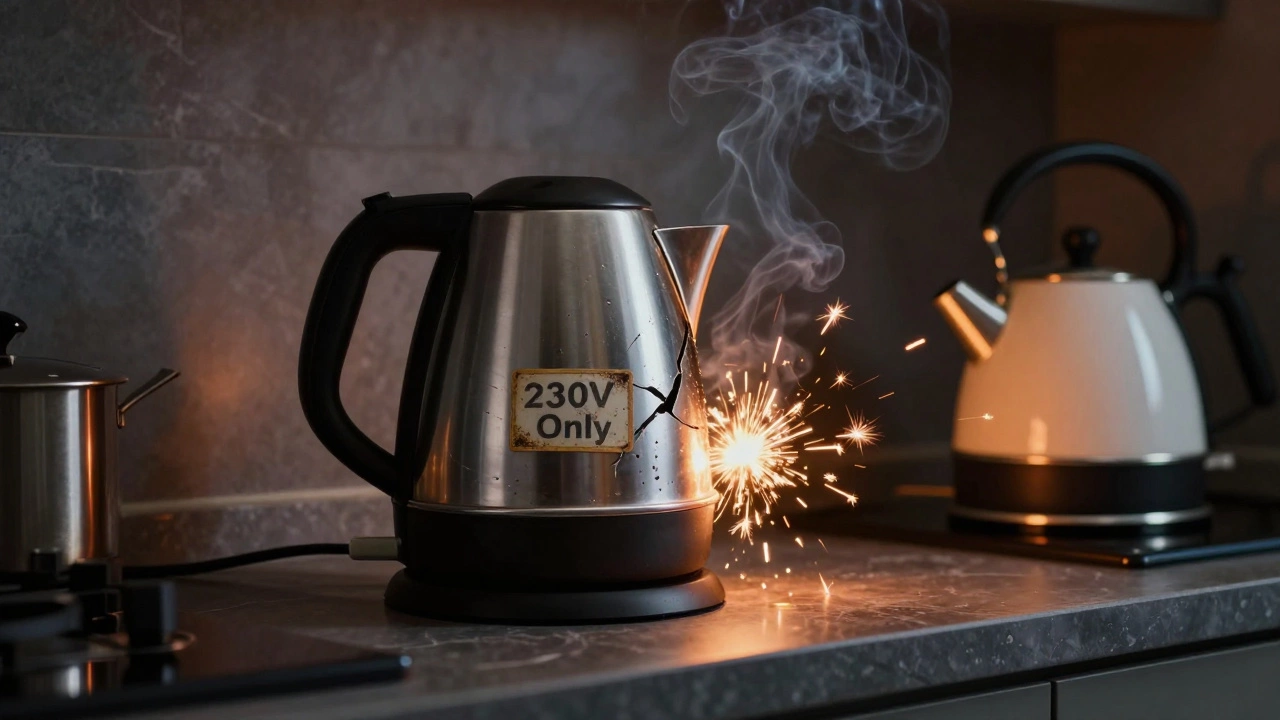
Think about Indian-made hair dryers, electric kettles, or irons. These are often built for the local market only. They’re cheap, heavy, and don’t include voltage switching. Plug one into a US outlet? You’ll likely burn out the heating element or trip the breaker. Same with Indian-made LED TVs, air fryers, or ceiling fans. They’re not made to handle 120V. You might get a spark, a smell, or worse.
What about chargers and power banks?
Chargers are usually safe. Look at the small rectangular brick. If it says Input: 100-240V ~ 50/60Hz, it works everywhere. The USB port delivers 5V regardless. So even if the brick is made in India, as long as the input range covers US voltage, it’s fine. Power banks? Same deal. They store DC power. You charge them with a compatible charger, then use them anywhere. No voltage issues at all.
But here’s a hidden trap: some Indian brands sell cheap universal chargers that claim to work globally. They don’t. They use low-quality transformers that overheat. I’ve seen cases where these chargers melted inside hotel rooms. Stick to brands like Anker, Xiaomi, or Apple. Avoid no-name chargers-even if they’re made in India.
What about appliances with motors or heating elements?
This is where things get tricky. Devices with motors (like Indian-made blenders or mixers) or heating elements (kettles, irons, space heaters) rely on precise voltage to function. A 230V kettle in the US will take twice as long to boil water. It might not even heat up properly. Worse, the motor might overheat trying to pull more current than the US circuit can safely supply. US outlets are usually 15-20 amps. Indian appliances expect 10 amps at 230V. That’s 2300 watts. US circuits max out at 1800 watts (15A x 120V). So even if you use a voltage converter, you’re pushing the limits.
Real example: A user brought a 1500W Indian electric kettle to Chicago. It worked for 3 minutes, then blew the circuit. The breaker tripped. The kettle didn’t break, but the wiring in the outlet did. That’s not a gadget failure-it’s a safety hazard.
Should you use a voltage converter?
Technically, yes-for high-wattage devices. But practically? No. Voltage converters are bulky, expensive, and inefficient. A 2000W converter costs $80 and weighs 3kg. You’ll pay more in shipping and hassle than buying a new kettle in the US. Plus, most converters are designed for short-term use. Running a hair dryer through one for 10 minutes a day? It’ll overheat and fail. And they don’t work well with electronics that have digital controls-like smart TVs or digital scales.
Bottom line: Only use a converter if you’re bringing a single, essential, low-wattage device for a short trip. For anything else, just buy locally. US stores have affordable options. A $25 hair dryer from Target lasts longer than a $15 one from India.
What about warranty and repair?
Even if your Indian gadget works in the US, don’t expect support. Brands like Realme, Micromax, or BoAt don’t have service centers in the US. If it breaks? You’re on your own. No replacement parts. No software updates. No warranty claims. You’re using a device built for a different market, with no local backup. That’s a risk most people don’t think about until it’s too late.
Final checklist: Before plugging in
- Check the label on the device: Does it say 100-240V? If yes, proceed.
- If it says only 220-240V or 230V, don’t plug it in without a converter.
- For devices over 50W (like kettles, irons, heaters), avoid converters. Buy a US version instead.
- Use a plug adapter only for shape-not for voltage conversion.
- Never use cheap, unbranded chargers or converters. They’re fire hazards.
- When in doubt, leave it behind. Buy a new one in the US.
Bottom line
Indian electronics aren’t magically incompatible with the US. Most modern gadgets work fine. But many budget devices, especially those with heating or motor components, are not. Voltage differences aren’t just technical-they’re safety issues. Plug the wrong thing in, and you risk damage, fire, or injury. Don’t gamble with your home or your gadgets. Check the label. When in doubt, buy local. It’s cheaper, safer, and far less stressful.
Can I use my Indian phone charger in the USA?
Yes, if it’s a modern USB charger. Almost all smartphone chargers made after 2015 support 100-240V input. Check the small print on the charger. If it says "Input: 100-240V", it works fine. You only need a plug adapter to fit the US socket. No voltage converter needed.
Why do some Indian electronics say 220V but still work in the US?
Some devices have a small tolerance range. A device labeled "220V" might actually handle 190-250V. But that’s not guaranteed. Manufacturers don’t test these for US use, and the warranty doesn’t cover it. Relying on tolerance is risky. If the label doesn’t say "100-240V", assume it’s not safe.
Can I bring my Indian TV to the US?
Not recommended. Indian TVs are built for 230V and 50Hz. US power is 120V and 60Hz. Even if you use a voltage converter, the TV’s internal circuitry may not sync with the different frequency. You’ll get no picture, distorted sound, or permanent damage. Plus, streaming apps and broadcast standards differ. Buy a new TV in the US.
Are there any Indian electronics that definitely won’t work?
Yes. Electric kettles, irons, hair dryers, space heaters, and older fans. These are high-wattage, single-voltage devices. They’re not designed for international use. Even if you use a converter, they’ll run inefficiently and overheat. Avoid bringing them. Buy replacements in the US instead.
What if I only need to use the device for a few days?
Even short-term use can be dangerous. Voltage mismatches cause stress on internal components. A device might work for 10 minutes, then fail suddenly. That’s when fire risk increases. It’s never worth the risk. Use a portable power bank for phones, and rent or buy small appliances locally.