
Furniture Value Calculator: IKEA vs Local Alternatives
Your Input
How It Works
This calculator compares value based on key factors discussed in the article: cost, durability, customization, and cultural fit. Your inputs will determine which option better meets your needs in the Indian market.
When IKEA first opened its doors in India in 2018, many assumed it was just another foreign brand trying to cash in on a growing middle class. But five years later, the question isn’t whether IKEA is popular-it’s whether it can truly succeed in a market that doesn’t behave like Sweden, the U.S., or even China. The answer isn’t simple. It’s buried in cultural habits, supply chain nightmares, and the quiet resistance of local makers who’ve been selling furniture for generations.
India Doesn’t Buy Furniture the Way IKEA Thinks
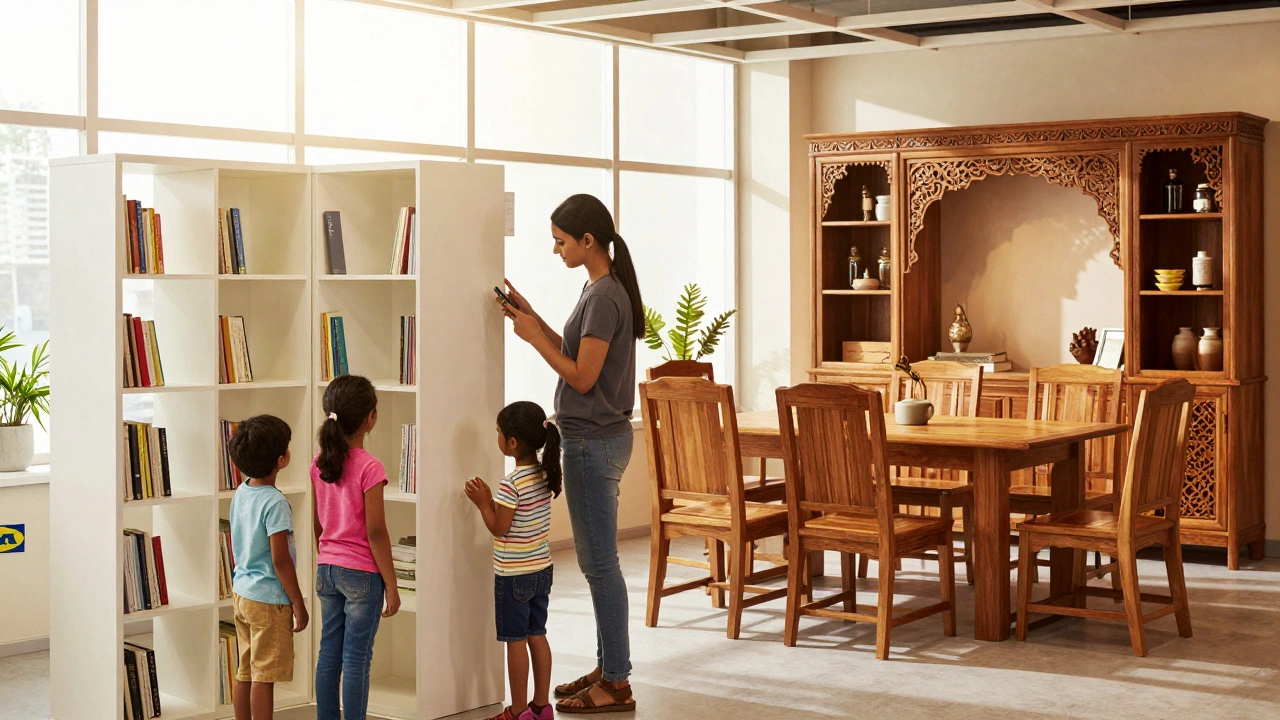
IKEA’s model is built on flat-pack, self-assembly, and minimalist design. It works in cities where people move often, live in small apartments, and trust instructions more than craftsmen. But in India? Most families still prefer solid wood, hand-carved details, and furniture that lasts decades-not five years. A typical Indian household doesn’t want a Billy bookshelf. They want a teakwood dining set that will be passed down to their children. And they want it assembled by someone who knows how to fit the joints properly.When IKEA launched in Hyderabad, customers came not to buy, but to browse. Many walked out without purchasing. Why? Because the price didn’t match the perceived value. A ₹25,000 sofa from a local workshop might look bulkier, but it’s made from real wood, comes with a 10-year guarantee, and the same craftsman who built it will come back if a leg wobbles. IKEA’s 2-year warranty felt like a slap in the face.
The Price Game Is Rigged Against Them
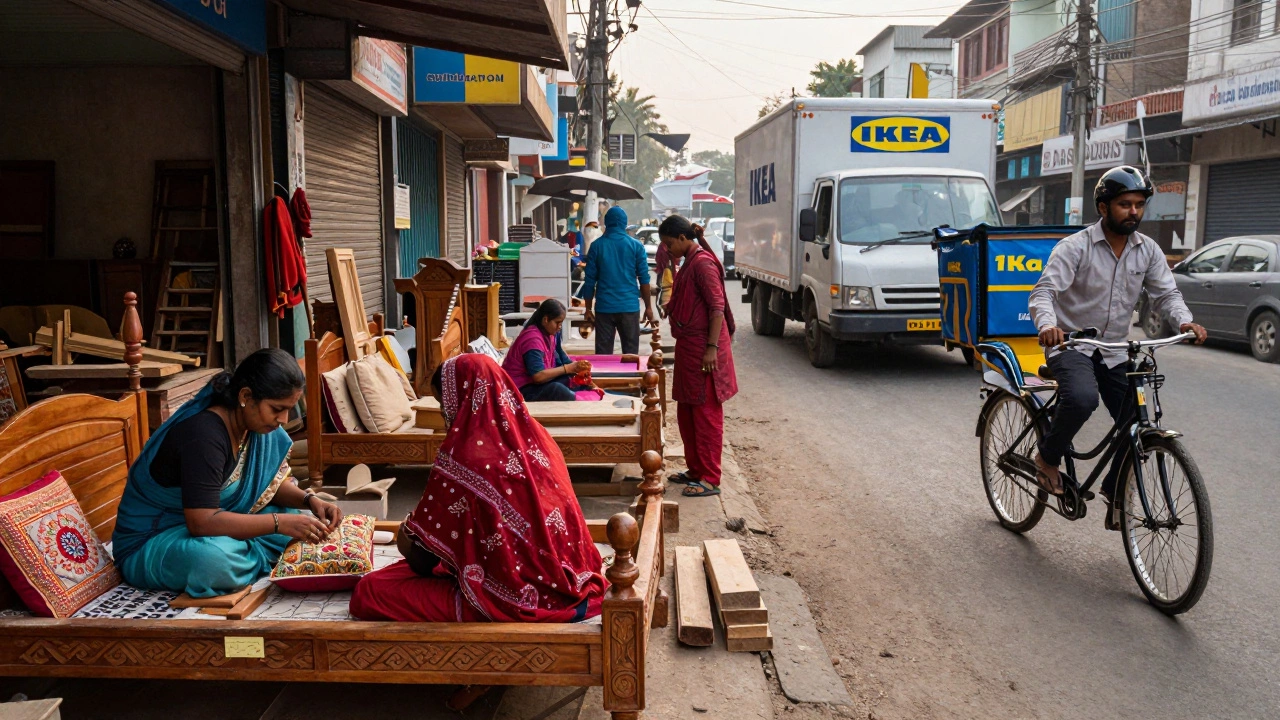
IKEA promised affordability. But in India, affordability means something different. A ₹1,999 chair from a roadside vendor in Jaipur isn’t just cheap-it’s replaceable. IKEA’s ₹3,999 chair, even if it’s made from particle board, still costs double. And when you add delivery, assembly, and the hassle of returns, the value drops fast.Local manufacturers don’t just undercut IKEA on price-they undercut them on logistics. In cities like Lucknow or Indore, you can order a custom bed from a nearby workshop and get it delivered and installed the next day. IKEA’s centralized warehouses in Pune and Kolkata mean delivery times of 7-10 days. That’s unacceptable in a market where weddings, moves, and renovations happen on tight schedules.
Local Brands Are Fighting Back-And Winning
Companies like Pepperfry, Urban Ladder, and even small family-run workshops have adapted faster than IKEA. They offer customization: choose your wood, color, size, and even the type of cushion filling. They use WhatsApp for orders. They let you pay in installments. They don’t force you to assemble anything.Pepperfry, for example, has over 200 physical stores across India and partners with local artisans in 150+ towns. They don’t just sell furniture-they sell heritage. A customer in Bhopal can order a hand-carved jharokha-style cabinet made by a craftsman whose family has done this for 300 years. That kind of story doesn’t fit into IKEA’s catalog.
Supply Chain Issues Are a Nightmare
IKEA’s global supply chain is efficient-until it hits India. Getting consistent, high-quality wood is hard. Many Indian forests are protected, and importing timber is expensive due to customs and duties. So IKEA had to pivot: they now source 70% of their materials locally. That sounds good, but local suppliers aren’t used to IKEA’s strict quality standards. One batch of plywood might be fine. The next might warp in the monsoon humidity. Quality control became a daily battle.Then there’s labor. In Sweden, assembly is done by machines. In India, IKEA relies on thousands of delivery and assembly workers. But turnover is high. Training is inconsistent. Customers complain about crooked shelves, missing screws, and technicians who don’t know how to read a diagram. IKEA’s famous assembly instructions? They work in English. But in rural India, many customers don’t read English. They need someone to show them.
What IKEA Got Right
Despite the setbacks, IKEA hasn’t failed. They’ve learned. Their stores in India now have larger showrooms with family-sized setups. They’ve added more Indian designs-like low-seated sofas for floor sitting and modular units that fit into traditional homes. They’ve partnered with local NGOs to train women from underprivileged backgrounds as assembly technicians. And they’ve lowered prices on 30% of their products since 2022.They also cracked one key insight: Indians love the IKEA experience. The food. The showroom layout. The way you can walk through a mock living room and imagine your life there. That emotional connection is powerful. It’s why 60% of visitors return, even if they don’t buy on the first visit.

The Real Test: Will They Scale?
IKEA plans to open 25 stores in India by 2030. But that’s not the real challenge. The real challenge is whether they can shift from being a destination brand to a daily part of Indian homes. Right now, they’re a weekend outing. Not a furniture solution.For IKEA to succeed, they need to stop thinking like a Swedish company and start thinking like an Indian one. That means:
- Offering financing options with zero down payment
- Building partnerships with local carpenters for repairs and upgrades
- Creating designs that fit into joint families, not nuclear ones
- Using regional languages in instructions and apps
- Accepting cash on delivery as a default option
They’ve started doing some of this. But slowly. And in a market where competitors move fast, slow is dangerous.
What Success Looks Like in India
Success for IKEA in India won’t mean becoming the #1 furniture brand. That’s impossible. Local players own that title. Success means becoming the #1 brand-the one people trust, remember, and recommend. It means being the go-to for young couples buying their first home. For students renting apartments. For urban renters who want something stylish, simple, and affordable.They don’t need to beat everyone. They just need to carve out a space where no one else is strong: modern, clean, reliable, and emotionally appealing furniture for a new generation. That’s their window.
Right now, that window is still open. But it’s closing. If IKEA doesn’t adapt fast, they’ll become another foreign brand that tried to change India-and ended up being changed by it instead.
Why hasn’t IKEA become the top furniture brand in India?
IKEA hasn’t become the top brand because Indian consumers prioritize durability, customization, and local craftsmanship over minimalist design and self-assembly. Local brands like Pepperfry and small workshops offer personalized service, faster delivery, and repair guarantees that IKEA can’t match. Price perception also works against IKEA-many customers see their products as overpriced for what they get.
Is IKEA losing money in India?
IKEA hasn’t publicly shared profit figures for India, but analysts estimate they’ve been operating at a loss since opening. Their investment in 25+ stores, local sourcing, and logistics infrastructure has been massive. However, they’re not pulling out. They’re reinvesting in localized products and lower price points, suggesting they see long-term potential rather than short-term returns.
Can IKEA compete with local furniture makers on price?
Not directly. Local makers can sell a wooden chair for ₹1,500 because they use low-cost labor, local wood, and skip corporate overhead. IKEA’s cheapest chair still costs ₹2,500-₹3,000. But IKEA doesn’t need to win on price alone. They can win on experience-store layout, product consistency, and brand trust. Their strategy is to compete on value, not just cost.
What’s the biggest cultural mismatch between IKEA and Indian customers?
The biggest mismatch is the idea of furniture as a disposable item. In India, furniture is an heirloom. Families invest in pieces meant to last 20+ years. IKEA’s flat-pack, short-lifespan model clashes with this mindset. Even their durable items are seen as temporary. Until IKEA embraces long-term use and repair culture, they’ll struggle to build loyalty.
Are IKEA’s Indian store designs different from other countries?
Yes. Indian stores are 30% larger than average global stores to accommodate bigger families. They’ve added more seating areas, prayer corner displays, and modular units that fit into traditional homes. They’ve also introduced darker wood tones, embroidered cushions, and storage solutions designed for joint family living-things you won’t find in a Swedish IKEA.
What should IKEA do next to survive in India?
IKEA needs to become a service brand, not just a product brand. They should launch a repair and refurbishment network with local artisans. Offer lifetime maintenance for key items. Create a trade-in program where old furniture gets recycled or repurposed. And most importantly-stop treating Indian customers like they’re just another market. Start listening to them.