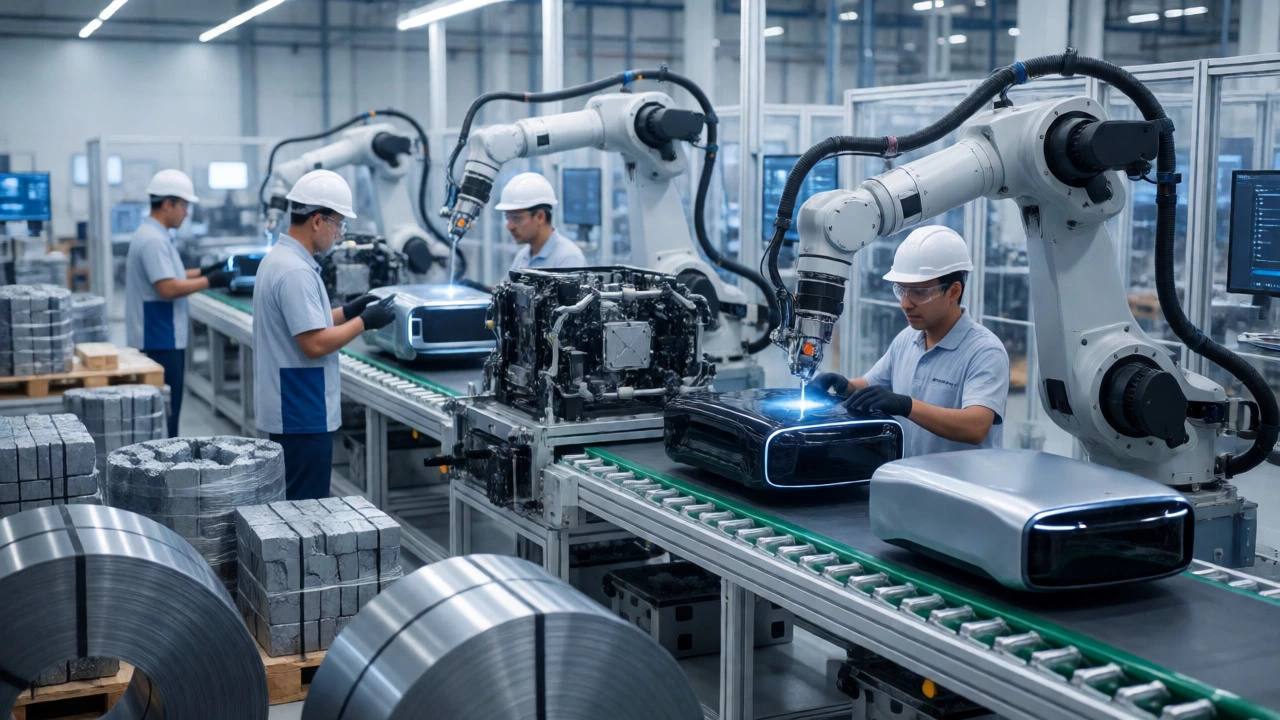

Manufacturing Economic Multiplier Simulator
Investment Parameters
Enter an initial investment amount to see how it ripples through the economy.
Total Economic Activity Generated
$0
Estimated Jobs Created
0
Sector Comparison & Impact Analysis
| Metric | Your Selection | Benchmark |
|---|---|---|
| Job Creation Potential |
-
|
High |
| R&D Contribution |
-
|
Very High |
| Wage Growth Potential |
-
|
High |
Note: The "Economic Multiplier" represents the total additional economic activity generated per dollar spent. Manufacturing typically has a higher multiplier due to complex supply chains requiring raw materials, logistics, energy, and specialized services.
Ready to Simulate
Enter your investment amount and select a sector to visualize the economic impact.
You walk into a store and grab a smartphone. You don't think about the steel in the frame, the rare earth minerals in the battery, or the plastic casing molded three weeks ago. But behind that single object sits an entire ecosystem of manufacturing, the process of converting raw materials into finished goods using labor, machinery, and chemical processing. It’s easy to take this for granted until you realize that without it, modern society simply stops functioning. We aren't just talking about factories making widgets; we are talking about the backbone of national stability, personal wealth, and global connectivity.
So, why does this matter to you, your neighbor, or your local community? It matters because manufacturing isn't just an industry-it's the engine that drives almost every other sector. When people ask "why is manufacturing important," they often look for simple answers like "it creates jobs." That's true, but it misses the bigger picture. Manufacturing creates the infrastructure for innovation, stabilizes economies during crises, and provides the physical tools needed for healthcare, education, and defense. Let’s break down exactly how this sector shapes our daily lives and why governments worldwide prioritize it through specific schemes.
The Economic Engine: Beyond Simple Jobs
Think of manufacturing as the multiplier effect in action. If a tech company hires a software engineer, that engineer spends money on coffee, rent, and clothes. But if a factory opens, it doesn't just hire assembly line workers. It demands raw materials from mining sectors, logistics services from trucking companies, energy from utility providers, and maintenance from specialized technicians. This ripple effect is known as the economic multiplier. Studies consistently show that every dollar spent in manufacturing generates significantly more economic activity than spending in most other sectors.
This isn't just theoretical. In many developed nations, manufacturing exports bring foreign currency into the country, strengthening the national reserve. A strong export market means a stronger currency, which makes imports cheaper for consumers. When you buy imported electronics at a reasonable price, you're indirectly benefiting from a robust domestic manufacturing base that keeps the trade balance healthy. Without this base, countries become overly dependent on imports, leaving them vulnerable to global price shocks and supply disruptions.
| Metric | Manufacturing Sector | Service Sector (General) | Agriculture |
|---|---|---|---|
| Job Creation Multiplier | High (1:3 ratio) | Medium (1:1.5 ratio) | Low-Medium |
| Wage Growth Potential | High (Skilled technical roles) | Variable (Often lower entry wages) | Low |
| R&D Contribution | Very High (>70% of private R&D) | Low | Negligible |
Innovation Starts on the Factory Floor
Here is a controversial idea: you cannot have a sustainable tech boom without a strong manufacturing base. Software can be written anywhere, but hardware-the physical embodiment of technology-must be built somewhere. Most breakthroughs in research and development
Manufacturing facilities are where abstract ideas meet physical reality. Consider the electric vehicle revolution. It wasn't just about better batteries; it was about rethinking how cars are assembled. Gigafactories didn't just build cars; they invented new ways to cast metal bodies and integrate software with hardware. This proximity between design and production accelerates iteration. When manufacturers stay close to innovators, knowledge transfer happens faster. This is why regions with high concentrations of manufacturing hubs also tend to have vibrant startup ecosystems. The skills learned on the floor-precision, quality control, systems thinking-spill over into other industries.
Social Stability and Community Health
Let's move away from GDP charts and talk about people. Manufacturing jobs, particularly in skilled trades, offer a path to the middle class that doesn't always require a four-year university degree. This accessibility is crucial for social mobility. In many communities, a stable manufacturing job means homeownership, better schools for children, and reduced crime rates. It provides dignity and purpose beyond mere survival.
Furthermore, manufacturing supports essential public services. Who builds the hospitals? Manufacturers. Who produces the medical devices used in those hospitals? Manufacturers. During the recent global health crisis, countries with strong domestic manufacturing capabilities could rapidly pivot to produce ventilators, masks, and sanitizers. Nations reliant entirely on imports faced severe shortages and skyrocketing prices. This demonstrated a hard truth: supply chain resilience is a matter of national security and public health.
Moreover, manufacturing fosters a culture of craftsmanship and continuous improvement. Workers learn to solve complex problems, manage resources efficiently, and collaborate in teams. These soft skills translate into better civic engagement and community leadership. Towns with thriving industrial bases often exhibit higher levels of social cohesion compared to areas where the primary employment is low-wage service work with high turnover.
The Role of Government Schemes in Sustaining Manufacturing
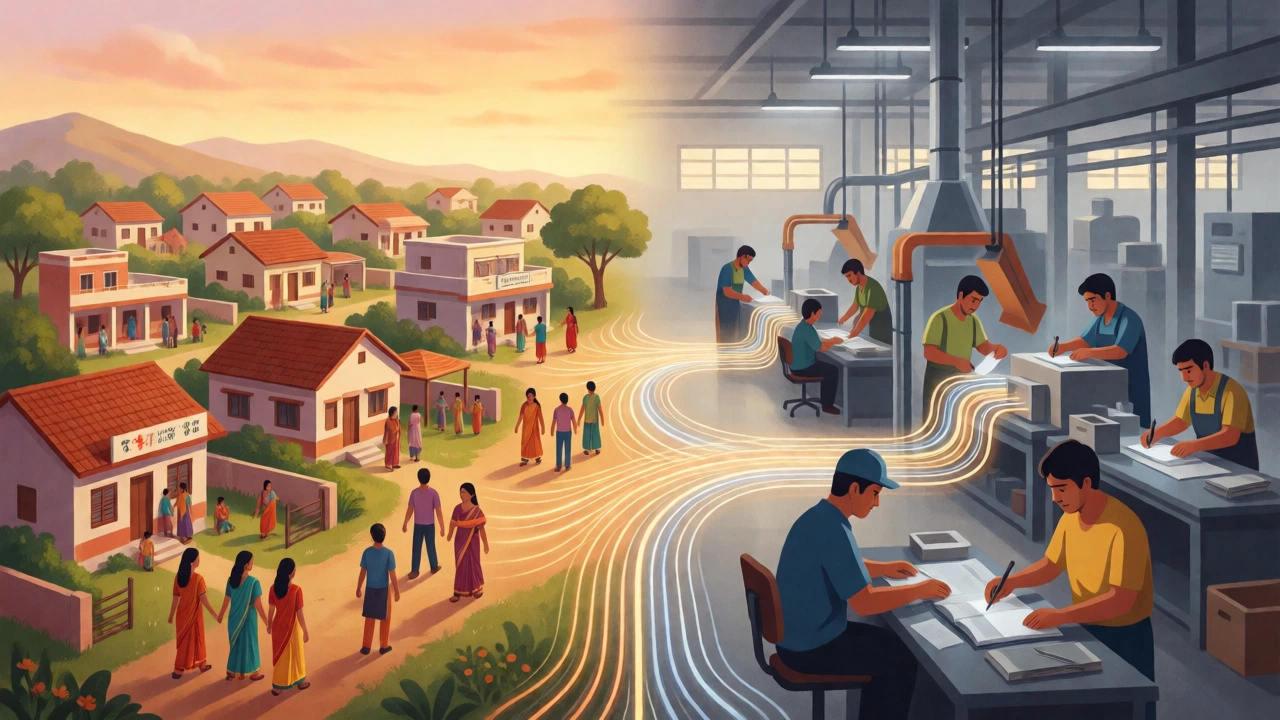
Governments understand that free markets alone don't always protect strategic industries. That's why you see so many government schemes manufacturing
Consider programs focused on skill development. Many governments partner with vocational institutes to create curricula aligned with industry needs. This ensures that the workforce is ready for advanced manufacturing techniques like robotics and automation. Another common scheme involves infrastructure support-building dedicated industrial corridors with reliable power, water, and logistics links. These interventions reduce the friction for businesses wanting to set up or expand operations.
For small and medium enterprises (SMEs), access to credit is often the biggest hurdle. Government-backed loan guarantees help these smaller players compete with larger corporations. By leveling the playing field, these schemes ensure diversity in the manufacturing landscape, preventing monopolies and encouraging niche innovations.
Environmental Responsibility and Sustainable Production
Critics often paint manufacturing as a polluter. While historically true, the narrative has shifted. Modern manufacturing is increasingly driven by sustainability goals. Consumers demand eco-friendly products, forcing manufacturers to adopt green technologies. This includes recycling waste heat, using renewable energy sources, and designing products for circularity-meaning they can be easily disassembled and recycled at the end of their life.
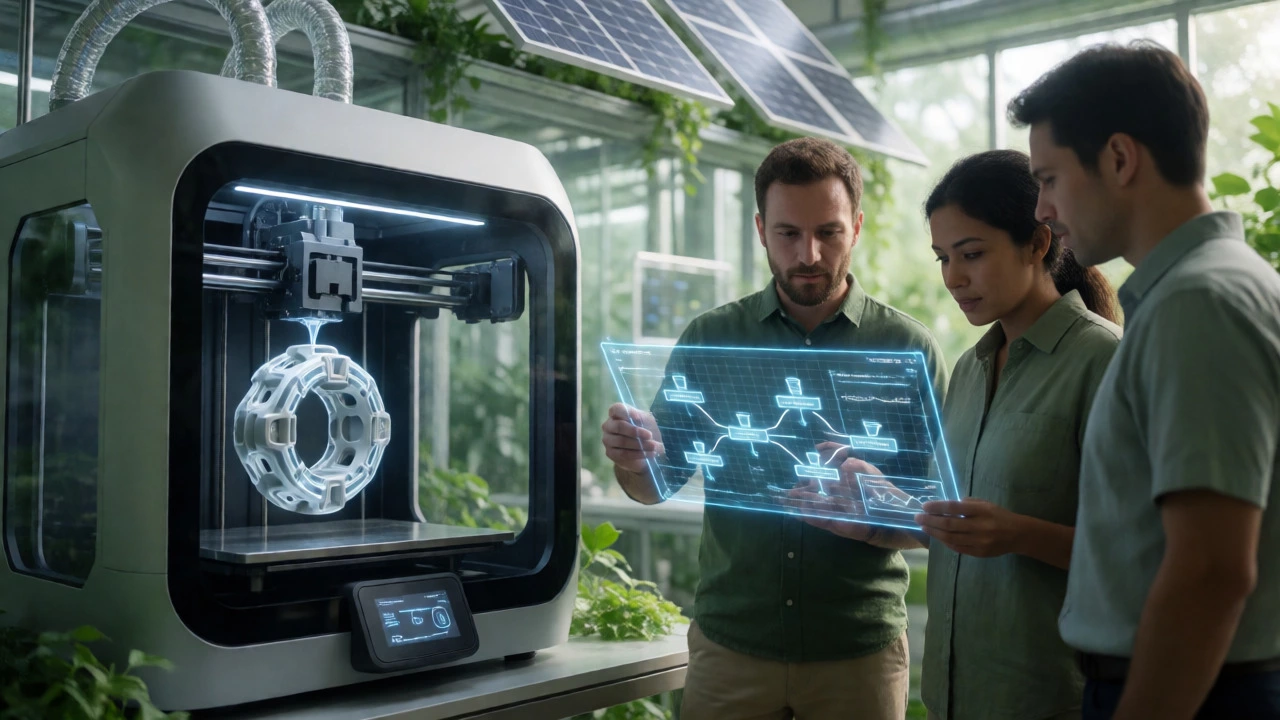
Advanced manufacturing techniques actually reduce waste. Additive manufacturing (3D printing), for example, uses only the material needed to build a part, unlike subtractive methods that cut away excess. This precision saves resources and reduces landfill burden. Additionally, localizing production reduces transportation emissions. Shipping goods across oceans contributes significantly to carbon footprints. By producing closer to the point of consumption, societies can lower their overall environmental impact.
Strategic Independence and National Security
Geopolitics plays a huge role here. Reliance on a single country for critical components-like semiconductors or pharmaceutical ingredients-creates vulnerability. Recent global tensions have highlighted the dangers of concentrated supply chains. Governments are now pushing for "friend-shoring" or reshoring, bringing key manufacturing processes back home or to allied nations.
This isn't just about economics; it's about sovereignty. If you can't make your own medicine or your own defense equipment, you depend on others' goodwill. Manufacturing capability acts as a buffer against geopolitical shocks. It ensures that essential goods remain available even when international relations deteriorate. This strategic autonomy is a core reason why policymakers continue to champion industrial policy despite the rise of the digital economy.
Key Takeaways
- Economic Multiplier: Manufacturing stimulates growth in logistics, raw materials, and services, creating more jobs per dollar invested than most other sectors.
- Innovation Hub: Physical prototyping and rapid iteration in factories drive technological advancements that software-only environments cannot replicate.
- Social Mobility: Skilled manufacturing jobs provide accessible pathways to the middle class, fostering stable communities and reducing inequality.
- Resilience: Domestic production capacity protects nations from supply chain disruptions during crises, ensuring availability of essential goods.
- Policy Support: Government schemes manufacturing initiatives focus on skill development, infrastructure, and green transitions to sustain competitiveness.
Does manufacturing still create good jobs?
Yes, but the nature of these jobs has changed. Modern manufacturing requires technical skills such as operating CNC machines, programming robots, and performing quality assurance. These roles often pay above-average wages and offer clear career progression paths. Unlike low-skill service jobs, manufacturing careers frequently come with benefits, union representation, and opportunities for upskilling through employer-sponsored training programs.
How do government schemes help small manufacturers?
Government schemes often provide subsidized loans, grants for adopting new technology, and tax breaks for hiring apprentices. They may also offer incubation centers where startups can share expensive machinery. Additionally, procurement policies sometimes mandate that a percentage of government contracts go to small local businesses, giving them a guaranteed market to start with.
Is manufacturing bad for the environment?
Historically, yes, but modern practices are changing this. Regulations and consumer pressure have forced industries to adopt cleaner technologies. Many factories now use renewable energy, recycle water, and minimize waste through lean manufacturing principles. Furthermore, producing goods locally reduces the carbon footprint associated with long-distance shipping.
Why is supply chain resilience important for everyday consumers?
It affects availability and price. When supply chains are fragile, shortages occur, leading to higher prices for basic goods like food, medicine, and electronics. A resilient supply chain, supported by diverse manufacturing locations, ensures that products remain available and affordable even during global disruptions like pandemics or natural disasters.
Can automation replace all manufacturing jobs?
Automation replaces repetitive tasks, not necessarily entire jobs. It shifts human roles toward supervision, maintenance, programming, and complex problem-solving. While some manual positions disappear, new roles emerge that require higher cognitive skills. The net effect is often increased productivity and higher-value work rather than mass unemployment, provided the workforce adapts through continuous learning.