
Global Manufacturing Leader Finder
Who is the true leader? It depends on how you measure success. Select a criterion below to see who takes the crown.
The Leader in
Key Competitors & Metrics
There is no single answer to who the leading manufacturer in the world is. That’s because “manufacturing” covers everything from building massive oil rigs to printing tiny microchips. If you measure by total revenue, the crown goes to energy and chemical giants. If you look at pure industrial output or brand value, automakers and tech hardware makers take the lead.
In 2026, the landscape of global manufacturing is defined by a few key players: Sinopec, the world's largest refining and petrochemical company, Ford Motor Company, a leading American multinational automobile manufacturer, and Honeywell International, a diversified technology and manufacturing leader. Understanding who leads requires looking at different sectors, as each has its own champion.
The Revenue Titans: Energy and Chemicals
When people ask for the "largest" manufacturer, they usually mean revenue. By this metric, the list is dominated by state-owned enterprises from China and major Western energy conglomerates. These companies don't just sell products; they process raw materials into the building blocks of modern life.
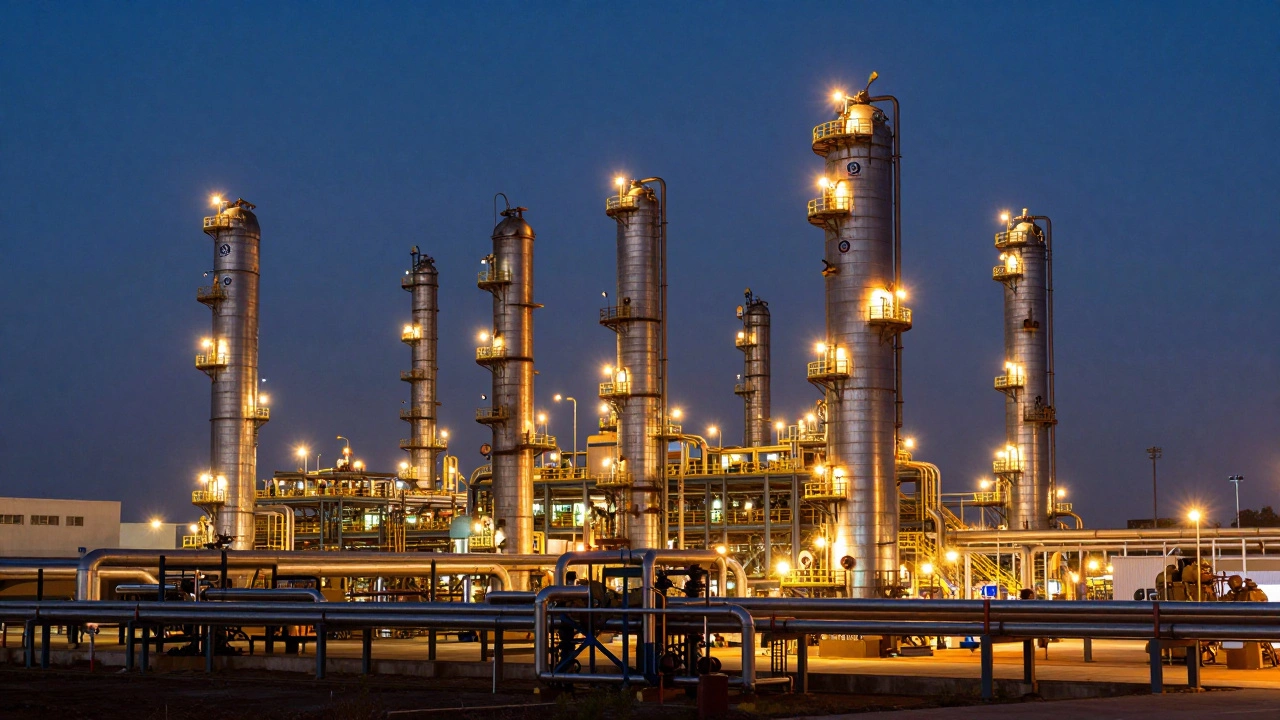
China Petroleum & Chemical Corporation (Sinopec) consistently ranks as the top manufacturing entity by revenue. In recent fiscal years, Sinopec has reported annual revenues exceeding $450 billion. They refine crude oil into gasoline, diesel, and jet fuel, while also producing plastics and synthetic fibers. Their scale is unmatched, processing more barrels per day than any other refiner globally.
Closely following are State Grid Corporation of China and ExxonMobil. While State Grid is often classified as a utility, its manufacturing of high-voltage equipment and grid infrastructure places it firmly in the industrial sector. ExxonMobil, an American multinational, remains a powerhouse in exploration, production, and petrochemical manufacturing, with revenues hovering around $300 billion annually.
- Sinopec: Focuses on refining, marketing, and petrochemicals.
- ExxonMobil: Leads in integrated oil and gas operations and chemical production.
- BP: A major British multinational energy company with significant downstream manufacturing.
Automotive Leaders: Volume vs. Value
The automotive industry is a bellwether for global manufacturing health. Here, the definition of "leading" splits between volume (units sold) and value (revenue/profit).
By vehicle sales volume, Toyota Motor Corporation is the undisputed king. For over a decade, Toyota has sold more than 10 million vehicles annually. Their dominance comes from the Toyota Production System (TPS), a lean manufacturing methodology that minimizes waste and maximizes efficiency. TPS is studied in business schools worldwide as the gold standard for operational excellence.
However, if you look at revenue, Ford Motor Company and General Motors (GM) often surpass Toyota. This is partly due to higher average transaction prices in the North American market and the inclusion of financial services revenue in their reported figures. Ford, headquartered in Dearborn, Michigan, generates over $150 billion in annual revenue, making it one of the most valuable manufacturing brands in the US.
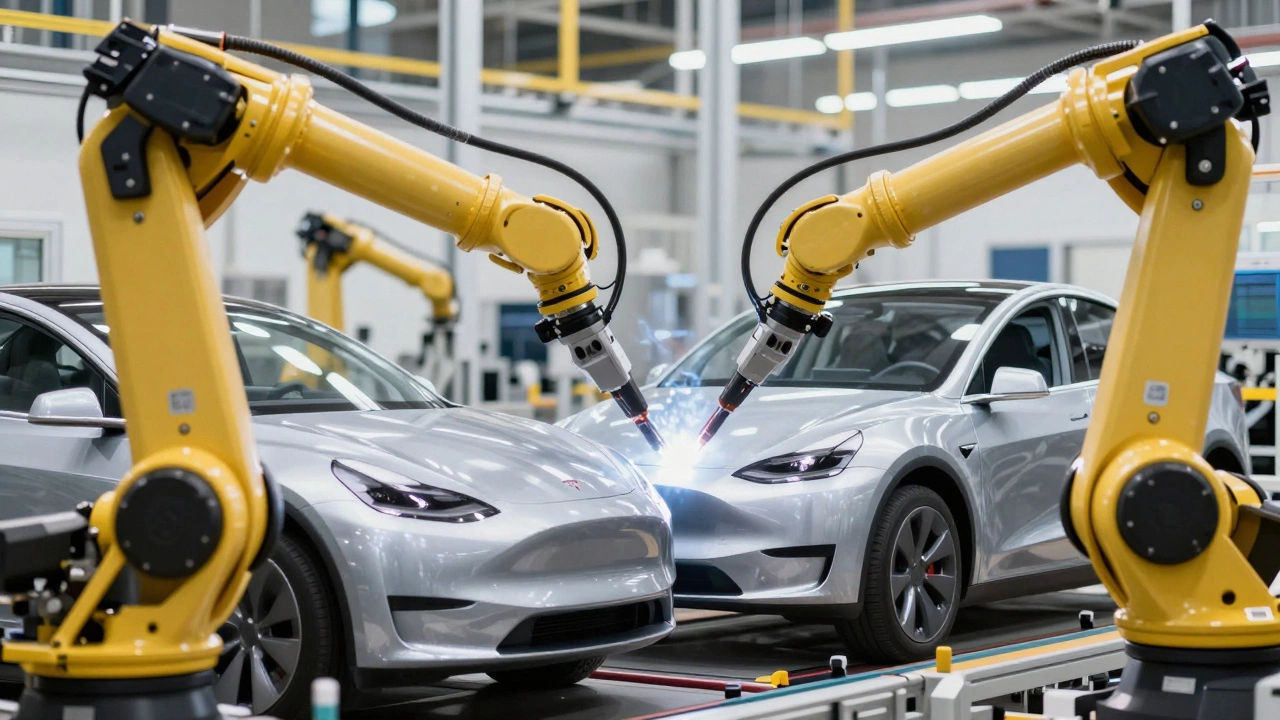
It is also impossible to ignore the rise of electric vehicle (EV) manufacturers. Tesla, Inc. may not have the highest volume yet, but its manufacturing innovation-such as gigacasting-has reshaped how cars are built. Tesla’s Gigafactories in Nevada, Shanghai, Berlin, and Texas represent a new model of vertical integration in automotive manufacturing.
| Company | Primary Sector | Key Metric | Approx. Annual Revenue (USD) |
|---|---|---|---|
| Sinopec | Petrochemicals/Refining | Revenue | $450B+ |
| Toyota | Automobiles | Vehicle Sales Volume | $270B+ |
| Ford | Automobiles | Revenue | $150B+ |
| Honeywell | Diversified Tech/Mfg | Brand Value & Innovation | $35B+ |
| Samsung Electronics | Electronics/Semiconductors | Market Cap & Output | $200B+ |
Electronics and Semiconductors: The Hidden Giants
If you think about what is inside your phone, laptop, or car, you realize that electronics manufacturing is the backbone of the digital economy. The leading manufacturer here depends on whether you count the assembler or the component maker.
Samsung Electronics is a behemoth in this space. They manufacture memory chips, displays, and consumer electronics like smartphones and home appliances. Samsung’s semiconductor division alone makes them one of the most critical manufacturers on Earth, supplying components to Apple, Microsoft, and others.
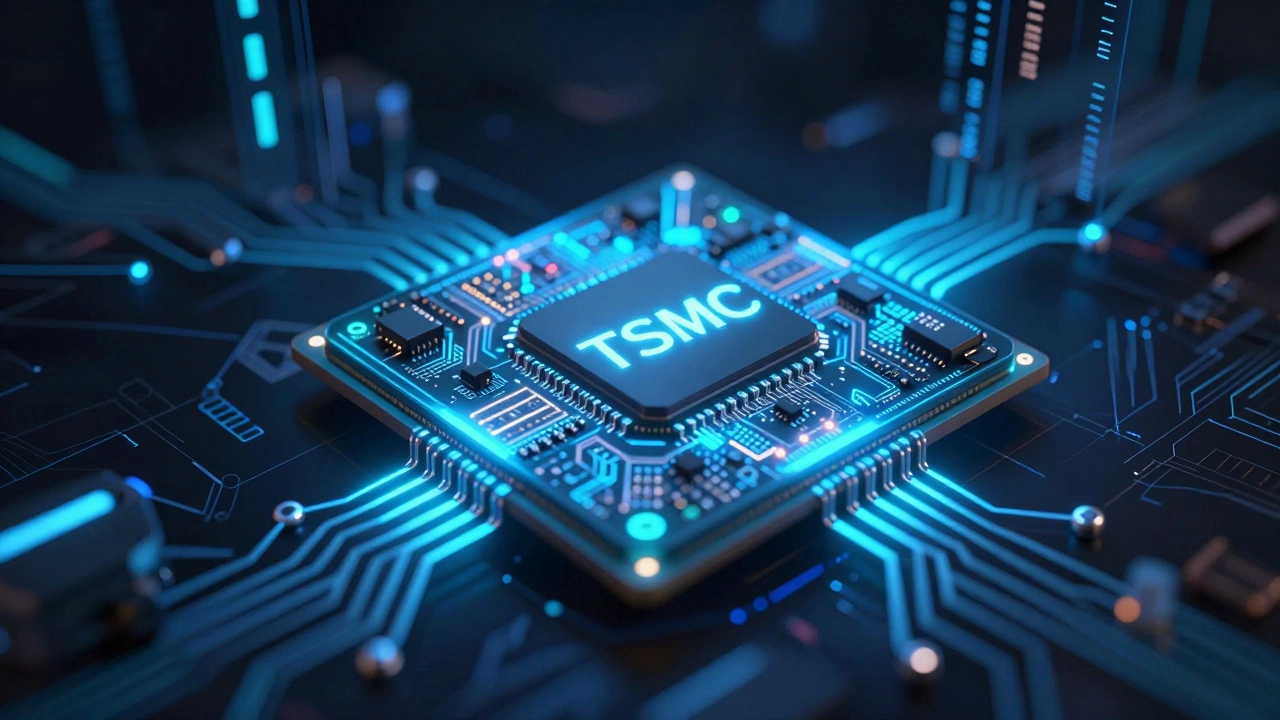
Then there is TSMC (Taiwan Semiconductor Manufacturing Company). TSMC does not design chips; it manufactures them for everyone else. As the world’s largest dedicated foundry, TSMC produces the most advanced silicon nodes (3nm and below). Without TSMC, the AI boom and modern smartphone industry would stall. Their monopoly on advanced chip fabrication makes them arguably the most strategically important manufacturer in history.
For consumer assembly, Foxconn (Hon Hai Precision Industry) is the giant. Known officially as Hon Hai, Foxconn assembles iPhones, game consoles, and servers. Their workforce in the tens of thousands highlights the labor-intensive side of high-tech manufacturing.
Diversified Conglomerates: The Jack-of-All-Trades
Some companies refuse to be boxed into one category. These diversified conglomerates manufacture everything from aerospace engines to HVAC systems.
Honeywell International is a prime example. They manufacture aircraft engines, building control systems, safety equipment, and performance materials. Honeywell’s ability to integrate software with physical hardware sets it apart. Their aviation group powers a significant portion of the world’s commercial fleet.
Similarly, General Electric (GE) has long been a manufacturing icon. After splitting into separate entities for healthcare, renewable energy, and aviation, GE Aerospace remains a top-tier manufacturer of jet engines. GE Vernova focuses on power generation and wind turbines, continuing the legacy of industrial innovation started by Thomas Edison.
How to Determine the "Leading" Manufacturer
To find the true leader, you must define your criteria. Are you looking for:
- Total Revenue: Sinopec, State Grid, and Walmart (if considered retail-manufacturing hybrid) lead.
- Operational Efficiency: Toyota and Amazon (logistics/manufacturing hybrid) set the standards.
- Technological Moat: TSMC and ASML (lithography machines) hold the keys to future progress.
- Brand Power: Apple (design-led manufacturing) and Nike (apparel manufacturing) dominate perception.
The shift toward automation and Industry 4.0 is changing these rankings. Companies that invest heavily in robotics, AI-driven quality control, and sustainable supply chains will likely move up the list in the coming years. Traditional heavy industries are being disrupted by agile, tech-forward manufacturers.
Regional Shifts in Manufacturing Leadership
Historically, the US, Japan, and Germany led manufacturing. Today, China is the factory of the world, hosting the largest number of Fortune 500 manufacturing firms. However, the narrative is shifting again.
Nearshoring and friend-shoring trends are bringing manufacturing back to the US, Mexico, and Eastern Europe. Companies like Tesla and Apple are diversifying their supply chains away from sole reliance on China. India is emerging as a new hub, particularly for pharmaceuticals and electronics assembly, supported by government initiatives like "Make in India."
This geographic dispersion means that the "leading manufacturer" might soon be a network rather than a single entity. Collaborative ecosystems involving multiple countries and partners are becoming the norm.
Who is the number one manufacturer in the world by revenue?
Based on total annual revenue, Sinopec (China Petroleum & Chemical Corporation) is typically ranked as the leading manufacturer. They generate over $450 billion annually through oil refining and petrochemical production.
Which car manufacturer is the biggest in the world?
If measured by vehicle sales volume, Toyota Motor Corporation is the largest, selling over 10 million units per year. If measured by revenue, Ford and General Motors often rank higher due to larger average transaction values and financial services income.
What is the difference between a manufacturer and a retailer?
A manufacturer creates physical goods from raw materials (e.g., Toyota builds cars). A retailer sells finished goods to consumers (e.g., Walmart sells TVs). Some companies, like Apple, do both: they design and oversee manufacturing, then sell directly via retail stores.
Is TSMC a manufacturer?
Yes, TSMC is the world's largest contract semiconductor manufacturer. They produce chips designed by other companies like Apple, NVIDIA, and AMD. Their role is critical because they control the production of the most advanced computer processors.
Why is Toyota considered a manufacturing leader?
Toyota is renowned for inventing the Toyota Production System (TPS), which introduced concepts like "lean manufacturing" and "just-in-time" inventory. This approach drastically reduces waste and improves quality, setting the global standard for efficient production.
Who are the top manufacturing companies in the US?
The top US manufacturing companies include Ford Motor Company, General Motors, Honeywell International, Lockheed Martin (aerospace), and Johnson & Johnson (pharmaceuticals/consumer goods).