
Machinery Manufacturer Ranking Tool
When you think of the largest machinery manufacturers, one name usually jumps out: Caterpillar Inc. is the world's leading manufacturer of construction and mining equipment, known for its diesel engines and hydraulic excavators. But is it truly the biggest? The answer depends on how you measure "biggest." Are we talking about revenue, market capitalization, or sheer volume of units produced? For most industry observers, Caterpillar holds the crown due to its massive global footprint and consistent revenue generation. However, the landscape is shifting rapidly with the rise of electric heavy machinery and new competitors from Asia.
The machinery sector is not a monolith. It spans everything from tiny precision CNC machines used in electronics manufacturing to colossal earthmovers that clear forests for highways. Understanding who leads this space requires looking at specific segments like construction, agriculture, and industrial automation. This guide breaks down the top players, their strengths, and why the title of "world's biggest" is more nuanced than it appears.
Defining "Biggest": Revenue vs. Market Cap
To identify the leader, we need clear metrics. In the industrial machinery sector, two primary metrics dominate: annual revenue and market capitalization. Revenue reflects the actual sales of products and services, while market cap represents the stock market's valuation of the company's future potential. These numbers often diverge significantly.
Caterpillar Inc. typically reports annual revenues exceeding $50 billion in recent years. Its strength lies in after-sales service and parts, which generate recurring income even after the initial machine sale. On the other hand, companies like Deere & Company (John Deere) have seen surges in market cap due to the high demand for agricultural technology, sometimes rivaling or exceeding Caterpillar's valuation despite lower total revenue. This distinction matters because a high market cap doesn't always mean the company sells more units; it means investors believe in its growth trajectory.
For practical purposes, when discussing production scale and global presence, Caterpillar remains the benchmark. It operates in over 190 countries and territories, making its supply chain and service network unmatched in breadth.
The Heavyweight Contenders: Construction and Mining
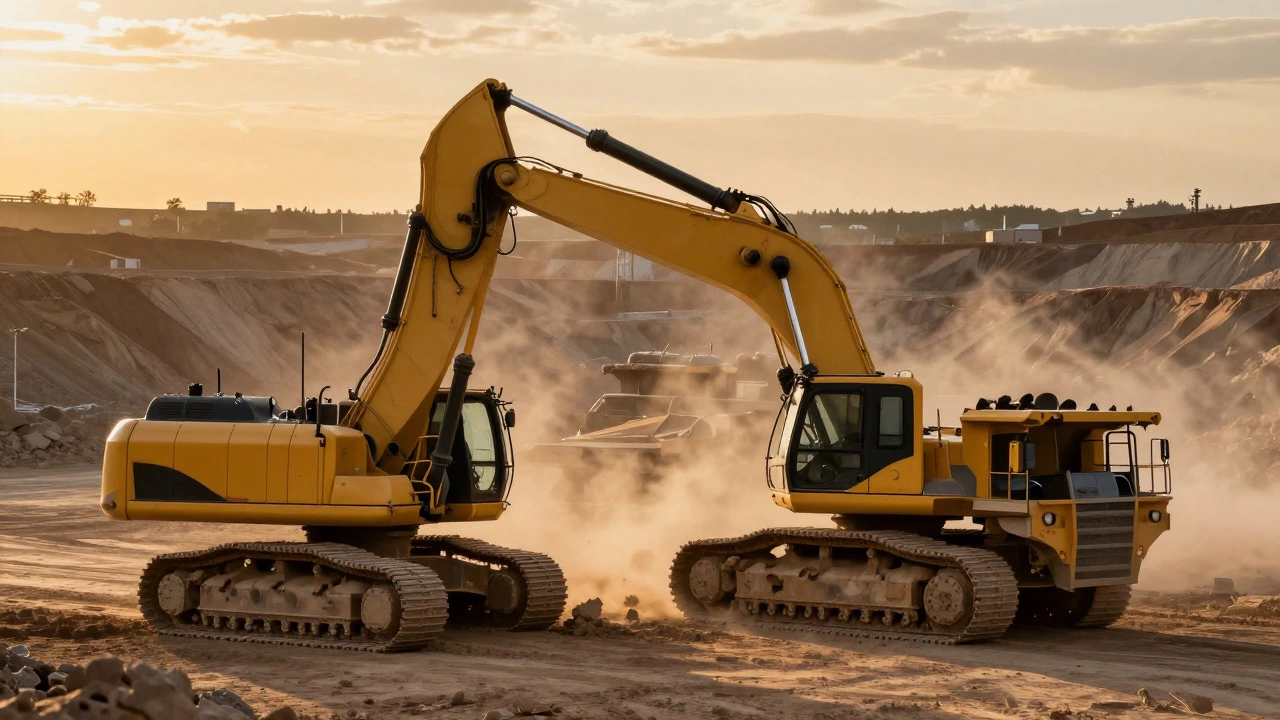
The construction and mining segment is the heart of heavy machinery manufacturing. Here, three names dominate the global conversation: Caterpillar, Komatsu, and Volvo Group.
- Caterpillar Inc.: Based in Peoria, Illinois, USA, Cat is synonymous with yellow heavy equipment. Their product line includes bulldozers, graders, and massive mining trucks. They are leaders in both internal combustion and emerging electric technologies.
- Komatsu Ltd.: A Japanese giant based in Tokyo, Komatsu is the second-largest player globally. They are particularly strong in Asian markets and have made significant strides in autonomous mining trucks. Their focus on fuel efficiency has gained them a loyal following among operators looking to reduce operating costs.
- Volvo Group: While known for commercial vehicles, Volvo's construction division produces highly competitive wheel loaders and excavators. Their integration of digital solutions into machinery sets them apart in terms of operator experience and fleet management.
These three companies compete fiercely for contracts in major infrastructure projects worldwide. Choosing between them often comes down to local service availability and specific technical requirements rather than brand prestige alone.
Agricultural Machinery: The John Deere Dominance
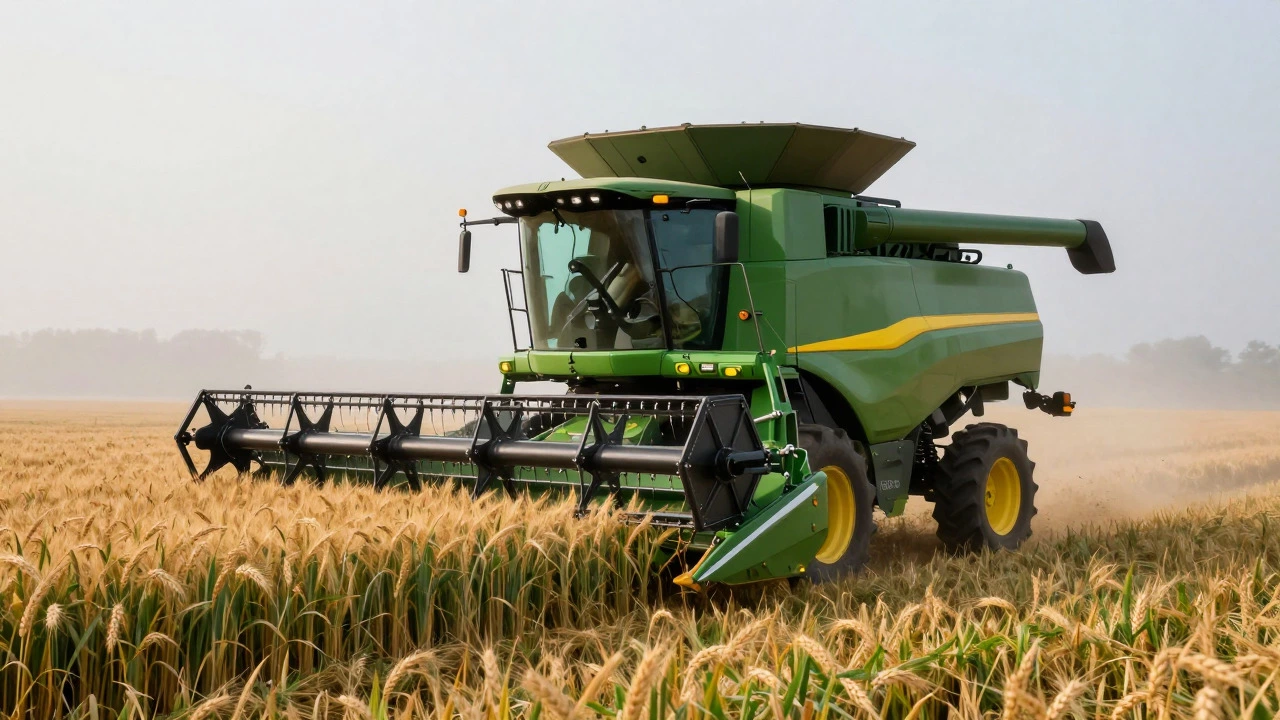
If we narrow the scope to agricultural machinery, the hierarchy changes completely. Deere & Company, better known as John Deere, is the undisputed king of farm equipment. From small tractors to combine harvesters, John Deere's green-and-yellow branding is iconic across North America, Europe, and increasingly in India and Brazil.
John Deere's dominance isn't just about selling tractors. It's about data. Their "See & Spray" technology uses AI to identify weeds and spray herbicide only where needed, reducing chemical usage by up to 70%. This technological edge allows them to command premium prices and maintain high customer loyalty. In terms of pure unit sales in the agri-sector, no other manufacturer comes close to their global share.
Industrial Automation and Robotics
Beyond dirt and crops, there is the invisible backbone of modern manufacturing: industrial robots and automation systems. In this niche, the "biggest" manufacturers are different entities entirely. Fanuc, a Japanese company, is a global leader in robotics, powering assembly lines in automotive plants worldwide. Similarly, ABB, a Swiss-Swedish multinational, dominates in electrification and industrial automation.
While these companies may not have the same household name recognition as Caterpillar or John Deere, their impact on global productivity is immense. Fanuc's robots handle everything from welding car frames to packing food items. If your definition of "machinery" includes the automated systems that run factories, then Fanuc and ABB are arguably the biggest players in that specific vertical.
Comparison of Top Machinery Manufacturers
To visualize the differences, let's look at a comparison of key attributes for the top contenders. Note that financial figures fluctuate quarterly, so these represent typical ranges observed in recent fiscal years.
| Company | Headquarters | Primary Segment | Key Strength |
|---|---|---|---|
| Caterpillar Inc. | USA | Construction & Mining | Global Service Network |
| John Deere | USA | Agriculture | AgTech Integration |
| Komatsu Ltd. | Japan | Construction & Mining | Autonomous Systems |
| Fanuc | Japan | Robotics & Automation | Precision Reliability |
| Volvo Group | Sweden | Construction & Trucks | Digital Connectivity |
The Role of Emerging Markets
You might be wondering where Indian manufacturers fit into this global picture. Companies like Tata Motors (through its JCB partnership) and Mahindra & Mahindra are rising powers. While they aren't yet in the same league as Caterpillar in global revenue, they are critical in the South Asian market. Their ability to produce cost-effective machinery tailored to local conditions makes them dominant regionally. As infrastructure spending booms in developing nations, these regional giants are gaining global visibility, potentially challenging the traditional Western and Japanese incumbents in the coming decade.
Furthermore, the shift towards sustainability is reshaping the competitive landscape. Manufacturers who can deliver zero-emission electric machinery without sacrificing power will hold the advantage. Caterpillar and Komatsu are investing billions in battery technology, but startups are also entering the fray with novel designs that could disrupt established supply chains.
How to Choose the Right Manufacturer for Your Needs
Knowing who the biggest is helps, but choosing the right partner for your business requires a different approach. Here is a simple framework to consider:
- Assess Your Primary Use Case: Are you moving earth, harvesting crops, or automating a factory? Stick to specialists in that niche.
- Evaluate Service Availability: The best machine is useless if it sits idle waiting for a part. Check the density of authorized dealers near your operation.
- Consider Total Cost of Ownership: Look beyond the purchase price. Fuel efficiency, maintenance intervals, and resale value determine long-term profitability.
- Check Technology Compatibility: Ensure the machinery integrates with your existing fleet management software or IoT platforms.
For most large-scale operations, sticking with a top-tier global manufacturer ensures access to the latest technology and robust support networks. For smaller or specialized needs, regional players might offer better value and customization.
Is Caterpillar really the biggest machinery manufacturer?
In terms of overall revenue and global presence in construction and mining equipment, yes, Caterpillar Inc. is generally considered the largest. However, in specific sectors like agriculture, John Deere holds the top spot, and in robotics, Fanuc leads.
Which country produces the most heavy machinery?
The United States and Japan are the top producers of high-value heavy machinery. The US is home to Caterpillar and John Deere, while Japan hosts Komatsu and Fanuc. China is a massive producer in terms of volume, particularly for domestic use and export to developing markets.
Are Indian machinery manufacturers competitive globally?
Indian manufacturers like Tata and Mahindra are highly competitive in emerging markets due to cost-effectiveness and localized features. While they are not yet global leaders in revenue compared to US or Japanese firms, their influence is growing rapidly as global infrastructure needs expand.
What is the difference between market cap and revenue for these companies?
Revenue is the money earned from sales in a given period. Market cap is the total value of all outstanding shares of a company's stock. A company can have high revenue but low market cap if investors doubt its future growth, or vice versa if investors expect rapid expansion.
Which machinery brands are best for electric conversion?
Caterpillar and Komatsu are currently leading in offering full-electric versions of their standard models. Volvo Group also has strong offerings in electric construction equipment. For older machinery, third-party retrofit kits are available but vary in reliability.