
Manufacturing Authority Navigator
Determine which government body oversees your manufacturing business based on scale and specific needs.
Have you ever wondered who actually pulls the strings behind the massive factories, supply chains, and industrial policies that shape a country's economy? When you hear about "Make in India" or new subsidies for setting up a plant, it’s not just one person making those decisions. It is a complex web of ministries, departments, and agencies working together. If you are looking to start a manufacturing business or simply want to understand how industrial policy works in India, knowing exactly who is in charge of manufacturing is your first step toward navigating government schemes effectively.
In India, the responsibility isn't handed over to a single entity. Instead, it is shared primarily between two powerful bodies: the Ministry of Commerce and Industry and the Ministry of Micro, Small and Medium Enterprises (MSME). This division often confuses entrepreneurs and investors. Who do you approach for land allocation? Who approves tax benefits? Who handles quality standards? The answer depends entirely on the scale of your operation and the specific type of support you need.
The Primary Architect: Ministry of Commerce and Industry
When we talk about large-scale manufacturing, infrastructure development, and international trade, the spotlight falls on the Ministry of Commerce and Industry, which oversees the broader industrial landscape of the nation. Within this ministry, the most critical body for manufacturers is the Department for Promotion of Industry and Internal Trade (DPIIT).
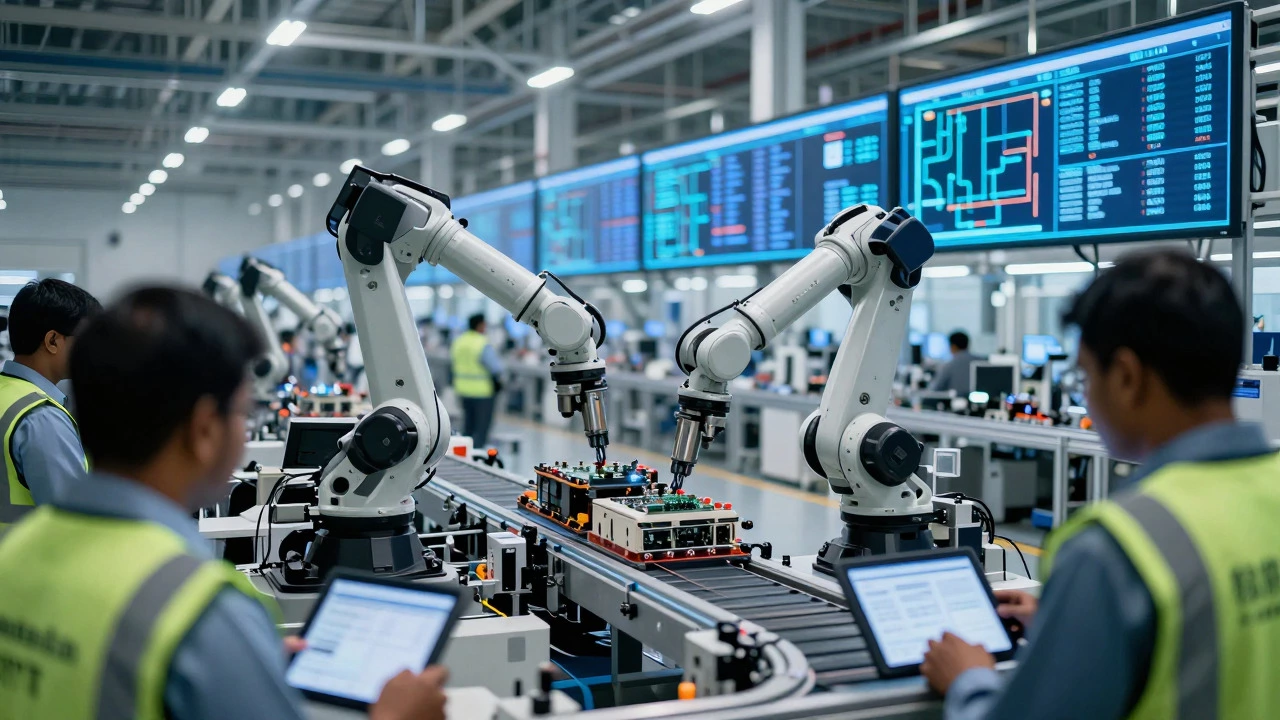
DPIIT acts as the nodal agency for industrial policy. Think of them as the architects of the manufacturing ecosystem. They are responsible for formulating policies that encourage investment, simplify regulations, and boost exports. If you are planning to set up a large automotive plant, an electronics assembly unit, or a heavy machinery factory, DPIIT is your primary point of contact for policy clarity.
Key responsibilities of DPIIT include:
- Policy Formulation: Drafting frameworks like the Production Linked Incentive (PLI) schemes that offer financial rewards for increased domestic production.
- Investment Promotion: Managing the Investment Promotion and Protection Framework to attract foreign direct investment (FDI).
- Single Window Clearance: Overseeing platforms that help businesses get necessary approvals from various central and state authorities without running around multiple offices.
For large enterprises, DPIIT ensures that the regulatory environment remains conducive to growth. They work closely with other ministries to remove bottlenecks in logistics, power supply, and raw material availability. If your query is about broad industrial corridors or special economic zones (SEZs), this is where you look.
The Champion of Small Players: Ministry of MSME
While DPIIT handles the big picture, the Ministry of Micro, Small and Medium Enterprises (MSME) focuses on the backbone of the Indian economy: small and medium-sized manufacturers. According to recent data, MSMEs contribute significantly to GDP and employment, yet they often struggle with access to credit, technology, and markets.
If your manufacturing unit falls under the MSME category-defined by investment in plant and machinery and annual turnover-you fall under the purview of this ministry. Their role is distinct from DPIIT. While DPIIT looks at macroeconomic indicators and global competitiveness, the MSME ministry looks at grassroots empowerment.
Their key functions include:
- Credit Support: Facilitating easier access to loans through schemes like the Credit Guarantee Fund Trust for Micro and Small Enterprises (CGTMSE).
- Technology Upgradation: Providing subsidies for adopting modern machinery and automation tools through programs like the Technology Management Assistance Scheme (TMAS).
- Market Access: Organizing trade fairs and helping small manufacturers export their goods through the Udyam Registration portal.
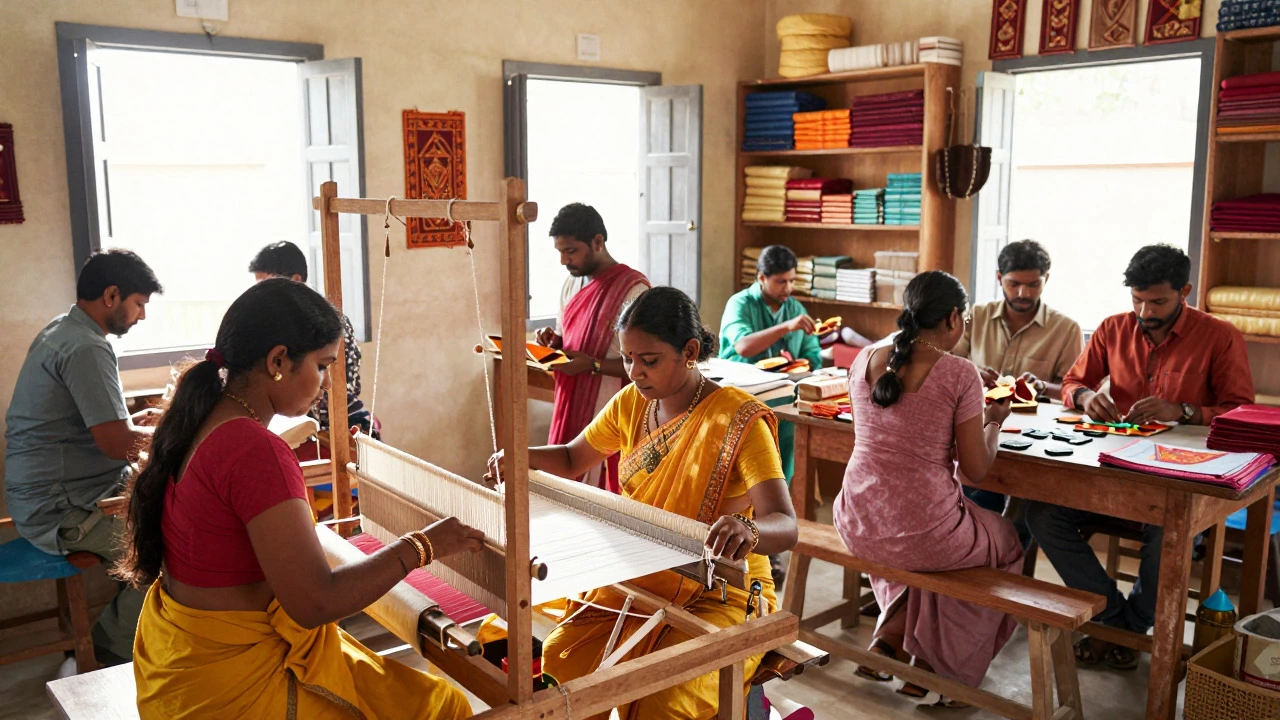
For a small-scale manufacturer producing textiles, handicrafts, or components, the MSME ministry is often more relevant than DPIIT. They provide tailored support that addresses the specific pain points of smaller operations, such as delayed payments from large buyers and lack of technical expertise.
Other Key Players in the Manufacturing Ecosystem
Manufacturing doesn't happen in a vacuum. Several other ministries play crucial roles depending on the sector. Ignoring these entities can lead to compliance issues or missed opportunities.
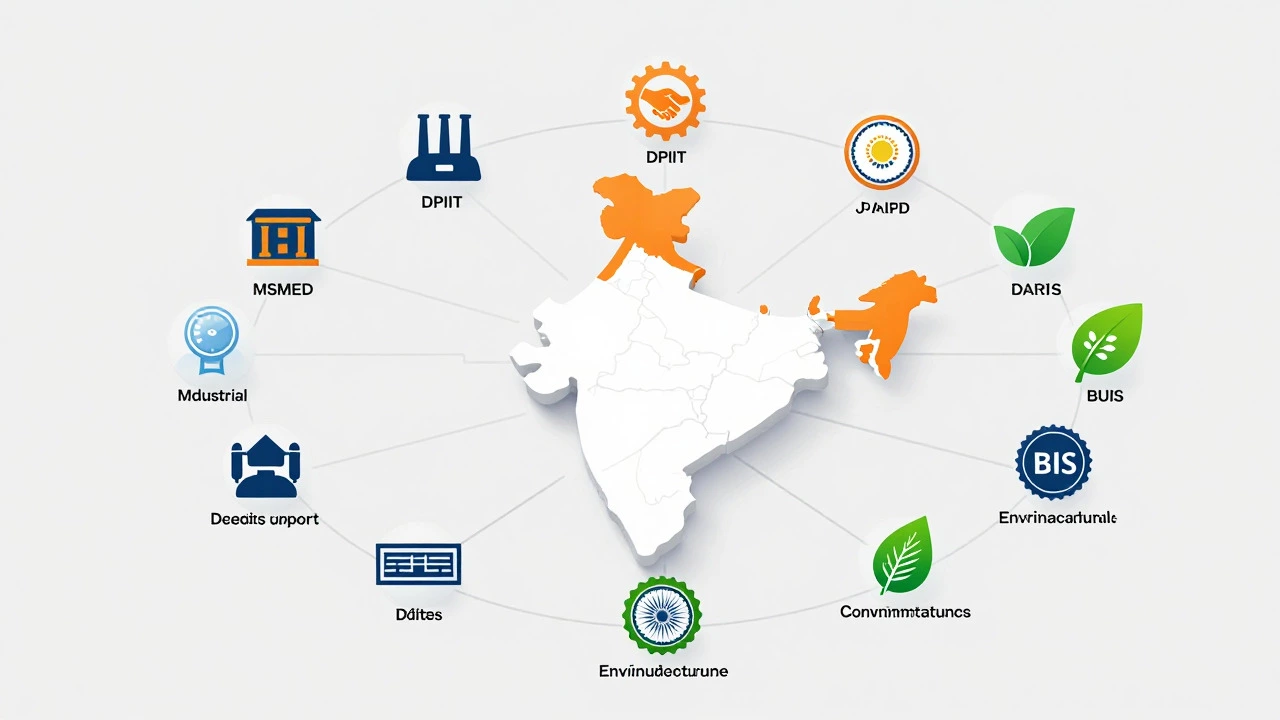
| Entity | Primary Role | Relevant For |
|---|---|---|
| DPIIT | Industrial policy, PLI schemes, FDI facilitation | Large-scale industries, exporters, investors |
| Ministry of MSME | Credit, tech upgradation, market access for SMEs | Small and medium manufacturers |
| Bureau of Indian Standards (BIS) | Quality certification and standardization | All manufacturers requiring ISI marks or quality compliance |
| Ministry of Environment, Forest and Climate Change | Environmental clearances and sustainability norms | Heavy industries, chemical plants, waste generators |
| Ministry of Skill Development and Entrepreneurship | Workforce training and skill development | Businesses needing trained labor for production lines |
The Bureau of Indian Standards (BIS) is particularly important. No matter who is in charge of policy, BIS is in charge of quality. If you manufacture electrical appliances, steel, or food products, you must comply with BIS standards. Failure to do so can result in product recalls or bans. Similarly, the Ministry of Environment plays a gatekeeping role. Before you lay the foundation stone for any factory, you need environmental clearance. This process involves impact assessments and adherence to emission norms.
Navigating Government Schemes for Manufacturing
Understanding who is in charge helps you navigate the maze of government schemes. India offers numerous incentives to boost manufacturing, but each scheme has a specific custodian.
Production Linked Incentive (PLI): Managed by DPIIT in coordination with sector-specific ministries (like Electronics, Pharmaceuticals, or Automobiles). This scheme offers cash incentives based on incremental sales. It is designed for large players who can scale quickly. To apply, you need to meet significant investment thresholds and demonstrate capacity expansion.
Prime Minister’s Employment Generation Programme (PMEGP): Administered by the Ministry of MSME. This is ideal for startups and small entrepreneurs. It provides subsidies for setting up micro-enterprises. The focus here is on job creation rather than just production volume. If you are starting a small workshop or a cottage industry, PMEGP is your go-to scheme.
Modified Interest Subvention Scheme: Also under MSME, this scheme allows eligible borrowers to pay interest rates lower than the benchmark rate. This reduces the cost of capital for small manufacturers, making it easier to invest in working capital and inventory.
To maximize benefits, map your business needs to the right ministry. Are you looking for policy stability and export promotion? Look to DPIIT. Do you need low-cost credit and technology grants? Approach the MSME ministry. Trying to apply for a PLI scheme when you qualify for MSME support might be overkill, while missing out on PLI because you only looked at MSME schemes could mean leaving money on the table.
State-Level Industrial Departments
Don’t forget the state governments. While central ministries set the overarching policy, implementation often happens at the state level. Each state has its own Industrial Department or Department of Industries and Commerce. These departments handle land allotment, state-level subsidies, and local infrastructure development.
For example, if you are setting up a textile mill in Gujarat or an IT hardware plant in Karnataka, the state industrial department will guide you through local regulations, labor laws, and utility connections. They often have their own incentive packages that complement central schemes. Engaging with both central and state authorities ensures a smoother setup process.
How to Get Started: A Practical Checklist
Knowing the hierarchy is one thing; acting on it is another. Here is a practical approach to engaging with the right authorities:
- Define Your Scale: Determine if your business qualifies as MSME or Large Enterprise. This dictates whether you start with the Ministry of MSME or DPIIT.
- Register Online: Obtain Udyam Registration for MSME status. This is mandatory for accessing most government benefits.
- Identify Sector-Specific Ministries: If you are in pharmaceuticals, check with the Ministry of Chemicals and Fertilizers. If in automobiles, look at the Ministry of Heavy Industries. They often co-manage PLI schemes.
- Check State Policies: Visit the website of your state’s Industrial Department. Look for land bank availability and state-specific subsidies.
- Compliance First: Ensure you meet BIS standards and environmental clearances before applying for financial incentives. Non-compliance can disqualify you.
The landscape of manufacturing governance is dynamic. Policies evolve, new schemes launch, and digital portals update regularly. Staying informed requires proactive engagement with these official channels. By understanding who is in charge, you transform from a passive observer into an active participant in India’s manufacturing revolution.
Is DPIIT the same as the Ministry of Commerce?
No, DPIIT is a department under the Ministry of Commerce and Industry. The Ministry is the broader umbrella organization, while DPIIT specifically handles industrial policy, promotion, and internal trade matters.
Which ministry should I approach for a small manufacturing startup?
You should approach the Ministry of Micro, Small and Medium Enterprises (MSME). They offer targeted support for startups, including credit guarantees, technology subsidies, and market access programs through schemes like PMEGP.
What is the role of the Bureau of Indian Standards (BIS) in manufacturing?
BIS is responsible for setting quality standards for products. Manufacturers must obtain BIS certification (ISI mark) for many categories of goods to ensure safety and quality. Compliance is mandatory for legal sale and often required for government tenders.
Can a company benefit from both DPIIT and MSME schemes?
Yes, but it depends on the specific scheme rules. Generally, MSME-focused schemes have turnover or investment caps. If your company grows beyond those limits, you may transition to DPIIT-led schemes. Some general infrastructure subsidies may be accessible to all sizes, but always check eligibility criteria carefully.
How do state industrial departments differ from central ministries?
Central ministries set national policies and provide broad incentives. State departments handle local implementation, land allocation, state-specific subsidies, and local infrastructure. You usually need to engage with both to fully leverage available benefits.