
Small-Scale Production Classifier
Business Metrics
Enter your metrics above to see how your business is classified.
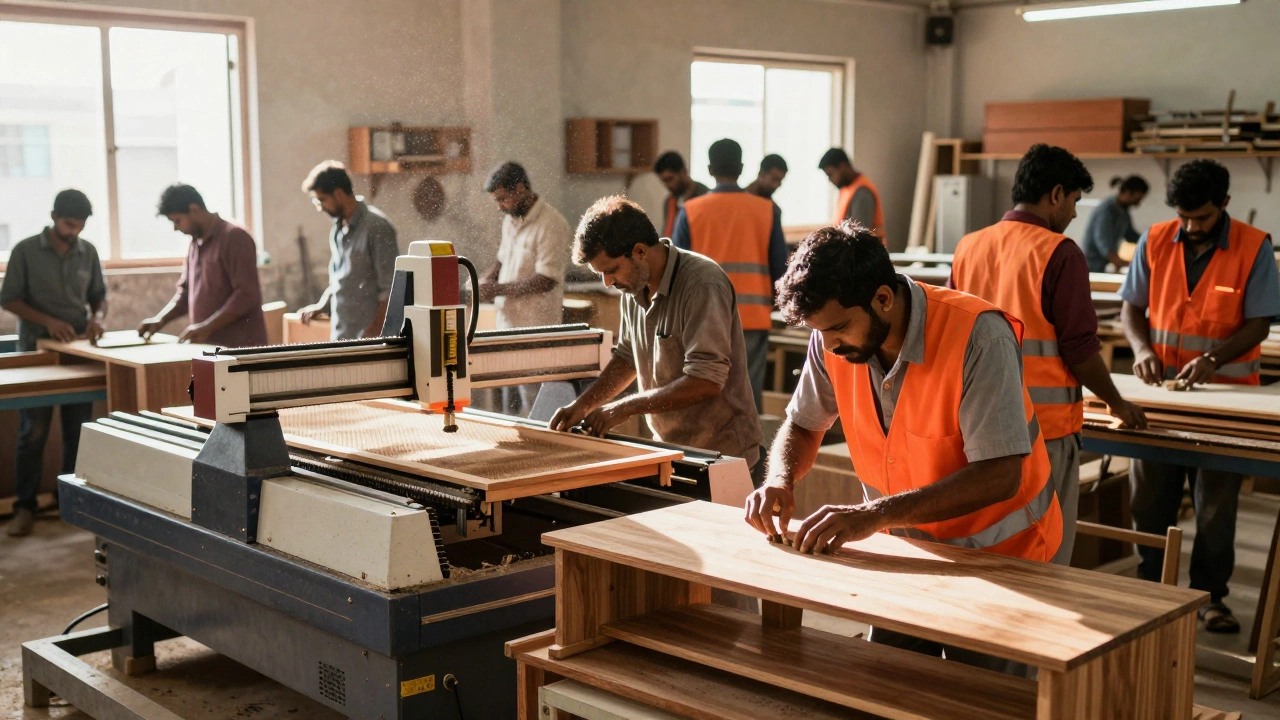
Imagine walking into a workshop where the hum of machinery is steady but not deafening. There are no endless conveyor belts stretching into the distance. Instead, you see a team of ten people working closely together, adjusting settings on a CNC machine or hand-finishing wooden furniture. This isn’t a massive factory floor; it’s the heart of small-scale production, which refers to manufacturing operations that utilize limited capital, labor, and output volume compared to large industrial enterprises.
You might be asking yourself: exactly where does the line get drawn? Is a bakery with five employees small-scale? What about a tech startup assembling custom drones in a garage? The definition isn’t just about counting heads or measuring square footage. It involves a mix of financial thresholds, operational complexity, and market focus. Understanding these boundaries is crucial if you’re planning to start a manufacturing business, apply for government grants, or simply understand how local economies function.
The Core Definition: More Than Just Size
At its simplest, small-scale production describes businesses that produce goods on a limited basis. These operations typically serve local or niche markets rather than global supply chains. However, "limited" is a relative term. In the textile industry, a unit producing 500 garments a day might be considered small-scale. In semiconductor manufacturing, a facility producing 1,000 chips might fit the same category.
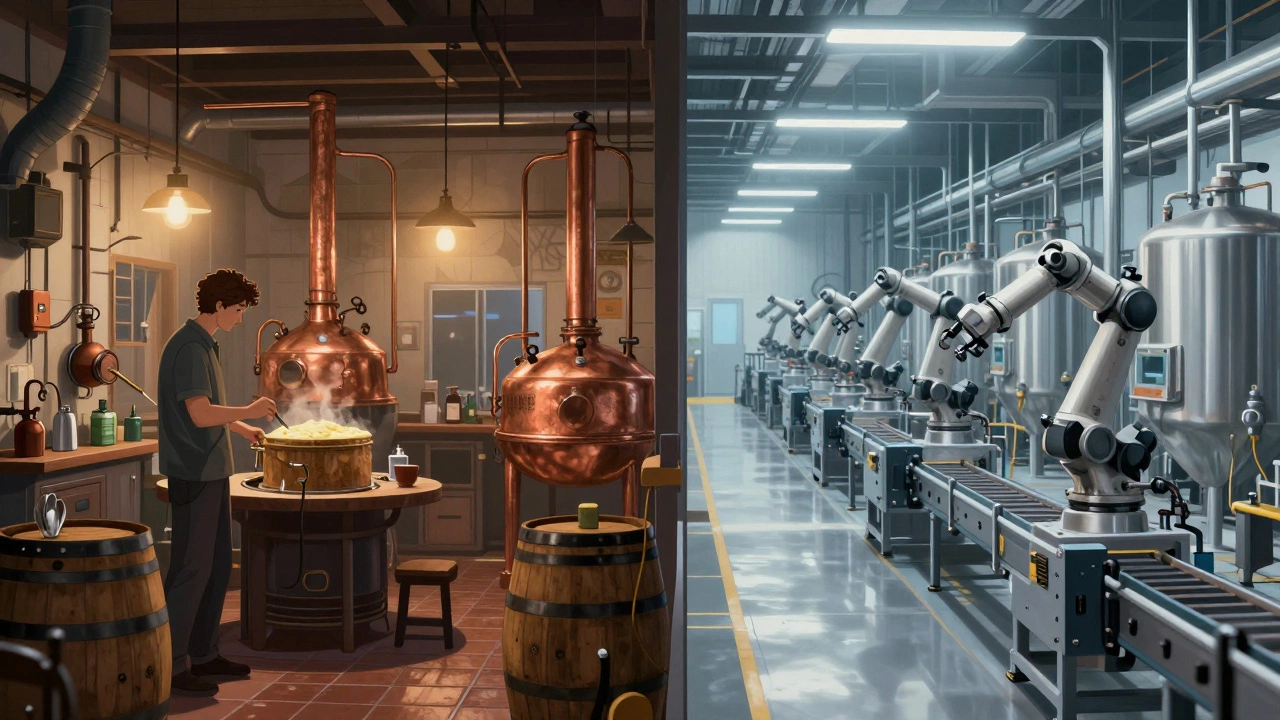
The key differentiator is often the level of automation and capital intensity. Large-scale industries rely heavily on mass production techniques, automated robotics, and economies of scale to drive down costs per unit. Small-scale producers, by contrast, often rely on semi-automated tools, skilled manual labor, and flexible processes. This flexibility allows them to switch products quickly, customize orders, and respond to market changes faster than their larger counterparts.
Think of it this way: a large car manufacturer spends years redesigning a model line. A small-scale custom vehicle builder can modify a design based on customer feedback within weeks. That agility is the hallmark of small-scale production.
Financial and Operational Thresholds
To make things concrete, governments and financial institutions use specific metrics to classify businesses. While these numbers vary by country and sector, they provide a useful framework. In many developed economies, including the UK and parts of Europe, a small-scale manufacturing business is often defined by:
- Investment Cap: Total investment in plant and machinery usually falls below a certain threshold (e.g., under £5 million in some UK contexts, though this varies by scheme).
- Employee Count: Typically fewer than 50 to 250 employees. Micro-enterprises may have fewer than 10 staff.
- Annual Turnover: Revenue limits often range from £2 million to £10 million annually, depending on the industry.
In India, for instance, the government has historically used stricter definitions for "small-scale industries," focusing on investment limits in plant and machinery. In the United States, the Small Business Administration (SBA) sets size standards based on both revenue and employee count, varying significantly between sectors like food processing versus electronics assembly.
These thresholds matter because they determine eligibility for tax breaks, low-interest loans, and protective trade policies. If you’re operating near these limits, understanding the exact criteria can save you thousands in compliance costs or unlock vital funding opportunities.
| Feature | Small-Scale Production | Large-Scale Manufacturing |
|---|---|---|
| Capital Investment | Low to Moderate | High (Billions) |
| Labor Dependency | High (Skilled Manual Labor) | Low (Automated Robotics) |
| Product Variety | High Customization | Standardized Mass Production |
| Market Focus | Local/Niche | Global/National |
| Flexibility | High (Quick Pivots) | Low (Rigid Supply Chains) |
Key Characteristics of Small-Scale Units
Beyond the numbers, small-scale production has distinct operational traits. First, there’s a strong emphasis on craftsmanship. Whether it’s handmade leather goods or precision-engineered medical devices, the human touch remains central. This doesn’t mean technology is absent; modern small-scale shops use Computer-Aided Design (CAD), 3D printers, and laser cutters. But these tools augment skilled workers rather than replace them entirely.
Second, decision-making is decentralized. In a large corporation, launching a new product might require approval from five different departments. In a small-scale unit, the owner or manager can greenlight a change instantly. This speed is a competitive advantage, especially in fast-moving sectors like fashion or consumer electronics accessories.
Third, risk management differs. Large firms can absorb losses from failed product lines. Small-scale producers operate with thinner margins, so every decision carries higher stakes. This forces them to be more conservative in inventory management and more aggressive in marketing to ensure consistent cash flow.
Real-World Examples Across Industries
To visualize what this looks like in practice, let’s look at a few sectors.
Food Processing: Consider a local brewery producing craft beer. They might brew 50 barrels a week, using traditional methods and selling directly to pubs and online. This is classic small-scale production. Contrast this with a mega-brewery producing millions of liters daily using fully automated systems. The craft brewery competes on quality, story, and community connection, not price.
Textile Manufacturing: A family-owned weaving unit in Manchester might produce bespoke fabrics for high-end designers. They use smaller looms, employ local artisans, and focus on sustainable materials. Their output is limited, but their profit margins are higher due to premium pricing. This contrasts with large textile mills that produce generic cotton sheets for global retailers.
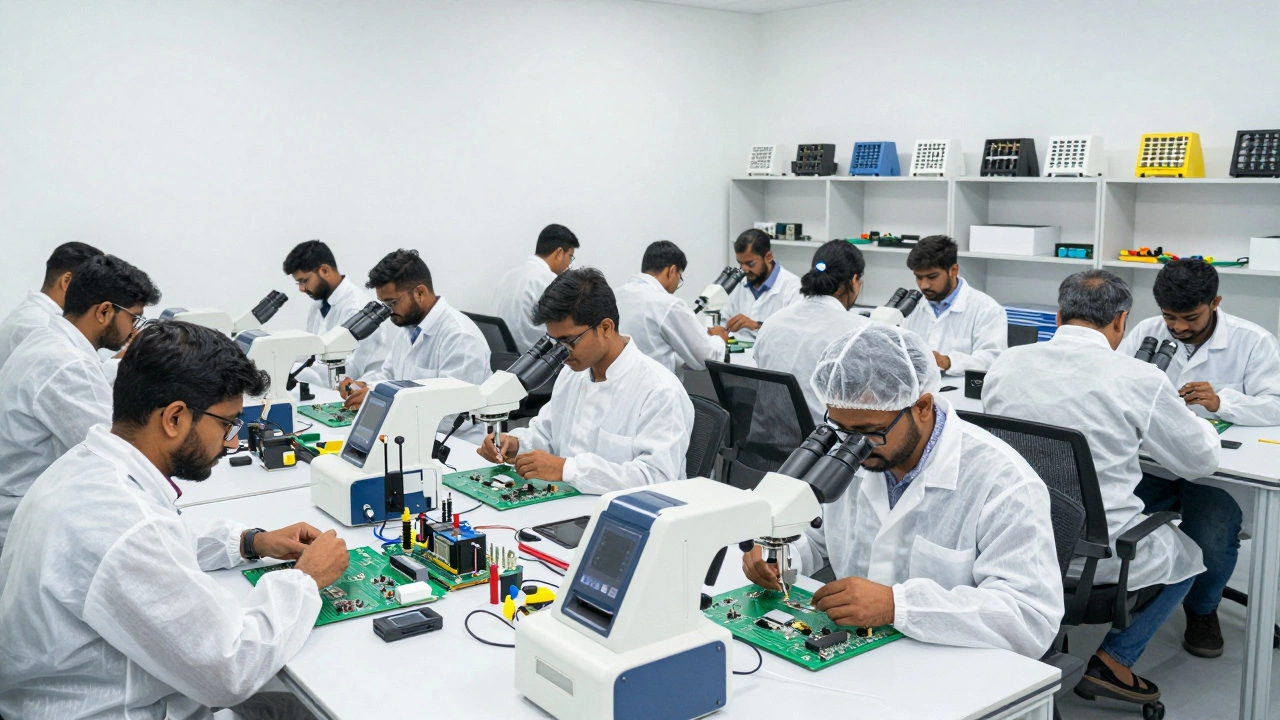
Electronics Assembly: A startup creating custom IoT sensors might assemble boards in a cleanroom workspace with twenty technicians. They use pick-and-place machines but handle final testing manually. This allows them to iterate designs rapidly for clients in healthcare or agriculture. A large electronics manufacturer would only take such an order if the volume justified retooling entire assembly lines.
Advantages and Challenges
Why choose small-scale production? The biggest benefit is adaptability. You can test new ideas without sinking millions into tooling. You can build personal relationships with suppliers and customers. You also tend to have lower overhead costs-no massive facilities to heat or cool, no complex HR departments to manage.
However, the challenges are real. Economies of scale work against you. Buying raw materials in bulk is cheaper for giants, so your cost per unit is higher. Access to capital can be difficult; banks often view small manufacturers as risky borrowers. Scaling up is tricky too. Growing from 10 to 50 employees requires completely different management skills and infrastructure.
Another hurdle is supply chain resilience. Large companies negotiate long-term contracts with logistics providers. Small producers often pay spot rates for shipping, which can spike during disruptions. Building reliable partnerships with local vendors becomes critical to mitigate this risk.
Government Support and Schemes
Recognizing the role small-scale producers play in job creation and innovation, many governments offer targeted support. In the UK, schemes like the Enterprise Investment Scheme (EIS) help raise capital. Grants for energy efficiency upgrades reduce operational costs. Training programs assist in upskilling workers for advanced manufacturing technologies.
In other regions, similar initiatives exist. For example, India’s Prime Minister’s Employment Generation Programme provides subsidies for setting up small units. The US Small Business Innovation Research (SBIR) program funds R&D for small tech manufacturers. Leveraging these resources requires understanding eligibility criteria and preparing detailed business plans.
If you’re considering entering this space, don’t overlook these safety nets. They can bridge the gap between startup phase and sustainable growth.
How to Get Started
Starting a small-scale production business begins with validation. Don’t buy machinery until you have pre-orders or clear demand signals. Create prototypes using existing services or shared workshops. Test your pricing model-ensure you cover material costs, labor, and overhead while remaining competitive.
Next, secure your workspace. Many cities now offer maker spaces or incubators designed for light manufacturing. These provide affordable rent, shared equipment, and networking opportunities. Finally, focus on branding. In small-scale production, your story matters. Customers buy into authenticity, quality, and ethical practices. Highlight these aspects in your marketing.
Is small-scale production profitable?
Yes, but profitability depends on niche positioning. Small-scale producers often achieve higher margins by targeting specialized markets willing to pay premium prices for customization or quality. However, volume sales are lower, so efficient cost control is essential.
What is the difference between cottage industry and small-scale manufacturing?
Cottage industries typically operate from homes with minimal equipment and family labor, often producing traditional crafts. Small-scale manufacturing uses dedicated workshops, some mechanization, and hired staff, bridging the gap between cottage work and industrial production.
Can small-scale producers compete with large factories?
Not on price or volume. They compete on speed, customization, quality, and sustainability. By focusing on segments where large players are too rigid or impersonal, small-scale producers carve out viable market positions.
What are common mistakes when starting small-scale production?
Over-investing in machinery before validating demand, underpricing products to ignore hidden costs, and neglecting legal compliance (permits, safety standards). Starting lean and scaling gradually reduces these risks.
How does technology impact small-scale manufacturing today?
Digital tools like CAD, 3D printing, and cloud-based ERP systems democratize capabilities once reserved for large firms. They enable rapid prototyping, precise inventory tracking, and remote collaboration, leveling the playing field significantly.