
Defined Processing Unit Checklist
Check if your processing unit is defined
This tool helps verify if your food processing unit meets all key criteria of a defined processing unit. Select the attributes that apply to your unit.
Check the results below to see if your unit meets the definition of a defined processing unit.
When you hear the term defined processing unit, it might sound like technical jargon-but in food manufacturing, it’s one of the most important concepts keeping your pantry stocked and your meals safe. A defined processing unit isn’t just a machine. It’s a carefully designed, standardized section of a food production line that performs one specific task, with clear inputs, outputs, and control parameters. Think of it like a single step in a recipe, but automated, measured, and repeatable-every single time.
What Exactly Is a Defined Processing Unit?
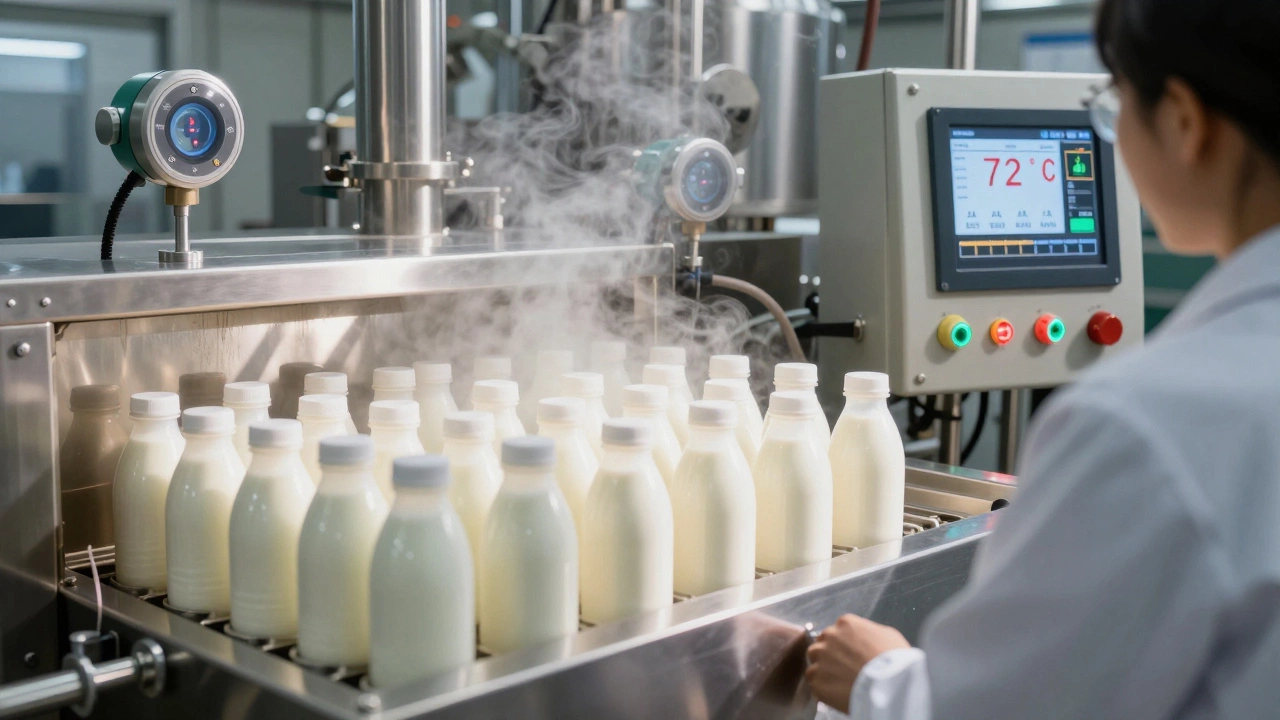
A defined processing unit is a self-contained part of a food processing system that carries out a single, well-defined operation. It has fixed boundaries: what goes in, what comes out, how long it takes, and what conditions it operates under. For example, a pasteurization tunnel that heats milk to 72°C for 15 seconds is a defined processing unit. So is a filler that dispenses exactly 500ml of juice into each bottle, or a metal detector that rejects any product with trace metal above 0.5mm.
These units aren’t random machines. They’re engineered with strict specifications. Every defined processing unit has documented parameters: temperature, pressure, speed, flow rate, dwell time, and quality thresholds. If any of these values drift outside the set range, the unit either stops automatically or flags the batch for review. That’s how food safety and consistency are maintained at scale.
Why Defined Processing Units Matter in Food Production
Without defined processing units, food manufacturing would be chaotic. Imagine a line where one operator sprays disinfectant by hand, another guesses how long to cook chicken, and a third fills jars without measuring. You’d get inconsistent products, safety risks, and recalls. Defined units fix that.
They’re the backbone of HACCP (Hazard Analysis and Critical Control Points) systems-the global standard for food safety. Each critical control point in HACCP maps directly to a defined processing unit. For example:
- Thermal processing → defined unit with temperature and time controls
- Cleaning-in-place (CIP) → defined unit with chemical concentration and flow rate
- Packaging seal verification → defined unit with pressure and heat settings
Regulators like the FDA and EFSA don’t just inspect final products-they audit whether each processing unit is operating within its defined parameters. If you can’t prove your unit’s settings are controlled and monitored, your facility fails inspection.
How Defined Processing Units Work in Real Food Lines
Let’s walk through a simple example: a ready-to-eat meal production line.
- Receiving and inspection unit: Raw ingredients are weighed, scanned for contaminants, and logged. Only approved batches move forward.
- Washing and peeling unit: Vegetables pass through rotating brushes and high-pressure sprays. Water flow, pressure, and duration are fixed.
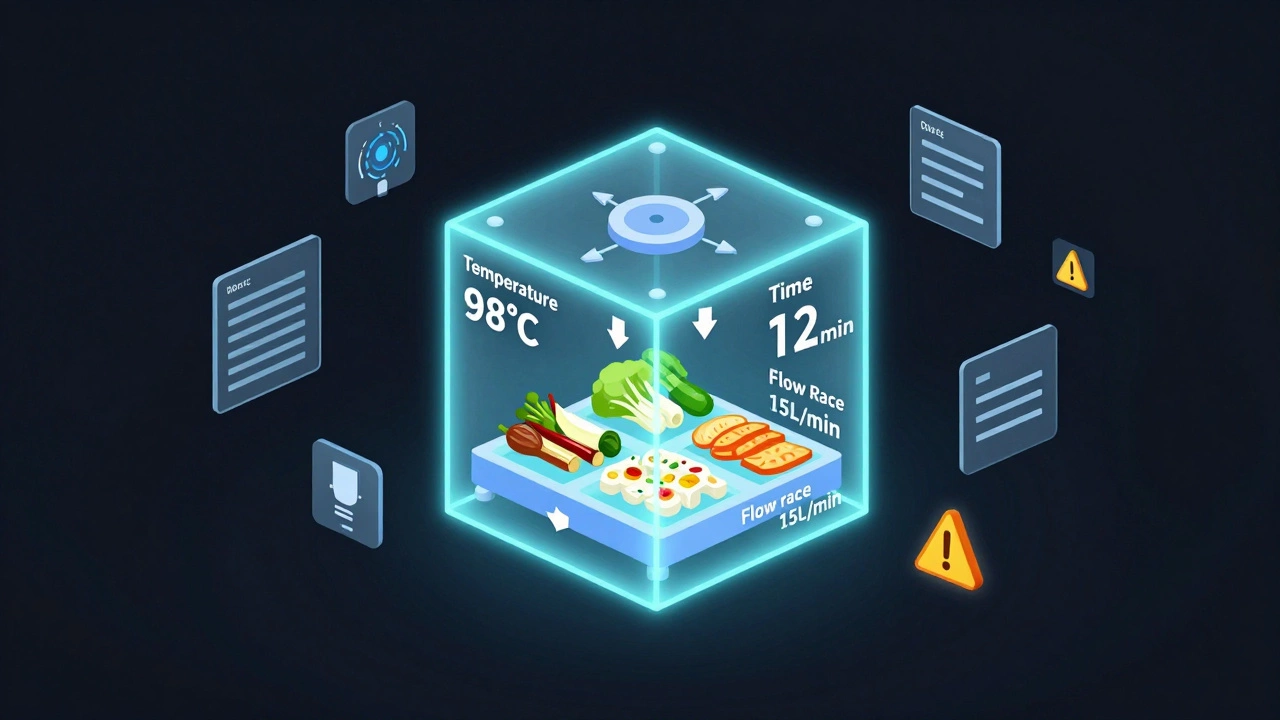
- Cooking unit: Steam-cooked in a tunnel at 98°C for 12 minutes. Sensors track core temperature of each tray.
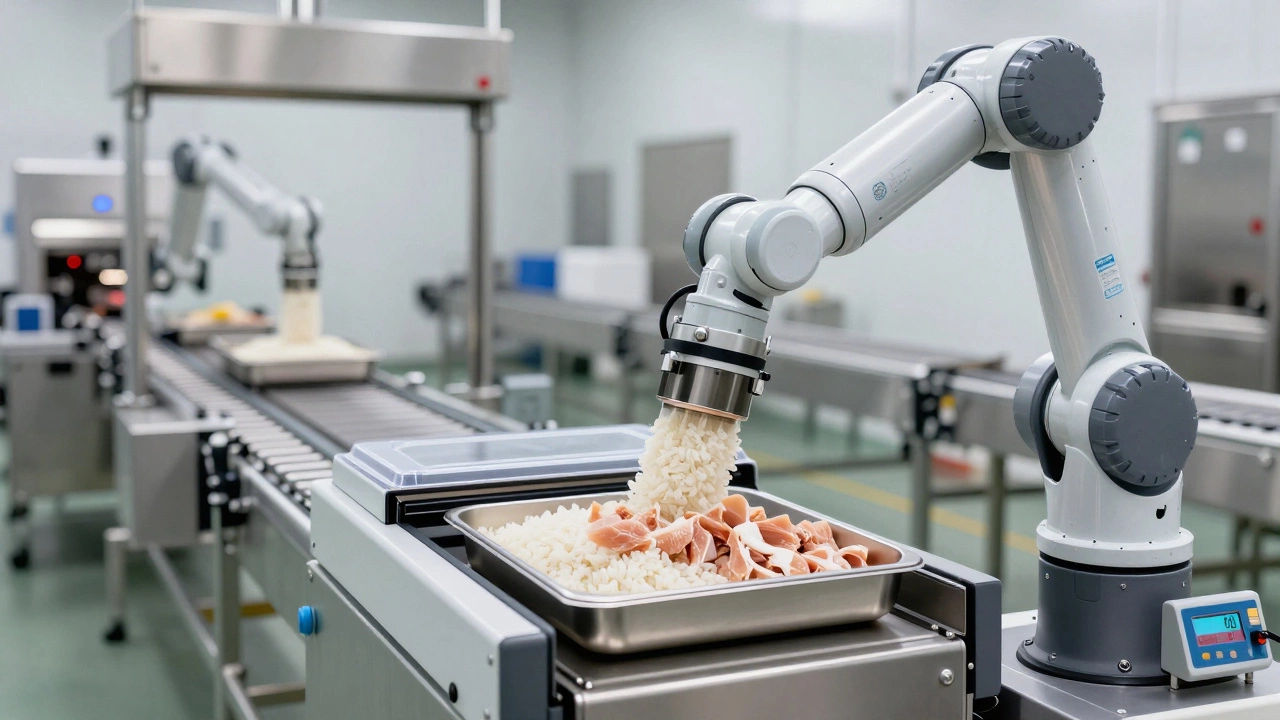
- Portioning unit: A robotic arm dispenses exactly 250g of rice and 180g of chicken into each tray.
- Sealing unit: Heat-seals the tray with a vacuum level of -0.8 bar. Any seal below -0.6 bar triggers rejection.
- Metal detection unit: Scans each sealed tray. If metal is detected above 0.3mm, the unit pushes the tray into a reject bin.
- Labeling and coding unit: Prints batch number, expiry date, and barcode. Each label must be scanned and matched to the batch record.
Each of these is a defined processing unit. They don’t improvise. They don’t rely on human judgment. They follow programmed rules. And they all communicate with a central control system that logs every action.
Key Attributes of a Defined Processing Unit
Not every machine is a defined processing unit. Here’s what makes one:
- Single function: Does one thing and does it well. No multitasking.
- Controlled inputs: Inputs (material, water, power, air) are measured and regulated.
- Measured outputs: Output quality (weight, temperature, pH, seal strength) is monitored in real time.
- Defined parameters: Every variable has a documented range (e.g., “temperature: 70-75°C”).
- Automated feedback: If output falls outside specs, the unit alerts or stops.
- Traceable data: All operations are logged with timestamps and operator IDs.
Compare that to a manual mixing bowl. No sensors. No logs. No controls. That’s not a defined processing unit. It’s a tool. The difference is the level of control and documentation.
How Defined Units Improve Efficiency and Compliance
Companies that use defined processing units don’t just meet regulations-they outperform competitors.
Take a UK-based sauce manufacturer. Before implementing defined units, they had 12% product waste due to inconsistent cooking and overfilling. After installing automated cooking and filling units with real-time feedback, waste dropped to 3%. They also reduced batch testing by 60% because every unit’s output was guaranteed within specs.
For small producers, defined units mean faster certification. A local jam maker in Manchester upgraded from manual filling to a defined filling unit with weight sensors and automated labeling. Within six months, they passed their BRCGS audit on the first try-something they’d failed twice before.
Defined units also make scaling easier. Add one more filling line? Just replicate the unit. Don’t retrain staff. Don’t rewrite procedures. Just plug it in.
Common Misconceptions About Defined Processing Units
Many think a defined processing unit is just expensive automation. That’s not true.
Some small producers believe they can skip defined units because they’re “too small.” But even a tiny bakery using an oven with a timer and thermostat is using a defined processing unit. The scale doesn’t matter-control does.
Others assume it’s all about machines. But human roles still matter. Operators must be trained to read alarms, log deviations, and follow cleaning procedures. A defined unit without trained staff is just a fancy brick.
And no, you don’t need AI or IoT to have defined units. Simple mechanical controls, timers, and sensors are enough. The key is documentation and consistency-not fancy tech.
How to Identify or Design a Defined Processing Unit
If you’re setting up a food line, here’s how to define your units:
- Map the process: Write down every step from raw material to finished product.
- Break it into tasks: Each task becomes a potential unit. Don’t combine steps.
- Define the critical parameters: What must be controlled? Temperature? Time? Weight? Flow? Pressure?
- Set acceptable ranges: What’s the minimum and maximum for each parameter?
- Choose the right equipment: Pick machines that can monitor and control those parameters.
- Document everything: Write a procedure, include calibration schedules, and assign responsibility.
- Test and validate: Run trials. Log results. Adjust until you hit consistency.
Don’t wait for an audit to find out you’re missing defined units. Start by reviewing your most common failures-recalls, rework, customer complaints. Those are your clues.
What Happens When Units Aren’t Defined?
When processing isn’t defined, problems cascade.
One dairy plant in Wales had a recurring issue: sour milk in sealed cartons. They couldn’t figure out why. After investigation, they found the pasteurization unit had no temperature logger. The operator was guessing the time based on the clock. One day, the boiler was slow. The milk only hit 68°C instead of 72°C. Bacteria survived. 14,000 cartons were recalled.
Another bakery had inconsistent loaf weights. They blamed the flour. Turns out, the scale hadn’t been calibrated in 18 months. No one checked. No one logged it. No defined unit. Just hope.
These aren’t rare cases. They’re common. And they’re preventable.
Final Thoughts: Defined Units Are the Foundation
A defined processing unit isn’t a luxury. It’s the baseline for safe, reliable food production. Whether you’re making snacks in a factory or jam in a kitchen, if you’re not controlling and documenting each step, you’re gambling with safety, compliance, and reputation.
Start small. Define one unit. Document it. Validate it. Then move to the next. Over time, your entire line becomes predictable, efficient, and audit-ready. That’s not just good manufacturing. It’s good business.
What is the difference between a processing unit and a machine?
A machine is any device that performs a physical task-like a mixer or a conveyor belt. A defined processing unit is a machine that’s been given strict rules: what goes in, what comes out, and how it’s monitored. Not every machine is a defined processing unit. Only those with documented, controlled parameters and feedback systems qualify.
Do small food businesses need defined processing units?
Yes. Even a home-based jam maker using a thermometer to ensure boiling point is reached is using a defined processing unit. Size doesn’t matter-control does. Regulators look at whether your process is repeatable and safe, not how big your facility is.
Can defined processing units be manual?
They can, but they’re less reliable. A manual unit might involve an operator checking temperature with a handheld probe and recording it. While it’s still a defined unit if parameters are documented and followed, it’s more prone to human error. Automated units with sensors and alarms are preferred for safety-critical steps.
How do defined processing units help with food safety?
They eliminate guesswork. By setting exact parameters for cooking, cooling, cleaning, and packaging, they prevent conditions where harmful bacteria can grow. If a unit’s temperature drops below the safe level, it stops or flags the batch-before it reaches consumers.
What happens if a defined processing unit fails?
It should trigger an automatic response: stopping the line, alerting staff, or diverting product to a quarantine area. All failures must be logged and investigated. The goal isn’t to punish mistakes-it’s to fix the system so the same error doesn’t happen again.
Are defined processing units required by law?
Not every unit is legally required, but under food safety standards like HACCP, ISO 22000, and BRCGS, you must identify and control critical points in your process. These critical points must be defined processing units. If you can’t prove you’re controlling them, you’re not compliant-and you risk shutdowns or recalls.