
Total Cost of Ownership Calculator
Calculate Your Car Ownership Costs
Fuel Costs
$0.00/year
Maintenance Costs
$0.00/year
Resale Value
$0.00
Total Cost of Ownership
$0.00
How Your Car Compares
Japanese Brands
Average 5-year cost: $0.00
Avg. maintenance: $0.00/year
German Brands
Average 5-year cost: $0.00
Avg. maintenance: $0.00/year
American Brands
Average 5-year cost: $0.00
Avg. maintenance: $0.00/year
Why Japanese cars win: They have the lowest maintenance costs (often $1,000-$1,500 less per year than German or American brands), highest resale value, and best fuel efficiency among major car categories. Based on industry data from J.D. Power and Consumer Reports.
When you think of reliable, fuel-efficient cars, chances are you’re thinking of Japanese brands. Japan doesn’t just make cars-it dominates global sales with a reputation for durability, smart engineering, and value. But which car brands actually come from Japan? And why do so many people around the world choose them?
Toyota: The world’s biggest carmaker
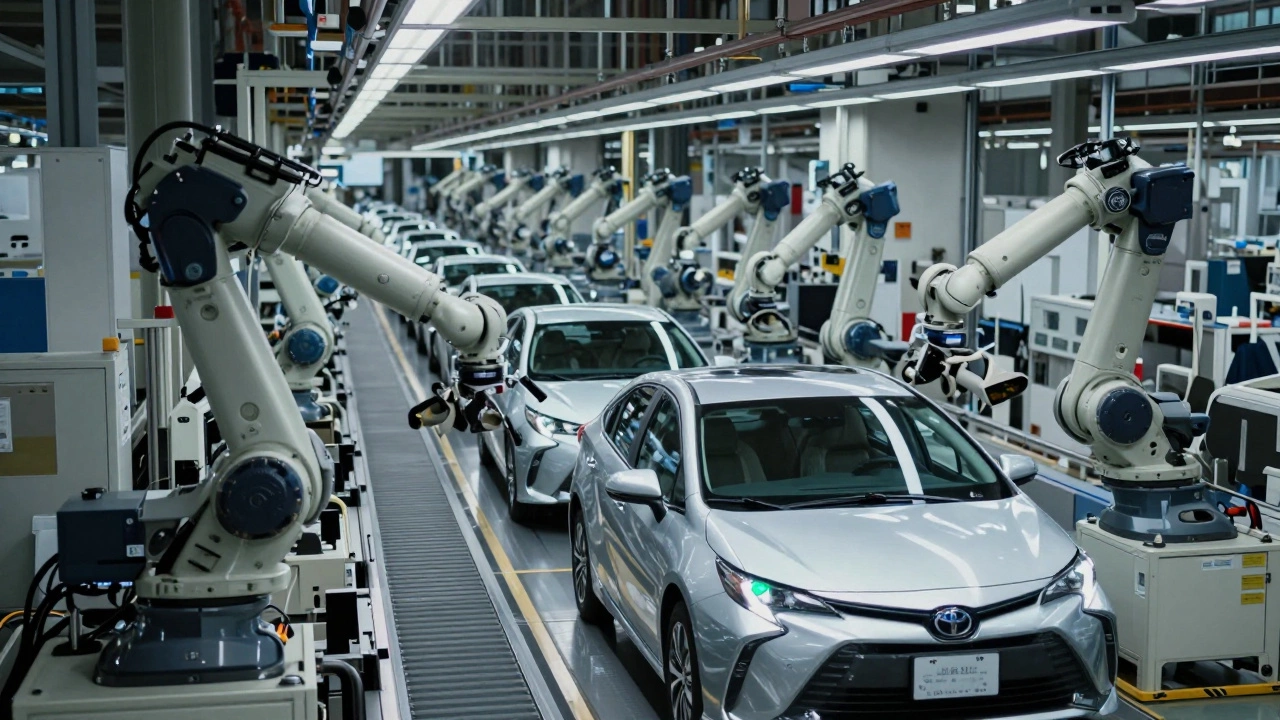
Toyota is the largest car manufacturer in the world by volume. Headquartered in Toyota City, Japan, it started as a textile machine company in 1933 before shifting to automobiles. Today, it sells over 10 million vehicles every year across more than 170 countries. Models like the Corolla, Camry, and RAV4 are household names. The Prius, launched in 1997, was the world’s first mass-produced hybrid car and helped set the standard for eco-friendly driving.
Toyota’s success isn’t luck. It’s built on the Toyota Production System, a method focused on reducing waste and improving quality at every step. This system is studied by factories worldwide-not just in cars, but in everything from hospitals to software development.
Honda: Engineering with simplicity
Honda, founded by Soichiro Honda in 1948, began as a motorcycle maker. It quickly moved into cars with the S500 in 1963. Today, Honda builds everything from compact city cars like the Fit to powerful sports cars like the NSX. Its Civics and Accords are among the most reliable vehicles ever made, often lasting over 200,000 miles with basic maintenance.
Honda’s engines are legendary. The K20 engine, used in the Civic Type R and other models, is known for high-revving performance and durability. Even in motorcycles and power equipment, Honda’s reputation for reliability carries over. Many mechanics say if a Honda breaks down, it’s usually because it was neglected-not because of a design flaw.
Nissan: Innovation with a bold streak
Nissan, founded in 1933, is Japan’s third-largest carmaker. It’s known for pushing boundaries. The GT-R, nicknamed "Godzilla," is a performance beast that outpaces far more expensive European sports cars. The Leaf, introduced in 2010, was the world’s first mass-market all-electric vehicle and still ranks among the best-selling EVs globally.
Nissan’s alliance with Renault and Mitsubishi gives it global reach, but its Japanese roots remain strong. The company’s design language-sharp lines, bold grilles, and driver-focused cockpits-is instantly recognizable. Nissan’s ProPilot Assist, a semi-autonomous driving system, is one of the most mature driver-assist technologies on the market today.
Subaru: Built for the tough stuff
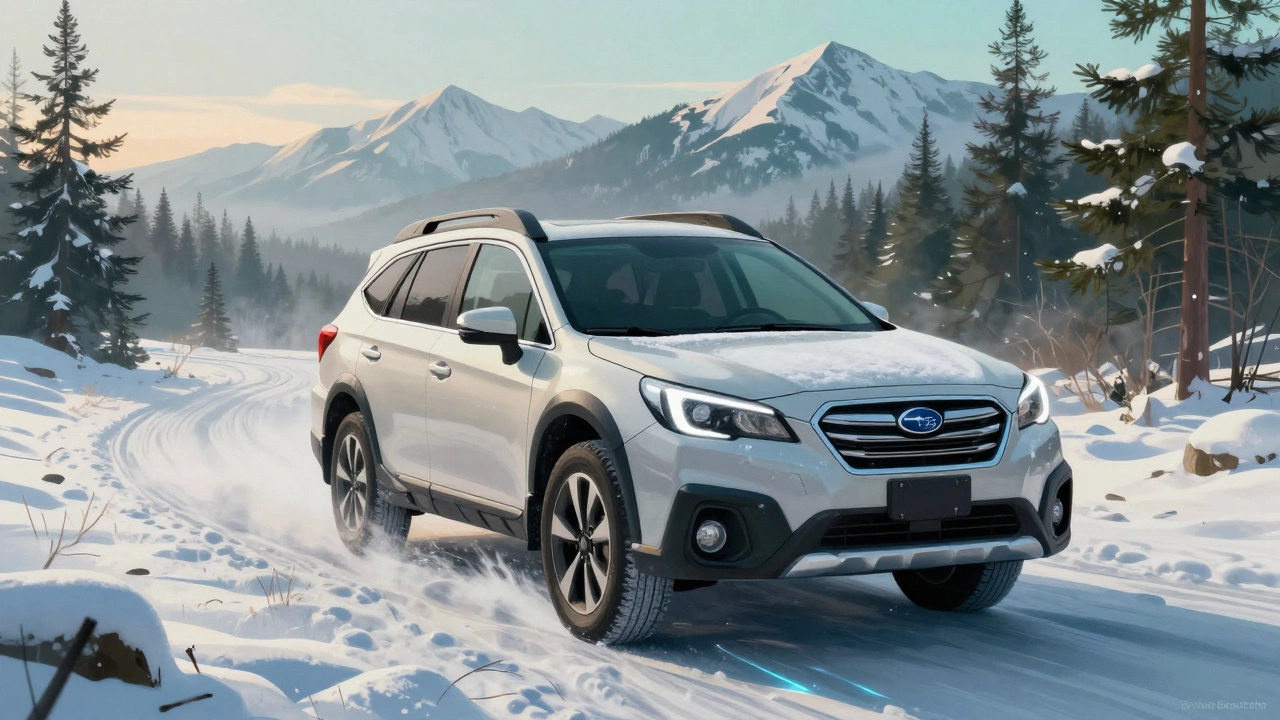
Subaru is smaller than Toyota or Honda, but it has a fiercely loyal following. Based in Osaka, Subaru is famous for its symmetrical all-wheel drive system and boxer engines. These features make Subarus ideal for snowy climates and rough roads. The Outback and Forester are top sellers in North America and Europe, especially among outdoor enthusiasts.
Unlike most brands, Subaru builds its own engines and transmissions in-house. Its boxer engines sit flat, lowering the center of gravity for better handling. The company also has one of the lowest recall rates in the industry. According to Consumer Reports, Subaru models consistently rank among the most dependable vehicles over 10 years of ownership.
Mazda: The driving enthusiast’s choice
Mazda, founded in 1920, doesn’t chase volume. It chases driving joy. The MX-5 Miata, launched in 1989, is the best-selling roadster of all time. Mazda’s SKYACTIV technology-lightweight materials, high-compression engines, and precise transmissions-makes even small cars like the Mazda3 feel engaging to drive.
Mazda’s design philosophy, called "Jinba Ittai," means "horse and rider as one." It’s about making the car feel like an extension of the driver. The company also pioneered the use of Skyactiv-D diesel engines that meet strict emissions standards without needing complex after-treatment systems. In 2025, Mazda’s CX-50 and CX-60 are among the few new SUVs that still offer manual transmissions.
Mitsubishi: The quiet contender
Mitsubishi isn’t as visible in Europe or North America as it once was, but it’s still a major Japanese automaker. Founded in 1917, it’s known for rugged vehicles like the Pajero (Montero in the U.S.) and the Lancer Evolution, a rally-bred sedan that became a cult favorite in the 1990s and 2000s.
Today, Mitsubishi focuses on practical, affordable models like the Outlander and Eclipse Cross. It’s also a leader in electric mobility in Southeast Asia, where its i-MiEV was one of the first EVs sold in the region. While it doesn’t compete with Toyota on scale, Mitsubishi’s engineering legacy in four-wheel-drive systems and hybrid tech remains influential.
Why Japanese cars dominate global markets
Japan’s car industry didn’t get big by accident. After World War II, the country focused on rebuilding its economy through exports. Japanese automakers adopted lean manufacturing, strict quality control, and long-term customer loyalty over short-term profits.
Unlike some European brands that prioritize luxury or performance, or American brands that focus on size and power, Japanese cars are designed for real-world use. They’re built to last, cost less to maintain, and hold their value better. A 2018 study by iSeeCars found that 2.8% of Toyota Camrys and 2.3% of Honda Accords reach 200,000 miles-far higher than the industry average of 0.9%.
Japanese brands also adapt quickly. When electric vehicles became a priority, Toyota invested billions in hybrids before going all-in on battery tech. Honda partnered with Sony to develop EVs. Nissan led the EV race with the Leaf. Even smaller players like Subaru and Mazda are rolling out electric models by 2026.
Japanese cars vs. others: What sets them apart
| Feature | Japanese Brands | German Brands | American Brands |
|---|---|---|---|
| Reliability (10-year ownership) | High | Moderate | Moderate to Low |
| Resale value | Very High | High | Low to Moderate |
| Maintenance cost (avg. over 5 years) | $5,000-$7,000 | $10,000-$15,000 | $8,000-$12,000 |
| Fuel efficiency (avg. MPG) | 32-40 | 25-35 | 20-28 |
| Hybrid/EV adoption rate | High | Moderate | Low to Moderate |
Japanese cars win in long-term cost of ownership. You pay less upfront than a BMW or Mercedes, and you save even more over time. A 2024 J.D. Power study showed that Japanese brands had the lowest rate of problems per 100 vehicles in the first three years of ownership.
What’s next for Japanese car brands?
By 2030, Japan plans to phase out new gasoline-only vehicles. Toyota is investing $70 billion in electrification. Honda and Nissan are forming joint ventures to build affordable EV batteries. Subaru is working on a new EV platform with Toyota. Mazda is betting on hydrogen engines as a long-term solution.
Even as global markets shift, Japanese automakers stay true to their core strengths: simplicity, durability, and smart engineering. They don’t chase trends-they define them.
Are all Japanese cars made in Japan?
No. Most Japanese brands build cars in multiple countries, including the U.S., Canada, the UK, Thailand, and Brazil. For example, Toyota makes the Camry in Kentucky, Honda builds the Accord in Ohio, and Nissan produces the Rogue in Tennessee. But the design, engineering, and quality standards are still controlled from Japan.
Which Japanese car brand is the most reliable?
According to Consumer Reports’ 2025 reliability rankings, Lexus (Toyota’s luxury division) ranks #1, followed closely by Toyota and Mazda. Honda and Subaru are also in the top five. Reliability is measured by how often vehicles need repairs over three years, and Japanese brands consistently outperform others in this area.
Do Japanese cars cost more to repair?
Generally, no. Japanese cars have lower repair costs because parts are widely available and mechanics are trained to work on them. A 2024 RepairPal study found that the average annual repair cost for a Toyota is $441, compared to $652 for a BMW and $715 for a Ford. Even luxury Japanese brands like Lexus cost less to maintain than German rivals.
Are Japanese electric cars any good?
Yes. The Nissan Leaf has sold over 500,000 units globally since 2010. Toyota’s bZ4X and Honda’s Prologue are competitive in range and features. While Tesla and Chinese EVs lead in innovation, Japanese brands focus on practicality, battery longevity, and ease of use. Many Japanese EVs offer 8-year/100,000-mile battery warranties.
Why are Japanese cars popular in India?
Japanese cars dominate India’s passenger vehicle market because they’re affordable, fuel-efficient, and easy to service. Maruti Suzuki, a joint venture between India’s Maruti and Japan’s Suzuki, sells over half of all new cars in India. Toyota, Honda, and Hyundai (though Korean, often grouped with Japanese brands in India) also lead in sales. Their small cars like the Alto, Wagon R, and Swift are built for Indian roads and traffic.
Final thought: It’s not just about where they’re made
Japanese car brands aren’t popular because they’re from Japan. They’re popular because they solve real problems. They don’t overcomplicate things. They don’t promise more than they deliver. And they keep getting better without losing what made them great in the first place.
If you’re looking for a car that won’t leave you stranded, won’t break the bank at the mechanic, and will still run well in ten years-Japanese brands are still the safest bet.