
Manufacturing Profitability & ROI Estimator
Most people think starting a factory requires a billion dollars and a plot of land the size of a small city. But that is a myth. The real money in today's market isn't necessarily in the biggest plants, but in the smartest niches. If you are looking for the profitable manufacturing business of the decade, you have to stop looking at what was popular ten years ago and start looking at where the supply chain is currently breaking.
Key Takeaways for Aspiring Manufacturers
- High-margin profitability usually comes from specialized, low-volume production (niche) rather than mass-market commodities.
- Sustainability and "green" materials are no longer just trends; they are the primary drivers of premium pricing in 2026.
- The most successful startups combine hardware production with a subscription-based service or a strong direct-to-consumer brand.
- Automation and 3D printing have lowered the entry barrier for specialized electronics and medical device prototyping.
The Shift Toward Specialized High-Margin Production
If you want to maximize profit, you need to move away from "commodity manufacturing." A commodity is something where the only way to win is to be the cheapest-think plastic straws or basic nails. In those businesses, your margins are razor-thin, and one mistake in raw material pricing can wipe out your yearly profit.
The real gold mine is in Specialty Manufacturing, which is the production of high-value, low-volume goods tailored to specific professional or industrial needs. Instead of making a million generic chairs, you make five hundred ergonomic workstations for surgeons. The volume is lower, but the price per unit skyrockets because you are solving a specific, high-stakes problem.
Pharmaceuticals and Specialized Healthcare Gear
Few sectors offer the profit margins seen in Pharmaceutical Manufacturing. This isn't just about making pills; it's about the high-value chemistry involved in biologics and personalized medicine. Because these products are often patented and essential for life, the pricing power is immense.
If you aren't ready to build a full-scale lab, look at medical device components. Think about the specialized valves used in dialysis machines or custom orthopedic implants. These items are small, but because they must meet strict regulatory standards, you can charge a premium for the certification and quality control. A company producing specialized surgical stents, for instance, can see gross margins exceeding 70% because the value is in the precision, not the material cost.
The Green Revolution: Sustainable Materials
We are seeing a massive shift away from traditional Plastic Manufacturing. While plastic is still everywhere, the profitability has shifted to biodegradable alternatives. Companies that produce mycelium-based packaging (made from fungi) or seaweed-based plastics are capturing the high-end market. Large brands are desperate to hit their 2030 carbon goals and are willing to pay 20-30% more for sustainable packaging to avoid "plastic taxes" and consumer backlash.
Consider the rise of recycled textile production. Instead of weaving new polyester, manufacturers are now creating high-performance fabrics from ocean plastic. This isn't just a feel-good project; it's a business model where the raw material is often subsidized or cheaper, but the end product sells for a luxury price tag because of its "circular economy" credentials.
| Industry Sector | Typical Margin | Entry Cost | Growth Potential |
|---|---|---|---|
| Medical Devices | High (60-80%) | High | Very High |
| Eco-Packaging | Medium-High (30-50%) | Medium | Explosive |
| Custom Electronics | Medium (20-40%) | Medium | Steady |
| Mass-Market Textiles | Low (5-15%) | High | Stagnant |

Electronics and the IoT Boom
You don't need to compete with giant factories in Shenzhen to make money in Electronics Manufacturing. The real profit now lies in IoT (Internet of Things) hardware development. This involves creating the physical shells and circuit boards for smart devices that serve a specific industry, like sensors for smart farming or wearable health monitors for the elderly.
The trick here is to focus on the "Edge Computing" hardware. Instead of making a general-purpose tablet, make a ruggedized handheld device for warehouse managers. By narrowing your target audience, you reduce your marketing spend and increase your price point. Many of these startups use a "hardware-as-a-service" (HaaS) model, where they sell the device at cost but charge a monthly subscription for the software that runs on it, creating a recurring revenue stream that traditional manufacturing lacks.
Food Processing and Functional Nutrition
Traditional Food Processing is often a race to the bottom on price. However, "functional foods"-foods that offer health benefits beyond basic nutrition-are seeing a surge in profitability. This includes plant-based protein alternatives, probiotic-infused snacks, and personalized nutrition kits.
For example, a company manufacturing lab-grown meat or precision-fermented proteins can charge a significant premium over traditional livestock. The profit comes from the technology (IP) rather than the volume of calories produced. If you can create a stable, tasty alternative to a common allergen (like a nut-free, high-protein flour), you've created a moat around your business that generic food processors cannot cross.

Choosing the Right Scale: Small vs. Large
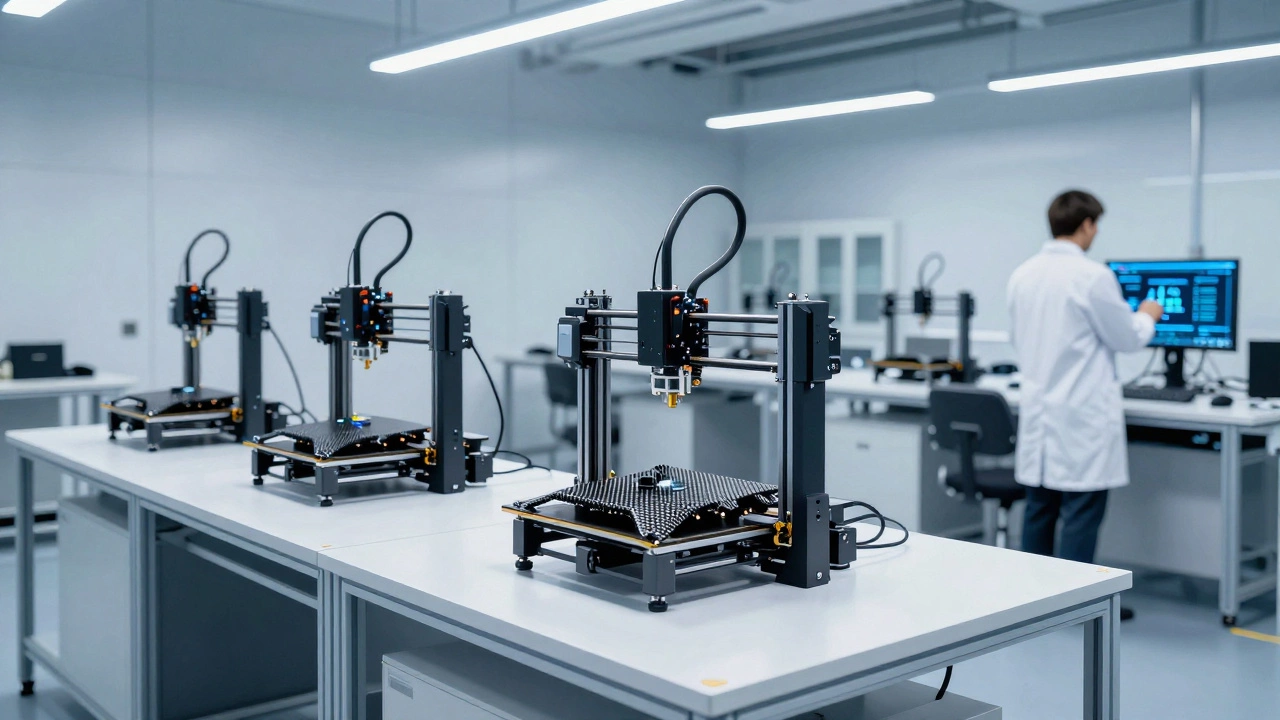
A common mistake is thinking you need a massive facility to be profitable. Small Scale Manufacturing is often more profitable on a percentage basis because it avoids the massive overhead of giant industrial plants. With the rise of additive manufacturing (3D printing), you can now produce complex metal or polymer parts that used to require a million-dollar casting machine.
If you are starting out, look for "micro-factories." These are highly automated, small-footprint spaces that focus on a single product line. By keeping your fixed costs low and using just-in-time inventory, you can pivot your product quickly if the market changes. A micro-factory producing custom carbon-fiber bike frames, for instance, can operate out of a small warehouse but generate more profit per square foot than a textile mill.
Common Pitfalls That Kill Manufacturing Profits
The biggest profit killer isn't a lack of sales; it's "hidden waste." This usually manifests as inefficient energy use, high scrap rates, or poor inventory management. Many new owners focus on the sales price but forget to calculate the total cost of ownership for their machinery. If a machine has a low purchase price but requires expensive proprietary parts and constant downtime for repairs, it will eat your margins alive.
Another danger is over-reliance on a single raw material supplier. In the current global climate, supply chain volatility is the number one risk. A 20% spike in the price of resin or steel can turn a profitable month into a loss. To protect your margins, you must diversify your sources or move toward vertical integration-where you control more of the production process yourself.
Which manufacturing business has the fastest ROI?
Generally, small-scale electronics assembly or specialized eco-packaging startups offer the fastest return on investment. This is because they require less heavy machinery and have shorter product development cycles compared to pharmaceuticals or steel manufacturing.
Is 3D printing actually profitable for a business?
Yes, but not for mass production. 3D printing is highly profitable for rapid prototyping, custom medical implants, and low-volume aerospace parts. It becomes unprofitable when you try to use it for items that could be made cheaper via injection molding.
How do I find a profitable niche?
Look for "pain points" in other industries. If you see engineers complaining that a certain part takes six weeks to arrive from overseas, that's your niche. Solve a delivery or quality problem for a professional B2B client, and you can usually charge a premium.
Do I need a lot of capital to start a manufacturing business in 2026?
Not necessarily. Many modern entrepreneurs start with "contract manufacturing," where they design the product and pay an existing factory to build it. Once they prove the market and generate cash flow, they invest in their own equipment to bring production in-house and increase margins.
Which is better: B2B or B2C manufacturing?
B2B (Business-to-Business) manufacturing is generally more stable and offers higher volume contracts. B2C (Business-to-Consumer) allows for higher brand-driven margins but requires much more spending on marketing and dealing with a larger number of small customers.
Next Steps for Your Startup Journey
If you are ready to start, don't buy a single machine yet. First, conduct a "pre-sale" phase. Create a prototype, show it to potential B2B clients, and get a letter of intent (LOI) or a pre-order. This proves there is a demand before you commit to the overhead of a physical plant.
Next, research local government grants for sustainable manufacturing. Many regions now offer tax breaks or direct funding for businesses that use green energy or recycle industrial waste. This can effectively lower your entry cost by 20-30%, giving you a huge head start on your competitors.