
Manufacturing Economic Impact Estimator
Enter the number of direct workers at a new manufacturing plant to estimate its total economic impact on the local community.
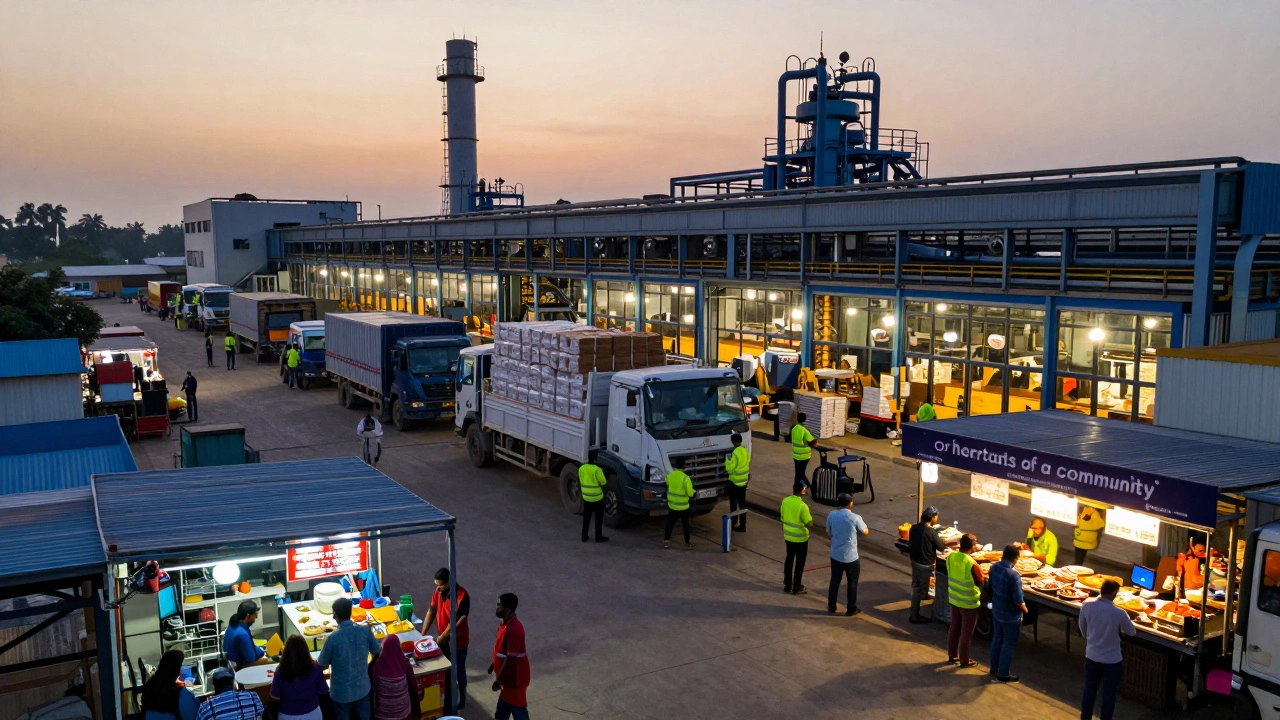
You walk past a factory at dawn. The lights are on, the trucks are loading, and hundreds of people are clocking in. Now imagine that same building dark and silent. What happens to the town? The local diner loses customers. The housing market cools. The tax base shrinks. This is not just about machines; it is about the heartbeat of a community. When we ask if manufacturing is good for the economy, we are really asking if physical production creates stability, wealth, and opportunity for ordinary people.
The short answer is yes, but with caveats. Manufacturing drives economic growth through job creation, innovation spillovers, and export earnings. However, its impact depends heavily on how governments support the sector through targeted schemes and infrastructure investment. In 2026, as global supply chains restructure and automation accelerates, understanding this relationship is more critical than ever.
Quick Takeaways: Why Manufacturing Matters
- Manufacturing generates higher productivity growth than most service sectors, driving overall GDP expansion.
- Government schemes like Production Linked Incentives (PLI) directly boost domestic capacity and reduce import dependency.
- Every direct manufacturing job supports approximately 1.5-2 indirect jobs in logistics, services, and retail.
- Modern manufacturing focuses on high-value electronics, pharmaceuticals, and green technology rather than low-cost labor.
The Multiplier Effect: How One Factory Feeds an Entire Town
Let’s look at the numbers without the jargon. When a company builds a plant, it doesn’t just hire workers. It buys steel from one supplier, packaging from another, and maintenance services from a third. Those suppliers then pay their employees, who spend money at local stores. Economists call this the "multiplier effect," and in manufacturing, it is particularly strong.
A study by the World Bank found that manufacturing-intensive regions experience 20-30% faster poverty reduction compared to agrarian or pure service-based economies. Why? Because manufacturing wages tend to be higher and more stable than informal sector work. A worker making components for automobiles earns a predictable salary that allows them to plan for education, healthcare, and housing. That predictability ripples outward.
Consider the automobile industry. For every person assembling cars, there are roughly two other people employed in parts manufacturing, logistics, and dealership services. If you add the engineers designing the vehicles and the technicians maintaining the assembly lines, the ratio climbs even higher. This network of interdependence makes manufacturing a powerful engine for broad-based employment.
But here is where it gets interesting. Not all manufacturing is created equal. Low-skill assembly plants may offer fewer long-term career paths than high-tech facilities producing semiconductors or medical devices. The quality of jobs matters as much as the quantity.
Government Schemes: The Catalyst for Industrial Growth
Markets don’t always self-correct. Building factories requires massive upfront capital, skilled labor, and reliable infrastructure. Many private companies hesitate to invest without assurance that the environment will remain stable. This is where government schemes step in. These programs act as catalysts, reducing risk and accelerating adoption.
In recent years, countries across Asia and Europe have launched ambitious initiatives. India’s Production Linked Incentive (PLI) scheme, for example, offers cash incentives based on incremental sales of manufactured goods. The goal? To make domestic production competitive against imports while creating scale. Similarly, Germany’s Industry 4.0 strategy provides grants for digital transformation, helping traditional manufacturers adopt AI and robotics.
| Scheme Name | Country | Focus Area | Key Benefit |
|---|---|---|---|
| Production Linked Incentive (PLI) | India | Electronics, Pharma, Auto | Cash incentive on incremental sales |
| Industry 4.0 Grants | Germany | Digital Transformation | Funding for AI and IoT integration |
| CHIPS Act Subsidies | United States | Semiconductor Fabrication | Tax credits and R&D funding |
| Make in China 2025 | China | High-Tech Industries | State-backed loans and land allocation |
These schemes work best when they address specific bottlenecks. For instance, if power outages plague a region, a subsidy alone won’t help. You need grid upgrades alongside financial incentives. Successful policies combine hard infrastructure (roads, electricity, internet) with soft infrastructure (training centers, regulatory simplification).
Critics argue that such programs distort markets by favoring large corporations over small businesses. While valid, the counterargument is that scale often precedes inclusivity. Once major players establish ecosystems, smaller vendors naturally integrate into supply chains. The key is ensuring transparency and periodic review to prevent abuse.

Export Earnings and Trade Balance: Selling to the World
One of the clearest ways manufacturing boosts an economy is through exports. Unlike services, which can be consumed locally, manufactured goods travel. A smartphone made in Vietnam ends up in Brazil. Steel produced in Japan powers construction in Canada. Each sale brings foreign currency into the country, strengthening its trade balance.
Take South Korea as an example. In the 1970s, it was largely agrarian. Today, it ranks among the top ten exporters globally, driven by companies like Samsung and Hyundai. Their success wasn’t accidental. It resulted from decades of strategic investment in education, technology, and export-oriented manufacturing.
However, relying too heavily on exports carries risks. Global demand fluctuates. Tariffs rise during political tensions. Supply chain disruptions-like those seen during the pandemic-can halt production overnight. Diversification remains essential. Countries benefit most when they manufacture both for domestic consumption and international markets.
Moreover, the type of exports matters. Selling raw materials yields less value than selling finished products. A nation exporting crude oil gains far less per unit than one exporting refined gasoline or petrochemicals. Value addition through manufacturing increases profit margins and retains more wealth within borders.
Innovation Spillovers: Factories as Laboratories
Factories aren’t just places where things get assembled. They are testing grounds for new technologies. When automakers develop battery-efficient engines, those innovations eventually trickle down to consumer appliances. When textile mills experiment with sustainable dyes, environmental standards improve across industries.
This phenomenon, known as "innovation spillover," occurs because manufacturing forces practical problem-solving. Engineers must optimize processes, reduce waste, and enhance durability under real-world constraints. Solutions discovered in one sector often inspire breakthroughs elsewhere.
For instance, advancements in semiconductor fabrication have accelerated progress in artificial intelligence, renewable energy storage, and medical imaging. Without robust chip manufacturing capabilities, many modern technologies would stall. This interconnectedness highlights why investing in advanced manufacturing pays dividends beyond immediate output.
Additionally, manufacturing attracts talent. Skilled engineers, data scientists, and designers flock to hubs where cutting-edge projects unfold. Over time, these clusters become magnets for startups and research institutions, creating virtuous cycles of creativity and competitiveness.
Challenges: Automation, Sustainability, and Workforce Gaps
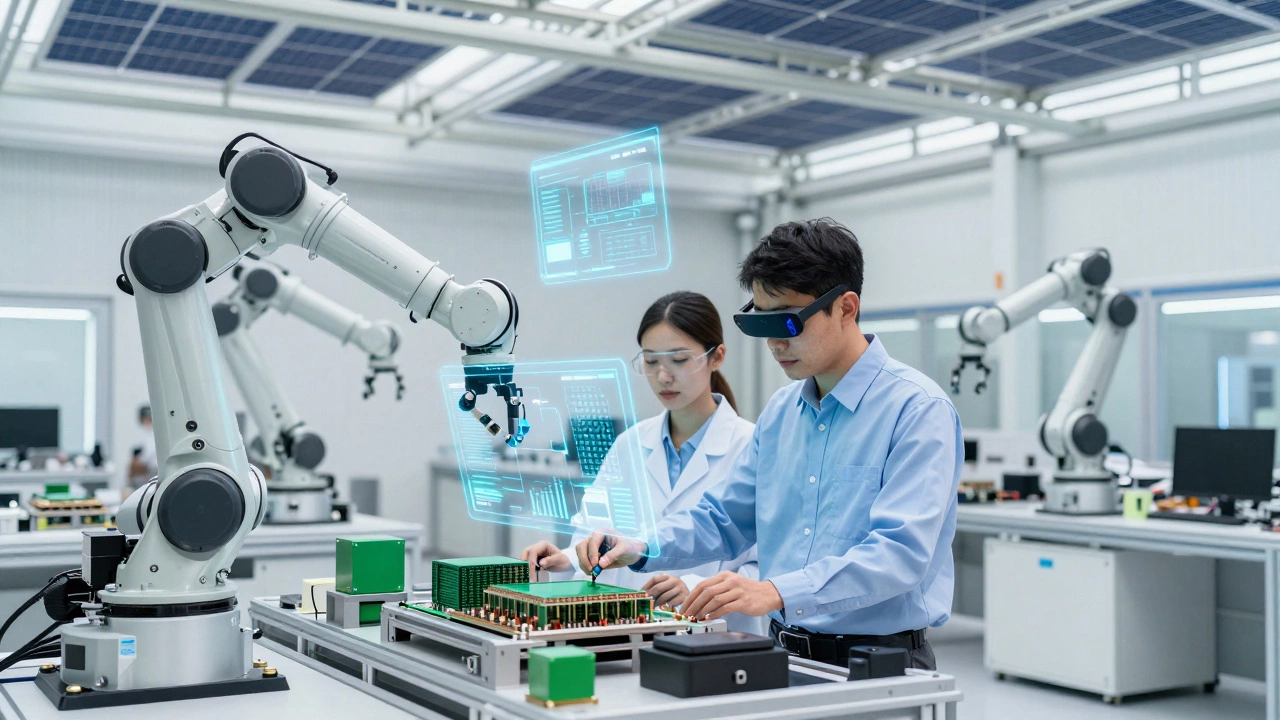
No discussion about manufacturing’s economic role would be complete without addressing challenges. First, automation threatens traditional jobs. Robots now perform tasks once done by humans-from welding car frames to sorting packages. While this boosts efficiency, it displaces workers lacking technical skills.
Second, sustainability concerns loom large. Traditional manufacturing consumes vast amounts of energy and water, emitting greenhouse gases and pollutants. Transitioning to green practices requires significant investment. Yet, failure to adapt invites regulatory penalties and reputational damage.
Third, workforce gaps persist. Many countries struggle to find qualified technicians capable of operating complex machinery. Vocational training systems often lag behind industry needs. Bridging this divide demands collaboration between educators, employers, and policymakers.
Despite these hurdles, solutions exist. Reskilling programs can prepare displaced workers for roles in maintenance, programming, and quality control. Circular economy models encourage recycling and reuse, minimizing waste. Public-private partnerships can fund apprenticeships aligned with emerging technologies.
The Future: Smart Factories and Regional Revival
Looking ahead, the definition of manufacturing continues evolving. Smart factories leverage Internet of Things (IoT) sensors, machine learning algorithms, and cloud computing to monitor operations in real-time. Predictive maintenance prevents breakdowns before they occur. Customization becomes feasible at mass scale.
At the same time, nearshoring trends gain momentum. Companies seek shorter supply chains closer to end consumers. Regions previously overlooked due to cost advantages now attract investment thanks to improved logistics and digital connectivity. Rural areas stand to benefit if equipped with adequate broadband and transport links.
Governments play a pivotal role in shaping this future. By prioritizing STEM education, streamlining permits, and offering targeted incentives, leaders can foster resilient industrial bases. Citizens, meanwhile, should advocate for equitable distribution of gains-ensuring prosperity reaches beyond urban centers.
Ultimately, manufacturing remains indispensable. It transforms raw inputs into usable outputs, fuels innovation, and anchors communities. With thoughtful policy and adaptive strategies, its contribution to economic well-being will only grow stronger.
Does manufacturing still create jobs in the age of automation?
Yes, but the nature of jobs changes. Automation eliminates routine manual tasks but creates demand for technicians, programmers, and analysts who maintain and optimize automated systems. According to McKinsey, net job losses in manufacturing will be offset by new roles requiring higher skill levels.
How do government schemes actually help small manufacturers?
Many schemes include provisions specifically for micro, small, and medium enterprises (MSMEs). These might involve simplified application processes, lower eligibility thresholds, or dedicated advisory services. For example, India’s PLI scheme reserves portions of incentives for MSME participants.
Why is export-oriented manufacturing considered better than import substitution?
Export orientation exposes firms to global competition, forcing efficiency improvements and quality enhancements. Import substitution can lead to complacency since protected domestic markets lack external pressure. Historically, nations pursuing export-led growth achieved faster development rates.
Can developing countries skip manufacturing and go straight to services?
Some argue yes, citing IT hubs in India or Kenya. However, evidence suggests manufacturing provides broader-based employment opportunities, especially for semi-skilled workers. Services alone rarely absorb large populations efficiently unless paired with strong educational foundations.
What role does infrastructure play in manufacturing success?
Infrastructure is foundational. Reliable electricity, efficient ports, high-speed internet, and smooth roads determine whether factories operate profitably. Poor infrastructure increases costs and delays deliveries, undermining competitiveness regardless of labor prices or tax breaks.