
India's Tech Maturity Index Calculator
Select the sectors you are evaluating to generate a customized "Tech Maturity Score" for India in 2026.
Mobile Assembly
MatureHigh export volume ($20B+), established by Apple & Samsung.
Semiconductor Fabs
Early StageIntel/Micron planning, packaging operational, no advanced logic yet.
Digital Infrastructure
World LeaderUPI, ONDC, Aadhaar leading global adoption rates.
Supply Chain Depth
VulnerableHeavy reliance on imports for components (batteries, displays).
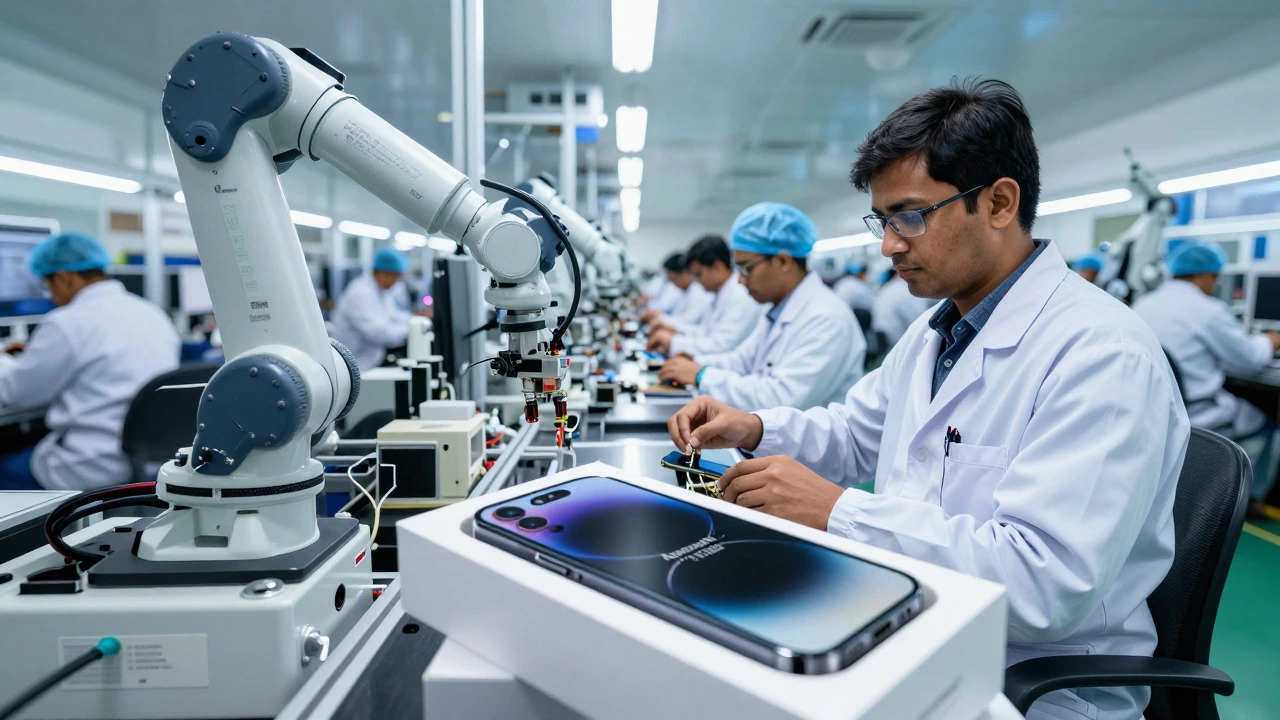
Walk into any major shopping mall in Mumbai, Bangalore, or Delhi today, and you will see a familiar sight. Shoppers are picking up the latest iPhone is a premium smartphone manufactured by Apple Inc., but if you flip it over, you might notice something new: "Assembled in India." This small label change signals a massive shift. For decades, the global narrative was simple-India was a service hub for IT support and software coding, while hardware manufacturing belonged to China and Southeast Asia. That story is ending. By mid-2026, the question is no longer whether India can make things, but how fast it can scale from assembling consumer goods to creating complex semiconductors.
So, is India technologically advanced? The answer isn't a simple yes or no. It depends on which layer of technology you look at. In software services and digital public infrastructure, India is a global leader. In heavy industrial manufacturing and deep-tech hardware, it is still catching up, but it is doing so with unprecedented speed. Let's break down what this means for the electronics sector specifically, where the real action is happening right now.
The Shift From Services to Hardware
To understand where we stand, we have to look at the last five years. Around 2021, the global supply chain broke due to the pandemic and geopolitical tensions. Companies like Apple Inc. is an American multinational technology company that designs, develops, and sells consumer electronics. realized they couldn't rely on one country for everything. They needed a backup plan. India offered that plan through aggressive government incentives.
The game-changer was the Production Linked Incentive (PLI) scheme. This wasn't just a tax break; it was a direct cash incentive for companies that increased their local manufacturing output. If you made more phones here, the government paid you a percentage of your sales value. This worked. Fast.
- In 2021, India exported roughly $3 billion worth of mobile phones.
- By 2024, that number crossed $15 billion.
- In early 2026, reports indicate exports are approaching $20 billion annually.
This growth didn't happen because Indian engineers suddenly invented a new type of battery. It happened because global giants moved their assembly lines here. Samsung Electronics is a South Korean multinational conglomerate known for its electronics division. started assembling smartphones in Noida back in 2018. Today, nearly half of all Samsung phones sold globally come from India. This proves that India has mastered the "assembly" phase of technological manufacturing. But assembly is only the first step.
The Semiconductor Challenge
If you want to know if a country is truly technologically advanced, don't look at who assembles the phone. Look at who makes the chip inside it. Semiconductors are the most complex products humans manufacture. Making them requires pure water, stable electricity, and precision engineering that rivals space travel.
For years, India had zero domestic semiconductor fabrication plants (fabs). We imported every single microchip. This was a strategic vulnerability. If the supply stopped, our banking, defense, and communication systems would freeze. Recognizing this, the Indian government launched a separate PLI scheme for semiconductors in 2021, offering up to 50% capital subsidy for fabs.
By mid-2026, the landscape is changing. While we aren't yet producing cutting-edge 3-nanometer chips used in the newest processors, we are operational in packaging and testing. Companies like Tata Electronics is a subsidiary of Tata Group focusing on electronics manufacturing and semiconductor assembly. have set up large-scale assembly and testing facilities. Meanwhile, foreign players are eyeing the market. Intel announced plans for a fab in Gujarat, and Micron Technology is setting up operations. These projects are in their early stages, with full production expected around 2027-2028. So, is India advanced in semiconductors? Not yet. But we are no longer standing on the sidelines.
| Sector | Current Status (2026) | Global Competitors | Key Players in India |
|---|---|---|---|
| Mobile Assembly | Mature & Export-Oriented | Vietnam, China | Apple, Samsung, Xiaomi |
| Semiconductor Design | Growing Talent Pool | USA, Israel | Qualcomm, Nvidia (R&D centers) |
| Chip Fabrication | Early Stage / Planning | Taiwan, South Korea | Intel, Micron, Tata |
| Digital Infrastructure | World Leader | Estonia, Singapore | UPI, Aadhaar, ONDC |
Digital Public Infrastructure: The Hidden Strength
While the factories are being built, another form of technological advancement is already running smoothly across the country. Digital Public Infrastructure (DPI) refers to the foundational digital systems that enable economic activity. India has built some of the world's most efficient DPIs.
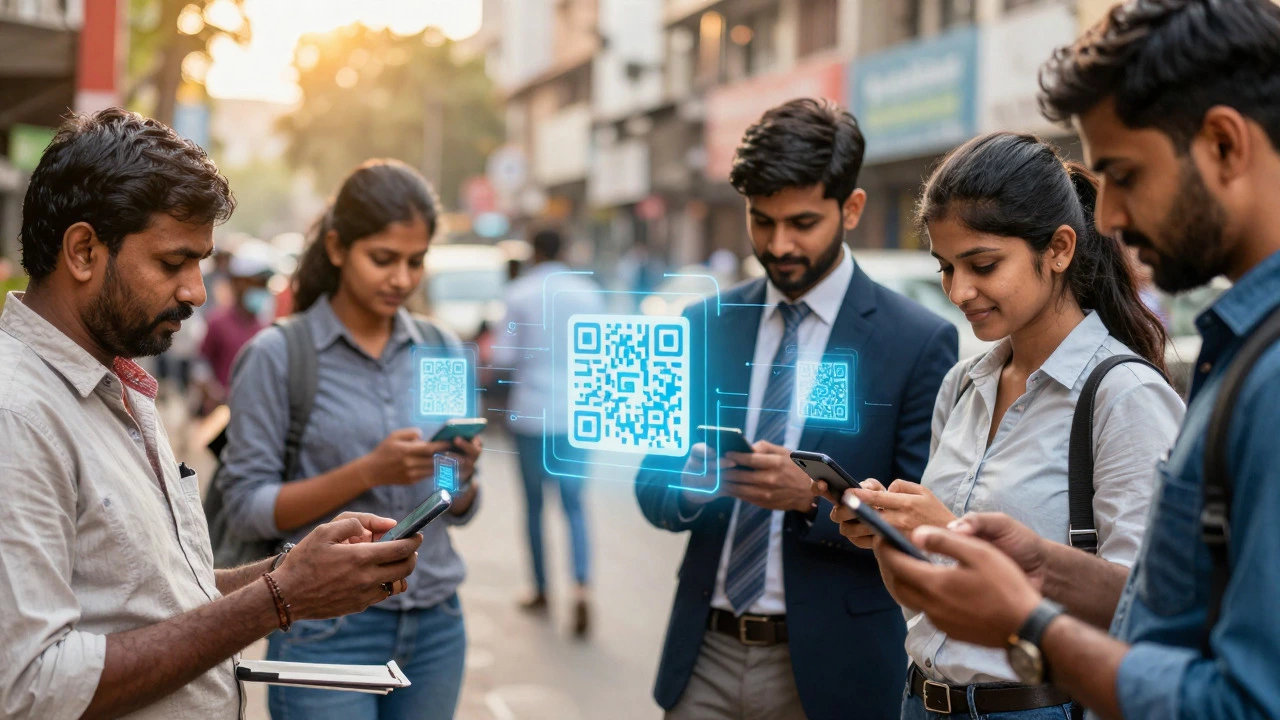
Take UPI (Unified Payments Interface). Launched by the National Payments Corporation of India (NPCI), it allows instant bank-to-bank transfers via QR codes. As of 2026, UPI processes billions of transactions monthly, dwarfing similar systems in Europe and North America. This isn't just about convenience; it's about financial inclusion. A street vendor in Kerala can accept digital payments just as easily as a corporate office in Gurgaon.
Then there is ONDC (Open Network for Digital Commerce). Think of it as an open protocol for e-commerce, breaking the monopoly of private platforms. It allows small retailers to list their products on any app that joins the network. This democratization of tech access is a unique Indian innovation. When people ask if India is technologically advanced, they often forget this layer. We may not build the chips yet, but we use digital tools to move money and goods more efficiently than almost anywhere else.
The Supply Chain Gap
Let's be realistic about the challenges. Being "technologically advanced" isn't just about final assembly or digital apps. It's about controlling the entire supply chain. Right now, India still imports most of its electronic components. Resistors, capacitors, displays, and batteries largely come from East Asia.
This creates a dependency risk. If shipping lanes close or tariffs rise, Indian manufacturers suffer. To fix this, the government is pushing for "China Plus One" strategies, encouraging companies to bring their component suppliers to India too. We are seeing progress in display panels, with companies like BOE and CSOT setting up factories in Tamil Nadu and Karnataka. However, building a complete ecosystem takes time. You can't force nature; raw materials like rare earth elements are still dominated by other nations.
Another hurdle is skilled labor. Operating a modern factory requires technicians who understand robotics, automation, and quality control. India produces millions of engineering graduates, but many lack practical hands-on skills. Vocational training institutes are expanding, but bridging the gap between classroom theory and factory floor reality remains a critical task for the next decade.
What This Means for Business and Investment
If you are looking to invest or start a business in this space, the opportunity is clear. The demand for electronics is exploding. With a young population and rising disposable incomes, Indians are buying more smart TVs, laptops, and wearable devices than ever before.
For startups, the focus should be on niche components rather than trying to build a whole phone. There is a huge need for:
- Precision tooling for PCB (Printed Circuit Board) manufacturing.
- Testing and certification labs for wireless devices.
- Recycling and waste management solutions for electronic scrap.
The government continues to offer subsidies under various schemes, including the Modified Electronics Policy. However, navigating the bureaucracy can be tough. Success requires patience and strong local partnerships. Don't expect quick wins; this is a long-game industry.
Conclusion: A Work in Progress
So, back to the original question: Is India technologically advanced? In 2026, India is a hybrid. It is a mature player in software services and digital payments. It is a rapidly growing hub for electronics assembly. And it is an emerging contender in semiconductor design and fabrication. We are not yet at the level of Japan or Germany in high-end industrial machinery, nor do we match Taiwan in chip density. But we are moving faster than most predicted.
The transformation is visible. From the streets of Bengaluru to the factories in Sri City, the shift from "importing technology" to "making technology" is underway. It won't be perfect, and there will be setbacks. But the trajectory is upward. For anyone watching the global tech landscape, India is no longer just a market to sell to; it is a place to build from.
Does India make its own semiconductors?
As of 2026, India does not yet mass-produce advanced logic chips (like those in CPUs) domestically. However, the country has begun operations in semiconductor packaging, testing, and assembly. Major companies like Intel and Micron are setting up fabrication plants, with full production expected between 2027 and 2029. Currently, India imports the majority of its chips.
Which countries are India's main competitors in electronics manufacturing?
India's primary competitors in electronics manufacturing are Vietnam and China. Vietnam has become a major hub for Samsung and Apple assembly, benefiting from lower labor costs and established trade agreements. China remains the dominant global leader due to its complete supply chain ecosystem, though it faces higher labor costs and geopolitical risks.
What is the PLI scheme in India?
The Production Linked Incentive (PLI) scheme is a government program that provides financial incentives to manufacturers based on the value of their incremental production. In the electronics sector, it aims to boost domestic manufacturing of mobile phones, laptops, and semiconductors, reducing import dependence and increasing exports.
Is it profitable to start an electronics manufacturing business in India?
Yes, it can be highly profitable due to strong domestic demand and export opportunities. Government subsidies under the PLI scheme reduce initial costs. However, success depends on securing reliable supply chains for components, managing logistics, and accessing skilled labor. Niche areas like component manufacturing and recycling offer lower entry barriers than full device assembly.
How does India's digital infrastructure compare globally?
India is a global leader in Digital Public Infrastructure (DPI). Systems like UPI for payments and Aadhaar for identity verification are cited as models for other developing nations. India processes more real-time digital payments than any other country, demonstrating advanced adoption and integration of digital technologies in daily life.