

Food Science Major Readiness Quiz
Think you're ready for the rigors of a Food Science degree? Take this quick quiz to see if you understand what makes this major challenging and rewarding.
Loading question...
Quiz Complete!
0/5
Calculating results...
Review Your Answers:
You’re staring at a course catalog, wondering if you should sign up for Organic Chemistry II or maybe drop out before you even start. The question "is food science major hard?" pops up in every freshman dorm room and online forum. Here’s the blunt truth: it’s not easy, but it’s not impossible either. It’s just different from what most people expect. You aren’t just learning how to make tasty cookies; you’re learning why they taste good, how to keep them safe from bacteria, and how to scale that recipe from your kitchen to a factory with 500 employees.
Think of food science as the bridge between biology, chemistry, engineering, and business. If you hate math, you’ll struggle. If you hate lab work, you’ll suffer. But if you like solving puzzles-like why a certain cheese melts better on pizza than another-you might actually love it. This guide breaks down exactly what makes this degree challenging, what skills you need, and whether it’s worth the sweat equity.
The Core Curriculum: Where the Difficulty Lies
Most students underestimate the sheer volume of science required. You don’t just take "Food Class." You take courses that could double as prerequisites for medical school. Food Chemistry is often cited as the biggest hurdle. It’s not just about ingredients; it’s about molecular interactions. You’ll study how proteins denature when heated, how lipids oxidize and go rancid, and how carbohydrates behave under stress. If you didn’t ace high school chemistry, you will need to put in serious hours here.
Then there’s Food Microbiology. This isn’t just looking at germs under a microscope. You need to understand bacterial growth curves, sterilization techniques, and the specific pathogens that cause foodborne illnesses like Salmonella or Listeria. One mistake in a lab report can mean the difference between a safe product and a recall. These classes demand precision and attention to detail that many liberal arts majors never encounter.
- Organic Chemistry: Usually two semesters. Heavy on memorizing reaction mechanisms.
- Physical Chemistry: Thermodynamics and kinetics applied to food systems.
- Biochemistry: Understanding enzymes and metabolic pathways in raw materials.
- Statistics: Yes, statistics. You need to analyze experimental data to prove your findings are valid.
Engineering Meets Kitchen: Process Control
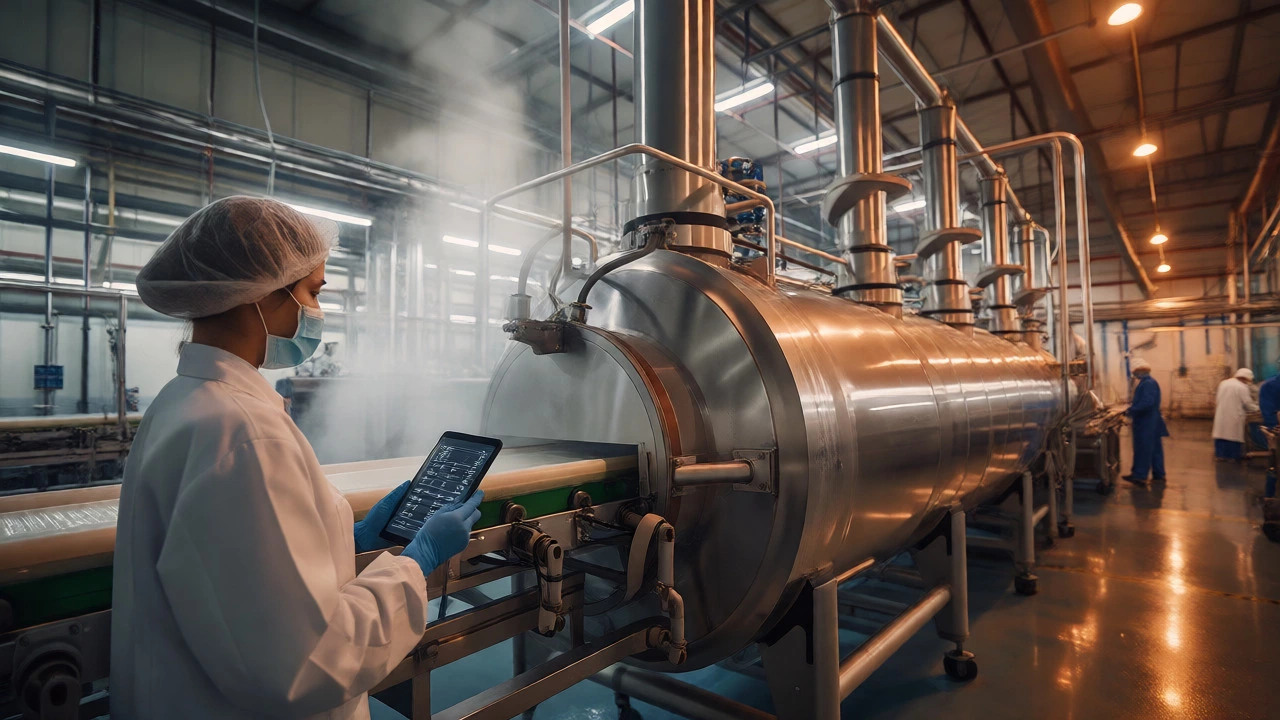
Here is where the "major" part gets tricky for humanities-minded students. Food science isn’t just about the product; it’s about the process. You have to understand how things move through pipes, how heat transfers in a tank, and how pressure affects texture. This is where Food Engineering comes in. It involves fluid dynamics and heat transfer calculations. You’re essentially doing physics problems, but instead of blocks sliding down ramps, you’re calculating how fast milk needs to flow through a pasteurizer to kill bacteria without burning the protein.
If you look at modern food processing units, you see complex machinery running 24/7. As a food scientist, you’re responsible for optimizing these lines. Can you speed up the conveyor belt by 10% without breaking the crackers? That’s an engineering question answered with scientific principles. Many students find this transition from pure science to applied engineering jarring because it requires a different type of thinking-logical, systematic, and numbers-heavy.
Lab Work and Field Experience: The Hidden Time Sink
Classroom lectures are only half the battle. Food science degrees are lab-intensive. You spend hours in sterile environments, handling samples, calibrating instruments, and cleaning glassware. Unlike some majors where you can cram for an exam, lab skills require muscle memory and consistency. You can’t fake pipetting accuracy.
Moreover, internships are practically mandatory for landing a job. Companies want candidates who have worked in actual plants. This means summer jobs often involve early mornings, cold warehouses, or noisy factories. You might be testing sensory panels (tasting weird variations of yogurt) or troubleshooting production line failures. It’s physical work disguised as science. If you’re looking for a cushy desk job right after graduation, this major might disappoint you initially.
| Major | Chemistry Load | Math/Stats Load | Lab Hours | Industry Exposure |
|---|---|---|---|---|
| Food Science | High (Organic + Bio) | Moderate-High | Very High | High (Internships) |
| Nutrition/Dietetics | Moderate | Low-Moderate | Moderate | Moderate (Clinical) |
| Chemical Engineering | High | Very High | High | High |
| Culinary Arts | Low | Low | Low | High (Kitchen) |
Soft Skills: Communication and Regulation
Surprisingly, one of the hardest parts of the job isn’t the science-it’s the paperwork and communication. Food scientists must write clear reports for non-scientists. Your boss might be a marketing manager who doesn’t care about Maillard reactions but cares deeply about shelf life. You need to translate "lipid oxidation rate increases at 25°C" into "the chips will taste stale in three months."
You also deal with regulations. In the US, that’s the FDA and USDA; globally, it’s Codex Alimentarius. Keeping up with labeling laws, allergen declarations, and safety standards is tedious but critical. A single mislabeled ingredient can shut down a production run. Students often overlook this administrative burden until they enter their first professional role.
Who Struggles Most? And Who Thrives?
Students who struggle usually fall into two camps: those who dislike quantitative analysis and those who prefer abstract theory over practical application. If you think "science" means reading textbooks but hate calculating dilutions or plotting graphs, you will find this major frustratingly difficult.
Conversely, students thrive if they are curious problem-solvers. Did you ever wonder why bread rises? Or why ice cream feels smooth instead of icy? If you enjoy deconstructing everyday experiences using scientific logic, you’ll find the coursework engaging rather than exhausting. Teamwork is also crucial. Group projects are common because real-world food development involves cross-functional teams-R&D, quality assurance, supply chain, and sales all working together.

Career Outlook: Is It Worth the Grind?
Let’s talk ROI. Despite the difficulty, the job market for food scientists is stable and growing. People always need to eat, and companies are constantly innovating to meet health trends (think plant-based meats, functional foods, clean labels). According to the Bureau of Labor Statistics, employment for agricultural and food scientists is projected to grow steadily, driven by the need for sustainable food production and safety compliance.
Entry-level roles include Quality Assurance Technician, Product Development Associate, or Regulatory Specialist. Salaries vary by location and company size, but mid-career professionals in R&D management or technical sales can earn comfortable incomes. The key advantage? Versatility. A food science degree opens doors in pharmaceuticals, cosmetics, and biotech because the underlying chemistry and regulatory frameworks overlap significantly.
Tips to Survive and Succeed
If you decide to tackle this major, here is how to make it manageable:
- Master the Basics Early: Don’t wait until junior year to fix your chemistry gaps. Take extra tutoring if needed.
- Get Hands-On Fast: Join student chapters of IFT (Institute of Food Technologists). Network with alumni and get lab experience outside of class.
- Learn Excel and Data Tools: Statistical software like SAS or R is often used in industry. Being proficient gives you a massive edge.
- Find a Mentor: Connect with professors who do research you find interesting. Their guidance can help you navigate elective choices and internship opportunities.
Is food science harder than nursing?
It depends on your strengths. Nursing has heavy clinical hours and anatomy/memorization demands. Food science has heavier chemistry and physics/math components. If you are strong in calculus and organic chemistry, food science may feel easier. If you prefer patient interaction and memorization over lab calculations, nursing might suit you better.
Do I need to be good at cooking to major in food science?
No. While an interest in food helps, culinary skills are not required. You need to understand flavor profiles and textures scientifically, but you don't need to be a chef. In fact, many successful food scientists admit they aren't great cooks in their home kitchens.
What is the most difficult class in a food science major?
Most students cite Organic Chemistry II and Physical Chemistry as the toughest due to the abstract concepts and heavy workload. Food Engineering is also challenging for those who haven't taken calculus-based physics previously.
Can I become a food scientist with a biology degree?
Yes, but you may face limitations. A general biology degree lacks the specialized coursework in food chemistry, processing, and regulatory affairs. Many employers prefer a dedicated Food Science degree or require additional certifications/experience for biology graduates to compete effectively.
Is the job stressful?
Stress levels vary by role. Quality Assurance can be high-stress due to audit deadlines and safety compliance issues. Product Development can be stressful due to tight launch timelines. However, it is generally considered less high-pressure than emergency medicine or investment banking.