
Pharma Startup Cost Estimator
Configure Your Business Model
Estimated Investment Breakdown
Select your options and click calculate to see the estimated startup cost breakdown.
Starting a pharmaceutical business in India is one of the most regulated yet rewarding ventures you can undertake. But before you sign any lease or buy your first mixer, you need to answer the elephant in the room: how much capital do you actually need? The short answer? It depends entirely on what kind of pharmacy you want to run.
If you are looking to set up a small-scale unit for repackaging or manufacturing basic formulations like syrups and ointments, you might start with as little as ₹50 lakhs (approx. $60,000). However, if your goal is to manufacture sterile injectables or complex solid dosage forms with full Good Manufacturing Practices (GMP) compliance, you are looking at a minimum of ₹1 crore to ₹5 crores ($120,000 - $600,000). For large-scale export-oriented units, the investment skyrockets into the tens of crores.
This guide breaks down the real costs involved in setting up a pharmaceutical company in India in 2026. We will look at licensing, infrastructure, machinery, and the hidden expenses that often catch new entrepreneurs off guard.
1. Define Your Business Model First
Before talking numbers, you must decide what you are selling. The Indian pharmaceutical market is segmented into different types of manufacturers, each with vastly different capital requirements.
- Repackaging Unit: You buy bulk drugs from larger manufacturers and package them under your brand. This requires minimal machinery but strict quality control. Investment: ₹30-70 Lakhs.
You produce tablets, capsules, syrups, or creams from raw materials. This requires mixing machines, coating pans, and more rigorous lab testing. Investment: ₹70 Lakhs - ₹2 Crores. - Sterile/Injectable Manufacturer: Producing injections or eye drops requires sterile environments (cleanrooms), autoclaves, and water purification systems. This is high-tech and high-cost. Investment: ₹2 Crores - ₹10 Crores+.
- Bulk Drug Manufacturer (API): Creating the Active Pharmaceutical Ingredient itself. This involves heavy chemical engineering, pollution control boards, and massive safety protocols. Investment: ₹5 Crores - ₹50 Crores+.
For this article, we will focus on the most common entry point for startups: a Formulation Unit that manufactures solid dosage forms like tablets and capsules.
2. Licensing and Regulatory Costs
The pharmaceutical industry in India is heavily regulated by the Central Drugs Standard Control Organization (CDSCO) and state-level drug control authorities responsible for issuing licenses. Getting these licenses is not just a formality; it is the backbone of your legality.
You will need two main licenses:
- Manufacturing License (Form 25 & 26): Issued by the State Licensing Authority (SLA). This allows you to manufacture specific drugs.
- Drug License for Sale: If you also plan to sell directly, you may need additional trade licenses depending on your state.
Cost Breakdown for Licenses:
- Application Fees: Varies by state, typically between ₹5,000 to ₹20,000 per application.
- Consultancy Fees: Most first-time founders hire a regulatory consultant to draft the dossier, prepare the site master file, and ensure the facility meets GMP standards. Expect to pay ₹1-3 Lakhs for this service.
- Inspection Delays: While not a direct fee, delays in inspection can cost you time. Budget for potential re-inspections if your facility doesn’t pass the first time.
Note: In 2026, many states have moved to online portals for license applications, which has streamlined the process but increased transparency in fee structures.
3. Infrastructure and Premises
Your factory layout is dictated by Good Manufacturing Practices (GMP) guidelines enforced by regulatory bodies ensuring product quality and consistency. You cannot just rent any warehouse. The space must be designed to prevent cross-contamination.
Key Infrastructure Requirements:
- Space: A minimum of 1,000-2,000 sq. ft. is recommended for a small formulation unit. This includes production areas, storage, quality control labs, and administrative offices.
- Clean Rooms: Areas where tablets are compressed or coated need controlled air pressure and filtration (HEPA filters). Setting up a Grade C or D cleanroom can cost ₹2-5 Lakhs alone.
- Water System: You need a Water Purification Plant (WPP) to produce Purified Water (PW) and possibly Water for Injection (WFI) if making liquids. A basic WPP system costs ₹1-3 Lakhs.
- Electrical Backup: Power fluctuations can ruin batches. An industrial-grade generator or UPS system is mandatory. Budget ₹2-4 Lakhs.
Rent vs. Buy: Most startups rent industrial sheds in pharmaceutical hubs like Hyderabad, Mumbai, Gujarat, or Tamil Nadu. Rent varies from ₹15 to ₹40 per sq. ft. per month. For a 1,500 sq. ft. unit, expect monthly rents of ₹25,000-₹60,000.
4. Machinery and Equipment
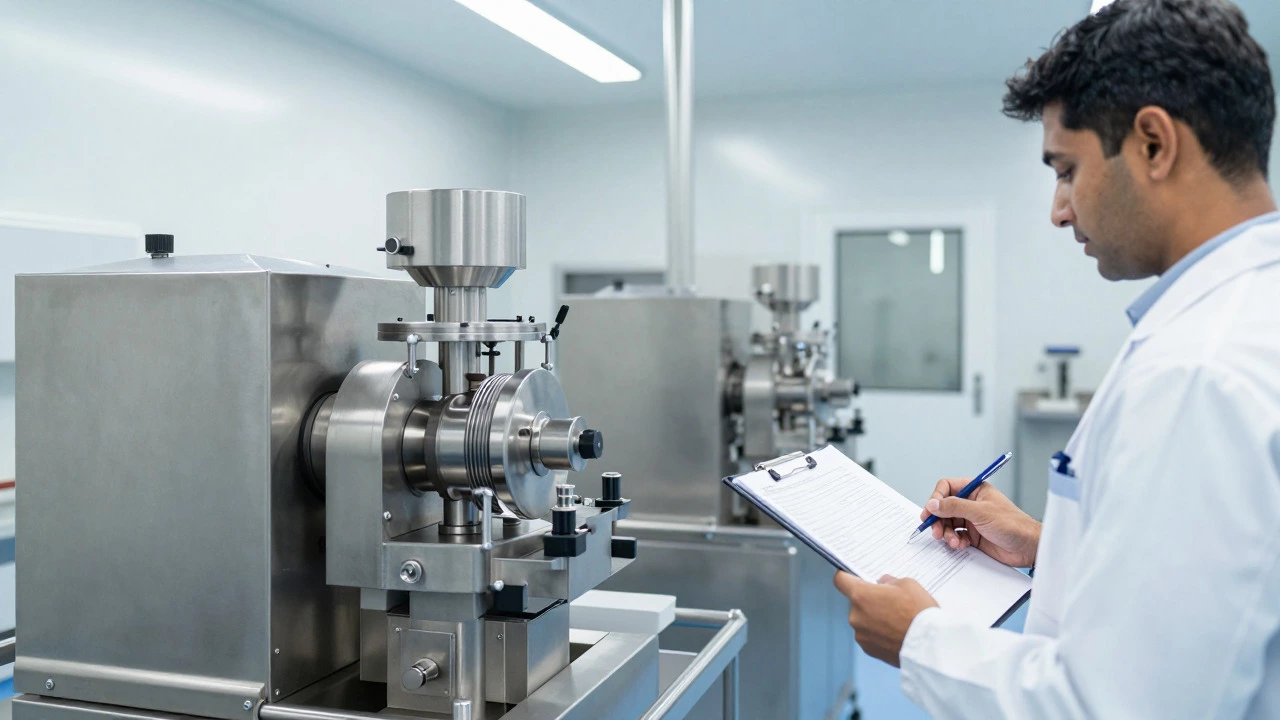
This is where the bulk of your capital goes. The machinery must be made of stainless steel (SS 304 or SS 316) to resist corrosion and contamination.
| Equipment | Purpose | Estimated Cost (INR) |
|---|---|---|
| High Shear Mixer Granulator | Mixing raw materials | ₹8 - 15 Lakhs |
| Rotary Tablet Press | Compressing powder into tablets | ₹10 - 25 Lakhs |
| Capsule Filling Machine | Filling capsules | ₹5 - 12 Lakhs |
| Coating Pan / Fluid Bed Dryer | Drying granules and coating tablets | ₹6 - 15 Lakhs |
| Blister Packing Machine | Packaging tablets into strips | ₹4 - 8 Lakhs |
| Cartoning Machine | Packing strips into boxes | ₹2 - 5 Lakhs |
| HPLC, Dissolution Tester, pH Meter | ₹10 - 20 Lakhs |
Total Machinery Estimate: For a semi-automatic setup, you can manage with ₹40-60 Lakhs. For fully automated lines, expect to spend over ₹1 Crore.
5. Quality Control Laboratory
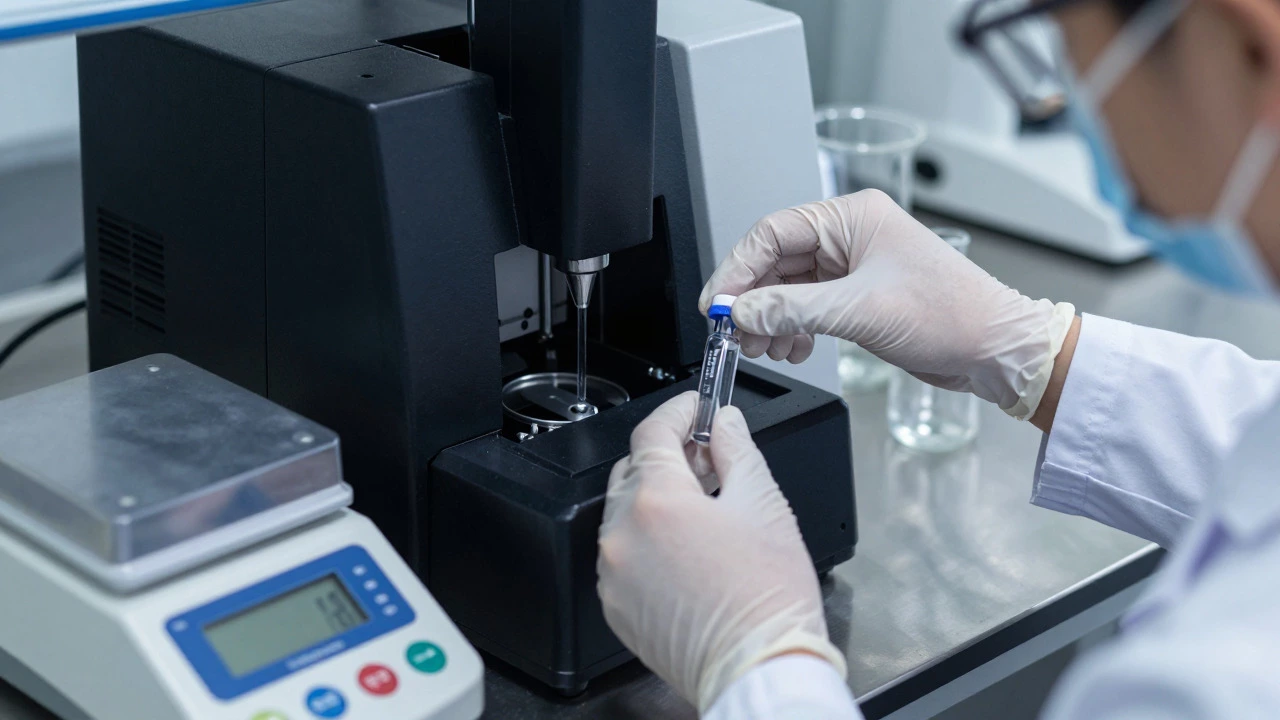
You cannot sell a single tablet without proving its potency, purity, and dissolution rate. Your QC lab is non-negotiable. Key instruments include:
- HPLC (High-Performance Liquid Chromatography): Used for assay testing. Cost: ₹8-15 Lakhs.
- Dissolution Tester: Checks how fast the drug dissolves in the body. Cost: ₹3-6 Lakhs.
- Furnace and Balances: For moisture content and precise weighing. Cost: ₹1-2 Lakhs.
Don't forget the recurring cost of chemicals and standards (reference substances) for testing, which can amount to ₹50,000-₹1 Lakh per month initially.
6. Human Resources and Salaries
A pharmaceutical plant requires qualified personnel. Regulations mandate certain roles:
- Whole Time Qualified Person (WTQP): Usually a pharmacist or chemist with experience. Salary: ₹40,000-₹80,000/month.
- Production Manager: Oversees daily operations. Salary: ₹30,000-₹60,000/month.
- QC Chemists: At least 2-3 technicians. Salary: ₹20,000-₹40,000/month each.
- Skilled Operators: For running machines. Salary: ₹15,000-₹25,000/month each.
Factor in statutory compliances like Provident Fund (PF), Employee State Insurance (ESI), and professional tax, which add roughly 12-15% to your payroll costs.
7. Working Capital and Hidden Costs
Many startups fail because they budget only for setup, not for survival. You need working capital to cover:
- Raw Material Inventory: APIs and excipients are bought in bulk. Credit terms from suppliers vary (30-90 days), but you’ll need cash upfront initially.
- Marketing and Sales: Doctors don’t prescribe unknown brands easily. Medical representatives (MRs) cost money. Budget ₹2-5 Lakhs/month for a small sales team.
- Utilities: Electricity for HVAC and machines, water, and waste disposal. Pharma waste disposal is expensive due to environmental norms. Budget ₹50,000-₹1 Lakh/month.
- Insurance: Product liability insurance and plant insurance. Approx. ₹1-2 Lakhs/year.

Total Investment Summary
Let’s aggregate the costs for a small-scale tablet/capsule formulation unit in India (2026 estimates):
- Licensing & Consultancy: ₹2-4 Lakhs
- Infrastructure Setup (Cleanroom, WPP, etc.): ₹10-15 Lakhs
- Machinery & Equipment: ₹40-60 Lakhs
- QC Lab Setup: ₹10-15 Lakhs
- Initial Working Capital (3-6 months): ₹10-20 Lakhs
Grand Total: ₹72 Lakhs - ₹1.14 Crores ($86,000 - $137,000).
This is a realistic range for a compliant, operational unit. You can go lower by buying second-hand machinery, but this increases maintenance risks and may complicate licensing inspections.
Government Schemes and Subsidies
India offers several incentives to reduce the burden:
- PLI Scheme (Production Linked Incentive): For large-scale manufacturers meeting turnover criteria. Offers 10-20% incentive on incremental sales.
- MSME Registration: Provides access to cheaper loans, collateral-free credit, and protection against delayed payments.
- State Industrial Policies: States like Gujarat, Maharashtra, and Telangana offer subsidies on electricity duty, stamp duty, and interest subvention on loans (up to 5-8%).
Always consult a local chartered accountant to maximize these benefits during the planning phase.
Final Thoughts on Starting a Pharma Business
Starting a pharmaceutical company in India is not just about having money; it’s about having patience and precision. The regulatory hurdles are high, but the barrier to entry protects you from casual competitors. If you maintain strict quality standards and build strong relationships with distributors and doctors, the returns can be substantial. Begin with a niche-perhaps generic antibiotics or chronic disease medications-and scale gradually. Don’t rush the licensing process; a delay today is better than a recall tomorrow.
What is the minimum investment required to start a pharma company in India?
The minimum investment for a small-scale repackaging or simple formulation unit ranges from ₹50 lakhs to ₹1 crore. This covers basic machinery, licensing, and initial working capital. For more complex products like injectables, the investment starts at ₹2 crores.
Do I need a pharmacy degree to own a pharmaceutical company?
No, you do not need a pharmacy degree to be the owner or promoter. However, you must hire a Whole Time Qualified Person (WTQP) who is a registered pharmacist or chemist to oversee technical operations and ensure compliance with drug laws.
How long does it take to get a manufacturing license in India?
The timeline varies by state but typically takes 3 to 6 months. This includes document verification, site inspection by the licensing authority, and issuance of the license. Hiring a regulatory consultant can help streamline this process.
Can I start a pharma business from home?
Generally, no. Pharmaceutical manufacturing requires specific infrastructure like cleanrooms, waste treatment plants, and separate storage areas that are rarely feasible in residential homes. You need an industrial plot or shed approved for pharma use.
What are the best locations to set up a pharma plant in India?
Top hubs include Hyderabad (Bolarum), Mumbai (Virar/Jogeshwari), Gujarat (Ahmedabad/Rajkot), and Tamil Nadu (Hosur). These regions offer established supply chains, skilled labor, and supportive government policies.