

India Pharma Manufacturing Explorer
Explore the estimated counts of active pharmaceutical manufacturing units in India as of 2026. Filter by segment or click on major hubs to see regional concentrations.
Click a marker to view hub details. Sizes represent relative concentration of high-value vs. volume-based units.
Biotech/Formulation
Legacy/HQ
API Hub
Volume/SME
Select a Hub
Hover over or click the markers above to see specific insights about India's key pharmaceutical clusters.
You might have heard that India is the "pharmacy of the world." It’s a catchy phrase, but what does it actually mean when you count the doors opening every morning to produce tablets, syrups, and injections? If you are asking how many pharma manufacturing companies are there in India, the short answer is: it depends on who is counting. The numbers vary wildly depending on whether you are looking at licensed units, active manufacturers, or just the big players.
As of 2026, the landscape has shifted significantly from the post-pandemic boom. While some older estimates cited over 10,000 units, recent data from the Ministry of Chemicals and Fertilizers suggests a more consolidated picture. We are talking about roughly 3,500 to 4,000 registered manufacturing units that are actively producing drugs for domestic consumption and export. But wait-why the discrepancy? Because "registered" doesn't always mean "producing," and "producing" doesn't always mean "exporting." Let’s break down the real numbers, the types of companies, and where they are located.
The Real Number: Registered vs. Active Units
When researchers or investors ask for the total count, they often hit a wall of conflicting data. Why? Because the definition of a "company" varies. The Drug Controller General of India (DCGI) maintains records of manufacturing licenses. According to the latest annual reports available in early 2026, there are approximately 3,800 valid manufacturing licenses across the country. However, not all of these are large-scale factories. Many are small-scale units producing traditional Ayurvedic or homeopathic medicines, which fall under different regulatory umbrellas like AYUSH.
If we narrow this down to allopathic pharmaceutical manufacturing-the kind that produces antibiotics, cardiac drugs, and diabetes medications-the number drops to around 2,500-3,000 active units. This distinction matters because the global supply chain relies heavily on these specific units. For instance, if you are sourcing generic paracetamol, you aren’t dealing with an Ayurvedic herb processor; you’re dealing with a chemical synthesis plant. These plants require stricter compliance with Good Manufacturing Practices (GMP), which naturally limits their number compared to smaller, less regulated segments.
| Category | Estimated Count | Primary Output | Regulatory Body |
|---|---|---|---|
| Allopathic Formulations | ~2,800 | Tablets, Capsules, Injectables | CDSCO / State FDA |
| API (Active Pharmaceutical Ingredients) | ~600 | Raw chemical compounds | CDSCO / State FDA |
| Ayurveda & Herbal | ~1,200 | Herbal extracts, powders | AYUSH Ministry |
| Homeopathy | ~900 | Diluted solutions, pellets | AYUSH Ministry |
| Total Active Units | ~5,500 | Mixed Portfolio | Various |
Why the Numbers Fluctuate: Consolidation and Compliance
You might wonder why the number isn't growing exponentially given India's population growth. The truth is, the industry is consolidating. Ten years ago, you could open a small factory with basic machinery and survive. Today, the bar is higher. International markets, especially the US and Europe, demand rigorous compliance. A single failure in a US FDA inspection can shut down exports for months, forcing smaller players to merge or close.
This consolidation explains why the raw count of "companies" might seem stagnant or even slightly declining in certain segments while revenue grows. Larger entities like Sun Pharmaceutical and Cipla are acquiring smaller units to expand capacity rather than building new greenfield sites from scratch. So, while the number of legal entities might drop, the production capacity per entity rises.
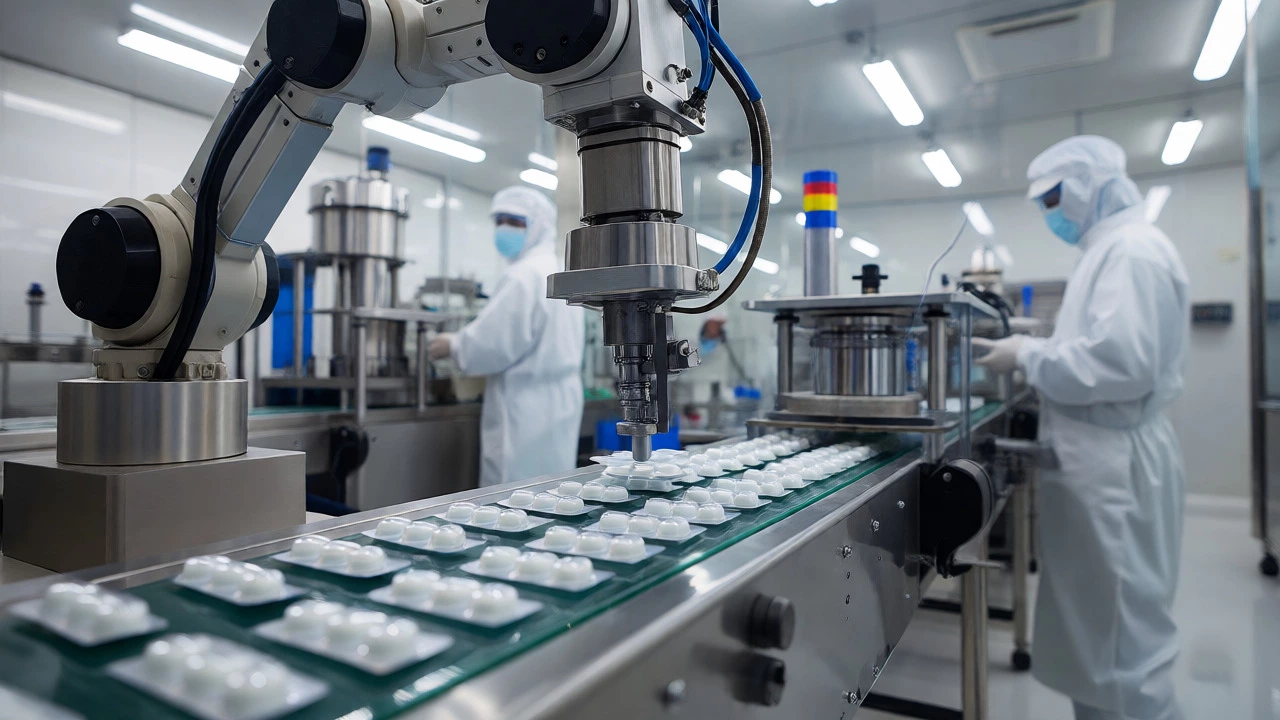
Another factor is the shift towards Contract Manufacturing Organizations (CMOs). Many brands today don't own factories. They outsource production to specialized manufacturers. This means the brand name you see on the box might belong to Company A, but the actual manufacturing happens at Company B’s facility. When counting "manufacturing companies," we must look at who owns the license to manufacture, not who owns the brand. This outsourcing model keeps the number of physical manufacturing units lower than the number of marketed drug brands.
Geographic Clusters: Where Are These Companies Located?
India’s pharma manufacturing isn't spread evenly. It’s clustered in specific hubs due to infrastructure, skilled labor availability, and historical policy decisions. If you are looking for suppliers, you need to know these regions:
- Hyderabad, Telangana: Often called the "Genome Valley," Hyderabad hosts a massive concentration of biotech and formulation units. It is home to giants like Dr. Reddy’s Laboratories and Aurobindo Pharma. The cluster here is dense, with hundreds of ancillary industries supporting packaging and logistics.
- Mumbai and Thane, Maharashtra: This region remains the financial and operational headquarters for many legacy companies. Cipla and Torrent Pharmaceuticals have significant operations here. The proximity to ports makes it ideal for export-oriented units.
- Ahmedabad and Vadodara, Gujarat: Gujarat is the hub for Active Pharmaceutical Ingredients (APIs). If you are looking for raw materials, this is where you go. The state government has been aggressive in offering industrial parks specifically for pharma, leading to a surge in API manufacturing units in the last five years.
- Baddi, Himachal Pradesh: Known as the "Puducherry of the North," Baddi has become a low-cost manufacturing hub. Thousands of small and medium enterprises operate here, benefiting from tax incentives offered by the state. It’s particularly strong in oral solid dosage forms like tablets and capsules.
These clusters create ecosystems. In Hyderabad, for example, you can find specialized testing labs, waste treatment facilities, and skilled chemists within a 20-kilometer radius. This density reduces operational costs and speeds up time-to-market, which is why new startups still prefer setting up shop in these zones despite high real estate prices.
Types of Manufacturers: Formulators vs. API Producers
Understanding the type of company is crucial because their business models differ entirely. Most people conflate them, but they serve different parts of the supply chain.
Formulation Manufacturers take raw APIs and turn them into finished goods-tablets, syrups, injectables. They focus on blending, compression, coating, and packaging. Their margins are generally lower, but volumes are high. Examples include Intas Pharmaceuticals and Zydus Cadila.
API Manufacturers produce the active ingredients themselves through complex chemical synthesis. This requires heavy investment in environmental controls because chemical processes generate toxic waste. Only about 600-700 companies in India are major API producers. Historically, India imported most APIs from China, but recent government schemes like the Production Linked Incentive (PLI) scheme have encouraged local API production, adding roughly 50-60 new large-scale API units since 2021.
There is also a third category: Biologics and Biosimilars. This is a newer segment with fewer players-perhaps 100-150 dedicated units-but it is growing fast. Companies like Biocon specialize here. Unlike traditional chemical drugs, biologics involve living organisms, requiring sterile environments and cold-chain logistics. The number of companies here is small, but the value per unit is enormous.

How to Verify a Manufacturer’s Legitimacy
If you are planning to source products or partner with a manufacturer, don't just rely on online directories. Many outdated listings exist. Here is how you verify:
- Check the Manufacturing License Number: Every legitimate unit has a unique license number issued by the State Food and Drug Administration (FDA). You can cross-reference this on the CDSCO website.
- Look for WHO-GMP Certification: If the company claims to export, they should have World Health Organization Good Manufacturing Practice certification. Without this, they likely only serve the domestic market.
- Visit the Facility (or Hire a Third Party): Photos can be misleading. Physical audits reveal whether the cleaning protocols, batch record keeping, and quality control labs match their claims.
- Review Recent Regulatory Actions: Check if the company has received any "Warning Letters" from the US FDA or EU agencies in the last two years. Frequent violations suggest systemic issues.
The Future Outlook: Will the Number Grow?
By 2030, experts predict the number of *active* manufacturing units will stabilize rather than explode. The trend is moving toward automation and larger, smarter factories. Small units that cannot afford automated lines or digital quality management systems will either exit or get acquired. However, the number of *specialized* units may grow. For example, we are seeing more niche manufacturers focusing on oncology drugs or rare disease treatments, which require specialized equipment.
Government initiatives like the National Pharmaceutical Pricing Authority (NPPA) reforms and the push for self-reliance (Atmanirbhar Bharat) are reshaping the map. As India reduces its dependence on Chinese APIs, new API plants are coming up in Odisha and Andhra Pradesh. So, while the total count of general formulation units might plateau, the diversity of specialized manufacturers will increase.
Are all 10,000+ listed pharma companies in India actually manufacturing?
No. Older statistics often cite over 10,000 units, but this includes dormant licenses, marketing-only firms, and very small Ayurvedic/Homeopathic units. The number of active, GMP-compliant allopathic manufacturing units is closer to 3,000-3,500 as of 2026.
Which city has the most pharma manufacturing companies in India?
Hyderabad, Telangana, typically leads in terms of high-value formulation and biotech units. However, Baddi in Himachal Pradesh has a higher count of small-to-medium scale oral solid dosage manufacturers due to favorable tax policies.
What is the difference between an API manufacturer and a formulation manufacturer?
An API (Active Pharmaceutical Ingredient) manufacturer produces the raw chemical compound that provides the therapeutic effect. A formulation manufacturer takes that API and combines it with excipients to create the final product (like a tablet or syrup) that patients consume.
How do I check if a pharma company is US FDA approved?
You can search the US FDA’s official database using the company’s name or establishment registration number. Look for "Inspection Classification" status. A "NAI" (No Action Indicated) classification is the best sign, while "VAI" (Voluntary Action Indicated) or "OAI" (Official Action Indicated) suggests past or current compliance issues.
Did the pandemic increase the number of pharma manufacturers in India?
It increased capacity and led to new investments, particularly in vaccines and APIs. However, it didn't necessarily double the number of companies. Instead, existing companies expanded lines, and some new specialized vaccine manufacturers emerged. The long-term effect is greater consolidation among smaller players who couldn't meet new compliance standards.