
Chemical Supply Chain Resilience Calculator
Identify your primary manufacturing sector to analyze specific shortage risks.
Pharmaceuticals
API Intermediates & Excipients
Agriculture
Herbicides & Fungicides
Electronics
Pure Solvents & Resins
Polymers
Styrene & Ethylene Glycol
Assess Your Current Vulnerability
Projected Impact
- Price Increase:
- Lead Time Delay:
- Key Bottleneck:
Recommended Mitigation Strategies
You might have heard rumors on the factory floor or in procurement meetings about empty shelves. The question isn't just "which chemical has shortages in India?" anymore. It's "which critical inputs are keeping your production line idle?" As of mid-2026, the Indian chemical landscape is facing a complex web of disruptions. It’s not a single product causing chaos; it’s a cluster of specific intermediates and raw materials that have become bottlenecks for chemical manufacturers in India.
If you run a plant in Gujarat, Maharashtra, or Tamil Nadu, you know that inventory management used to be simple. You ordered, you received, you produced. Today, lead times have stretched, prices have spiked, and availability is erratic. This article breaks down exactly which chemicals are scarce, why this is happening right now, and what you can do to keep your business running.
The Core Culprits: Which Chemicals Are Actually Short?
When we talk about shortages, we aren’t talking about common table salt or basic sulfuric acid. Those are stable. The pain points are concentrated in high-value intermediates and specialized feedstocks. Here are the three main categories experiencing severe deficits in 2026:
- Pharmaceutical Intermediates (API Precursors): Compounds like Paracetamol intermediates, Cefalexin raw materials, and various vitamin precursors are seeing tight supplies. While India produces many APIs, the upstream building blocks often rely on imports from China or Europe. Any disruption there ripples directly into Indian pharma plants.
- Specialty Agrochemicals: With the monsoon season approaching, demand for Glyphosate, Imidacloprid, and certain fungicide intermediates has surged. However, capacity constraints in key manufacturing hubs have led to a mismatch between supply and peak seasonal demand.
- Electronic Grade Solvents: The boom in India’s electronics manufacturing sector (driven by PLI schemes) has created a sudden spike in demand for Acetone, Methanol, and Ethanol of ultra-high purity. Existing distillation units are operating at maximum capacity, leaving little room for error or surge orders.
It’s crucial to distinguish between a "shortage" and a "price spike." Sometimes, the chemical is available, but only at a premium that makes your final product uncompetitive. In 2026, both issues are present simultaneously.
Why Is This Happening Now? The Root Causes
To fix the problem, you need to understand the cause. The current shortage isn't accidental. It’s the result of three converging factors that hit hard in late 2025 and early 2026.
1. Regulatory Tightening in Key Export Hubs
India relies heavily on imported raw materials for its chemical industry. Approximately 40% of our specialty chemical inputs come from East Asia. Recently, stricter environmental regulations in major exporting nations have forced several large-scale plants to shut down for retrofitting or permanent closure. This reduced global supply just as Indian demand was accelerating.
2. Energy Cost Volatility
Chemical manufacturing is energy-intensive. Natural gas and electricity prices have remained volatile due to geopolitical tensions and shifting global energy policies. When energy costs rise, smaller domestic producers in India often cut back on production runs because they can’t absorb the margin squeeze. This leads to lower overall market availability.
3. Logistics Bottlenecks
Don’t underestimate the physical movement of goods. Port congestion in Mumbai and Chennai has increased average clearance times by nearly 30% compared to 2024 levels. If your container sits on the dock for two extra weeks, that’s two weeks of lost production potential. For perishable or time-sensitive chemicals, this delay effectively creates a shortage even if the material exists overseas.
| Sector | Key Affected Chemicals | Primary Cause of Shortage | Estimated Price Increase (YoY) |
|---|---|---|---|
| Pharmaceuticals | API Intermediates, Excipients | Import dependency & regulatory delays | 15-25% |
| Agriculture | Herbicides, Fungicides | Seasonal demand spike & raw material scarcity | 10-20% |
| Electronics | Pure Solvents, Resins | Sudden demand surge from new factories | 20-35% |
| Polymers | Styrene, Ethylene Glycol | Energy cost volatility | 8-12% |
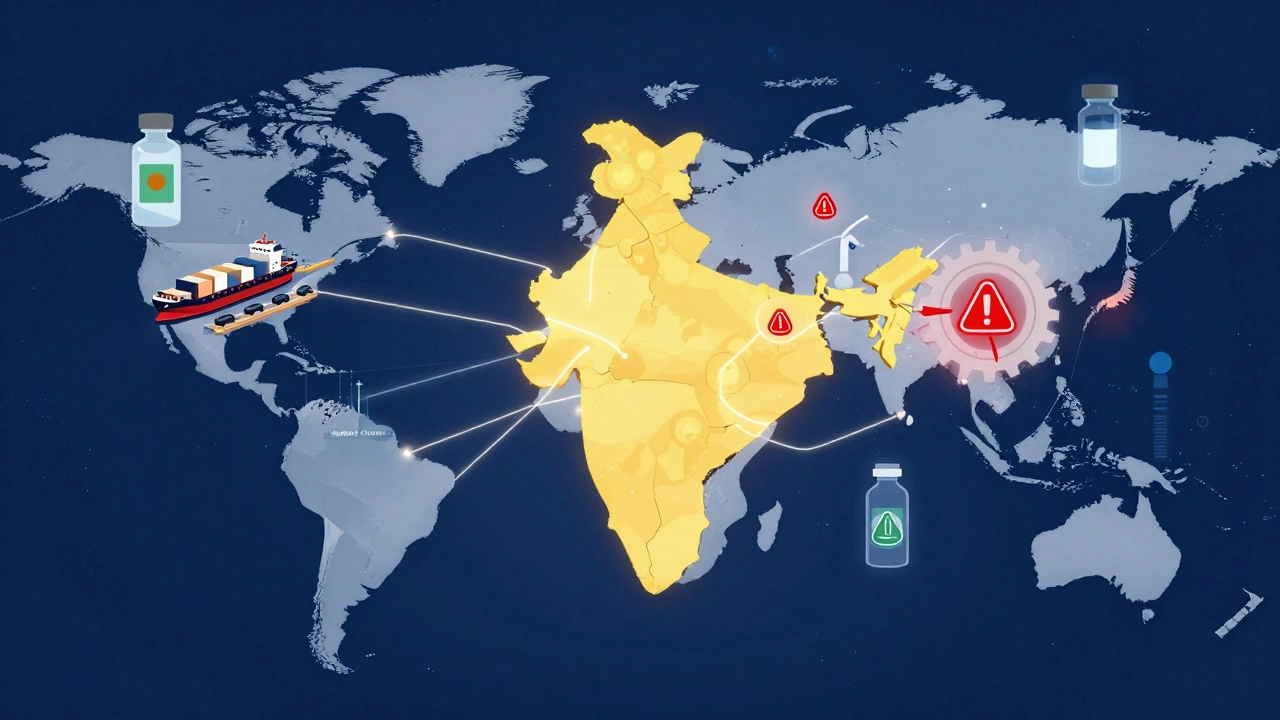
How Chemical Manufacturers in India Are Responding
Smart businesses don’t wait for the crisis to pass. They adapt. Here is how leading chemical manufacturers in India are navigating the 2026 landscape:
- Diversifying Suppliers: Companies are no longer relying on a single source for critical intermediates. If you were buying 100% from one region, you’re vulnerable. Many firms are now splitting orders between Asian, European, and domestic suppliers to hedge against regional disruptions.
- Vertical Integration: Larger players are moving backward up the supply chain. Instead of buying finished intermediates, they are investing in facilities to produce their own raw materials. This capital-intensive move pays off by securing long-term supply stability.
- Strategic Stockpiling: For non-perishable chemicals with predictable usage patterns, companies are increasing safety stock levels from 2 weeks to 6-8 weeks. Yes, it ties up working capital, but the cost of downtime is far higher.
- Formulation Adjustments: In some cases, R&D teams are tweaking formulations to use alternative, more abundant chemicals without compromising quality. This requires close collaboration between procurement and technical teams.
The Role of Government Initiatives
The Indian government is aware of these vulnerabilities. Under the broader Make in India and Production Linked Incentive (PLI) schemes, there is a strong push to localize the production of critical chemical inputs. Specifically, incentives are being offered for setting up manufacturing units for specialty chemicals and green hydrogen-derived products.
However, policy changes take time. A new plant takes 2-3 years to become operational. So, while the long-term outlook is positive for self-reliance, the short-term reality of 2026 still requires careful navigation of existing gaps.

Practical Steps for Your Business Right Now
If you are managing procurement or operations, here is your immediate action plan:
- Audit Your Critical List: Identify the top 5 chemicals that, if unavailable, would stop your production. Focus your efforts here. Don’t waste energy worrying about commodities that are easily sourced.
- Engage Early with Suppliers: Don’t wait until you’re out of stock. Talk to your suppliers now. Ask them about their raw material security. If they are struggling, you will too. Find out if they have backup sources.
- Explore Domestic Alternatives: There is a growing number of small and medium enterprises (SMEs) in India producing niche chemicals. They may offer shorter lead times and better communication than distant international giants.
- Review Contracts: Look at force majeure clauses and price adjustment mechanisms. Ensure your contracts allow for flexibility in delivery schedules during periods of global disruption.
Looking Ahead: Will Shortages Persist?
The consensus among industry experts is that the acute phase of the 2026 shortages will ease by late 2027. New capacity coming online in India and relaxed regulations in export hubs should stabilize the market. However, the era of cheap, abundant, and reliable chemical inputs is likely over. We are entering a period where supply chain resilience is a core competitive advantage.
For chemical manufacturers in India, this means a shift in mindset. It’s no longer just about making the best product at the lowest cost. It’s about ensuring you have the materials to make it when you need them. Those who build flexible, diversified, and transparent supply chains today will dominate the market tomorrow.
Which specific pharmaceutical chemicals are most affected by shortages in India?
The most affected are API intermediates such as those used for Paracetamol, Ibuprofen, and various antibiotics like Cefalexin. These rely heavily on imported precursors, making them vulnerable to global supply chain shocks.
Are basic industrial chemicals like sulfuric acid also in short supply?
Generally, no. Basic bulk chemicals like sulfuric acid, caustic soda, and ammonia have stable domestic production in India. The shortages are primarily in specialty chemicals, intermediates, and high-purity solvents required for advanced manufacturing.
How long are the expected lead times for chemical imports in 2026?
Lead times have increased significantly. Where orders used to arrive in 4-6 weeks, many manufacturers are now seeing 8-12 week timelines due to port congestion, customs delays, and tighter supplier inventories abroad.
What is the government doing to address chemical shortages?
The government is expanding Production Linked Incentive (PLI) schemes for specialty chemicals and encouraging domestic manufacturing through tax benefits and easier land acquisition. However, these measures take time to translate into actual market supply.
Should I switch to local suppliers despite higher costs?
In many cases, yes. While local suppliers may charge a premium, they offer greater supply chain visibility, faster response times, and reduced risk of international logistics delays. For critical components, reliability often outweighs marginal cost savings.