
India Electronics Manufacturing PLI Estimator
PLI Benefit Simulator
2026 ProjectionEstimated Impact
India isn't just assembling phones anymore; it's becoming the world's hardware laboratory. For years, the narrative was all about software and IT services, but the tide has shifted. We are seeing a massive pivot toward physical production, where the goal is to move from 'Assembled in India' to 'Designed and Made in India.' If you're looking at where the real money and momentum are moving in 2026, it's all about the silicon and the circuits.
Key Takeaways
- Semiconductors: India is moving from chip design to actual fabrication (fabs).
- Consumer Electronics: Massive shifts in the production of laptops, tablets, and wearables.
- EV Ecosystem: Growth in Battery Management Systems (BMS) and power electronics.
- Government Push: The PLI schemes are the primary engine driving foreign investment.
- Hardware Startups: A new wave of indigenous electronics brands is emerging.
The Semiconductor Surge and Chip Fabrication
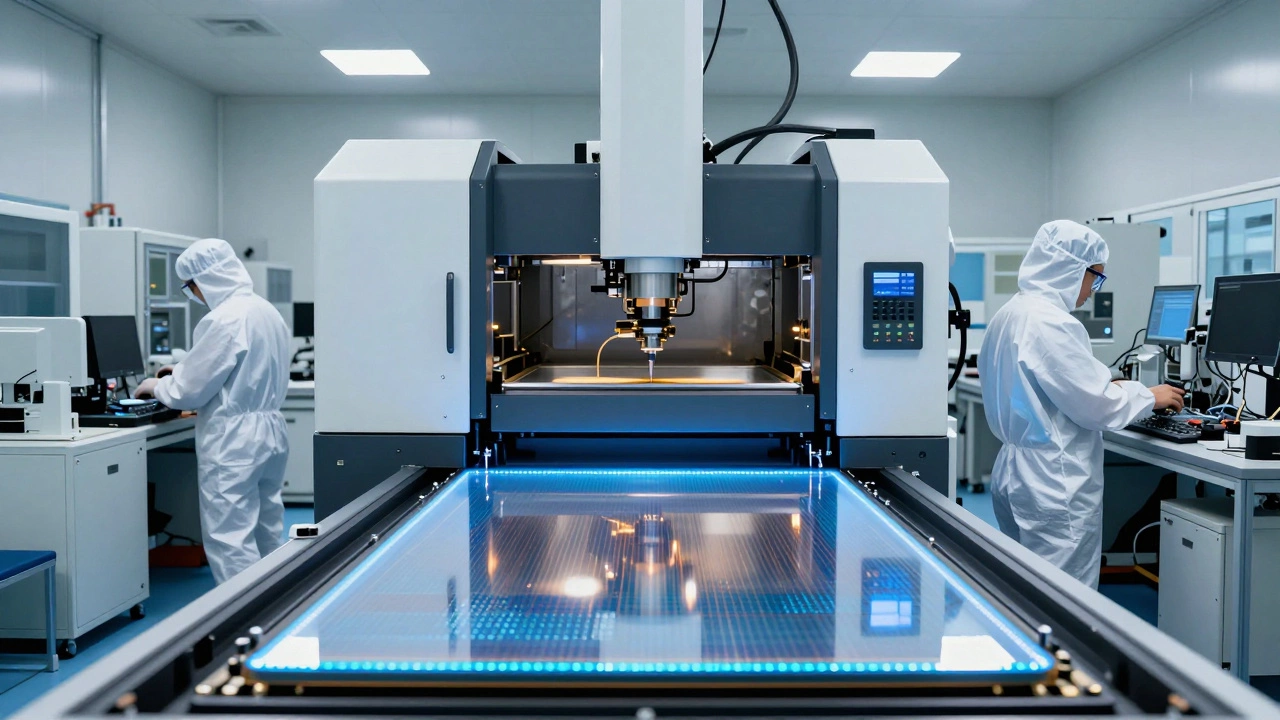
The most explosive growth is happening in the semiconductor space. For a long time, India was the world's back office for chip design, but now it's building the factories. Semiconductor Fabrication is the process of creating integrated circuits on silicon wafers. This is the 'brain' of every electronic device, and India is finally bringing this capability home.
The shift is driven by a need for supply chain resilience. After the global chip shortages of the early 2020s, India realized that relying solely on imports was a risk. Now, we see massive investments in 'fabs' and Assembly, Testing, Marking, and Packaging (ATMP) plants. For instance, the partnership between the government and global giants like Micron has set the stage for high-end memory chips to be processed locally. This isn't just about high-tech labs; it's about creating a massive ecosystem of chemicals, specialized gases, and ultra-pure water systems required to keep these plants running.
Scaling the Consumer Electronics Ecosystem
If you look around any city in India, you'll see the results of the electronics manufacturing India boom in the gadgets people hold. It's no longer just about smartphones. The focus has expanded into a broader range of consumer tech. Laptops, tablets, and high-end wearables are now being produced in huge volumes within the country.
The secret sauce here is the PLI Scheme (Production Linked Incentive), which is a government initiative that provides financial incentives to companies based on their incremental sales from goods manufactured in India. This has turned India into a global export hub. Major players aren't just making products for the Indian middle class; they are exporting millions of units to Europe and the US. This scale is attracting a 'cluster' effect, where component makers-those making the screens, the batteries, and the casings-are setting up shops right next to the main assembly lines to cut costs and time.
| Segment | Primary Driver | Key Component | Growth Stage |
|---|---|---|---|
| Semiconductors | National Security/Sovereignty | Silicon Wafers | Rapid Expansion |
| Consumer Tech | PLI Incentives/Global Demand | PCB Assemblies | Mature/Scaling |
| EV Electronics | Green Energy Transition | Li-ion Batteries/BMS | Early High Growth |
| Medical Devices | Healthcare Accessibility | Precision Sensors | Emerging |
The Electric Vehicle (EV) Power Play
You can't talk about electronics in India without mentioning the electric revolution. The boom here isn't just in the cars themselves, but in the electronics that make them work. We're seeing a huge spike in the production of Battery Management Systems (BMS), which are electronic systems that manage a rechargeable battery's state, ensuring safety and efficiency.
Power electronics, including inverters and converters, are becoming a core part of the manufacturing landscape. India is focusing heavily on reducing the dependency on imported cells. By building local gigafactories, the country is integrating the chemical process of battery making with the electronic process of circuit design. This creates a vertical integration where a single company can handle everything from the raw minerals to the final dashboard electronics in an EV.
Hardware Startups and the 'Indigenization' Wave
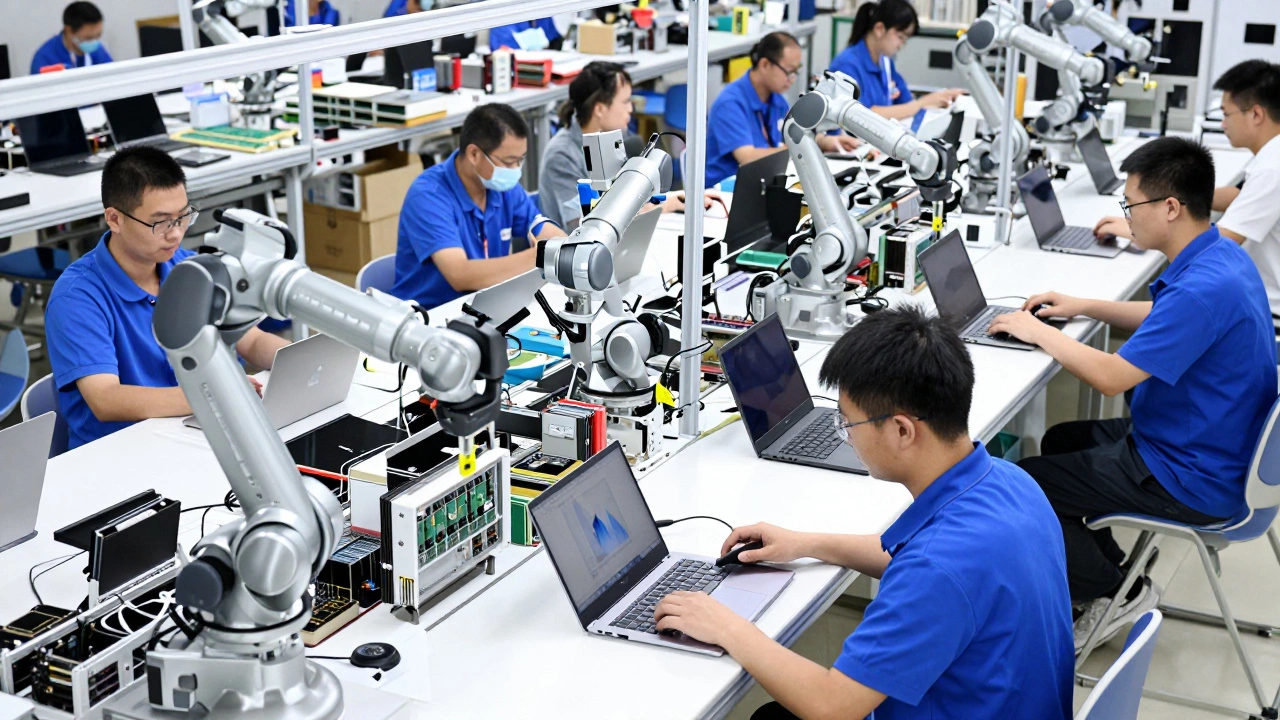
There's a quiet revolution happening in the startup world. For a decade, every founder wanted to build the next big app. Now, a new generation of engineers is building hardware. We are seeing a rise in indigenous brands creating drones, IoT devices for agriculture, and smart home systems.
These startups are leveraging IoT (Internet of Things), a network of physical objects embedded with sensors and software to connect and exchange data. By integrating sensors into industrial machinery or farming equipment, these companies are solving real-world problems. For example, startups are now manufacturing smart soil sensors that tell a farmer exactly when to water their crops, all while the hardware is designed and printed on PCBs (Printed Circuit Boards) within India. This move toward 'deep tech' hardware is what will eventually replace the simple assembly model with a high-value innovation model.
Infrastructure and the Role of Special Economic Zones
None of this would be possible without a change in how factories are built. The rise of specialized electronics parks and Special Economic Zones (SEZs), which are designated areas with liberal economic laws to attract foreign investment and boost exports, has been critical. These zones provide the reliable power, high-speed data connectivity, and streamlined customs clearing that high-tech manufacturing requires.
In these zones, we see a synergy between the government's vision and private capital. The focus has shifted toward 'plug-and-play' infrastructure, where a company can rent a pre-equipped facility and start production in weeks rather than years. This has lowered the barrier to entry for mid-sized players who want to enter the electronics space but can't afford to build a factory from the ground up.
Challenges and the Road Ahead
It isn't all smooth sailing. The biggest hurdle remains the 'component gap.' While India is great at assembly, it still imports a huge percentage of the tiny capacitors, resistors, and connectors. To truly boom, the country needs to move further up the value chain. This means not just assembling a phone, but manufacturing the camera module and the display panel locally.
Another challenge is the skill gap. Fabrication plants require a very specific type of engineering expertise-vacuum physics, chemical engineering, and extreme precision machining. The current push includes updating university curricula and partnering with international institutes to ensure that when the fabs open, there are enough skilled technicians to run them. The goal is to transition from a labor-cost advantage to a technology-capability advantage.
What is the PLI scheme and how does it help electronics?
The Production Linked Incentive (PLI) scheme is a financial boost given by the Indian government to manufacturers. It pays companies a percentage of their incremental sales of goods produced locally. This makes it financially attractive for global brands to move their factories from other countries to India, as it lowers their overall cost of production and encourages large-scale manufacturing.
Is India actually making chips or just assembling them?
India is currently in a transition phase. While most electronics are still assembled, the country has officially entered the fabrication stage. With the establishment of new semiconductor fabs and ATMP (Assembly, Testing, Marking, and Packaging) plants, India is now creating the actual silicon wafers and processing the chips that go into devices, rather than just soldering them onto boards.
Which cities are the hubs for electronics manufacturing?
Major hubs include Noida and Greater Noida in Uttar Pradesh, Sri City in Andhra Pradesh, and Bengaluru in Karnataka. These areas offer specialized electronics parks with better power infrastructure and proximity to ports for easier exporting.
What is the difference between a Fab and an ATMP plant?
A Fab (Fabrication plant) is where the actual integrated circuit is created on a silicon wafer using complex chemical and light-based processes. An ATMP plant takes those finished wafers, cuts them into individual chips, tests them for defects, packages them into a protective case, and marks them for sale. ATMP is the final stage of chip production.
How is the EV boom affecting the electronics industry?
EVs are essentially computers on wheels. They require advanced Battery Management Systems (BMS), power inverters, and sophisticated sensors. This has created a massive new market for power electronics and embedded systems, pushing traditional electronics manufacturers to pivot toward automotive-grade components.
What's Next for Entrepreneurs?
If you're looking to enter this space, don't try to compete with the giants in smartphone assembly. The real opportunity lies in the 'gaps'-the components that the big players still import. Think about precision sensors, specialized PCBs, or thermal management systems for high-power electronics.
Another path is the B2B sector. With the rise of smart factories (Industry 4.0), there is a huge demand for industrial IoT hardware that can monitor machine health in real-time. The transition from a consumer-focused market to an industrial-focused hardware market is where the next big wave of growth will be.