
Surat Textile Scale Estimator
Enter a timeframe to visualize the massive scale of Surat's textile industry, known as Asia's largest textile market.
Global Context Comparison
| Metric | Surat, India | Guangzhou, China | Dhaka, Bangladesh |
|---|---|---|---|
| Primary Focus | Fabric Production (MMF) | Finished Goods & Export | Garment Assembly |
| Labor Cost Index | Low | Rising High | Very Low |
| Annual Fabric Output | ~2.5 Billion Meters | ~1.8 Billion Meters | Negligible (Imports) |
| Global MMF Share | ~10% | ~40% (Total Textiles) | <1% |
You might think the biggest fashion hub in Asia is somewhere flashy like Tokyo or Seoul. Or maybe you picture the massive export ports of China. But if you walk into Surat, a city in Gujarat, India, you’ll see something different. This isn’t just about high-end boutiques. It’s about raw volume. Surat handles more synthetic fabric than almost anywhere else on the continent. It is widely recognized as Asia’s largest textile market by volume and production capacity. Why? Because it feeds the entire global supply chain for affordable clothing.
Let’s be clear: when we talk about "largest," we’re talking about throughput. Surat produces roughly 10% of the world’s man-made fiber (MMF) fabrics. That’s not a typo. Ten percent. The city has over 63,000 power looms running day and night. If you are a buyer, a manufacturer, or just curious about where your cheap polyester shirt comes from, this is the epicenter. Here is how Surat became the giant it is today, and why it matters to the global economy.
Why Surat Holds the Crown
The title of "largest" usually sparks debate between Surat and other hubs like Guangzhou or Dhaka. But here’s the distinction: Guangzhou is huge for finished goods and exports. Dhaka is massive for garment assembly. Surat is the king of textile manufacturing at the source level. It processes yarn into fabric at a scale that dwarfs most competitors. The infrastructure here is built for speed and low cost. Labor costs are significantly lower than in China, which has been rising steadily since 2015. This economic advantage allows Surat to undercut competitors on price while maintaining decent quality for mass-market goods.
Think of it this way: if China is the factory floor of the world, Surat is the loom room. You don’t buy a finished suit in Surat; you buy thousands of meters of fabric that will become suits in Vietnam, Bangladesh, or Turkey. This upstream dominance is what secures its status as the largest market for raw textile output in Asia.
The Scale of Production
To understand the size, look at the numbers. The Surat textile cluster contributes nearly ₹1.2 lakh crore ($14 billion USD) annually to India’s GDP. That is a staggering amount for a single city. The region produces over 7 million meters of fabric every single day. Most of this is synthetic-polyester, nylon, and viscose. Cotton is present, but Surat’s real strength lies in man-made fibers.
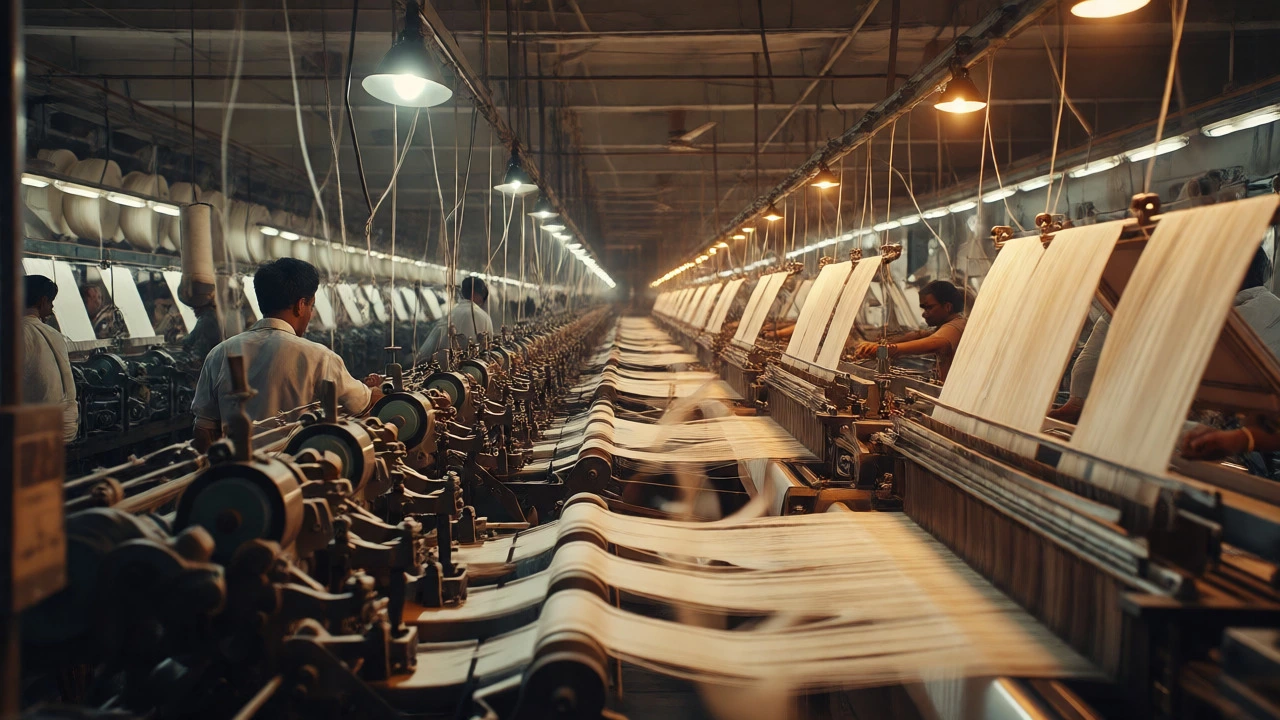
Why synthetic? Because it’s cheaper and faster to produce. Natural cotton requires farming, ginning, and complex processing. Synthetic fibers come from petrochemicals, which Gujarat has abundant access to due to its refineries. This vertical integration means Surat doesn’t wait for imports. They make the polymer, spin the yarn, weave the cloth, and dye it all within a 50-kilometer radius. This proximity reduces logistics costs and speeds up time-to-market.
| Metric | Surat, India | Guangzhou, China | Dhaka, Bangladesh |
|---|---|---|---|
| Primary Focus | Fabric Production (MMF) | Finished Goods & Export | Garment Assembly |
| Labor Cost Index | Low | Rising High | Very Low |
| Annual Fabric Output | ~2.5 Billion Meters | ~1.8 Billion Meters (Fabric) | Negligible (Imports Fabric) |
| Global Share (MMF) | ~10% | ~40% (Total Textiles) | <1% |
Inside the Wholesale Markets
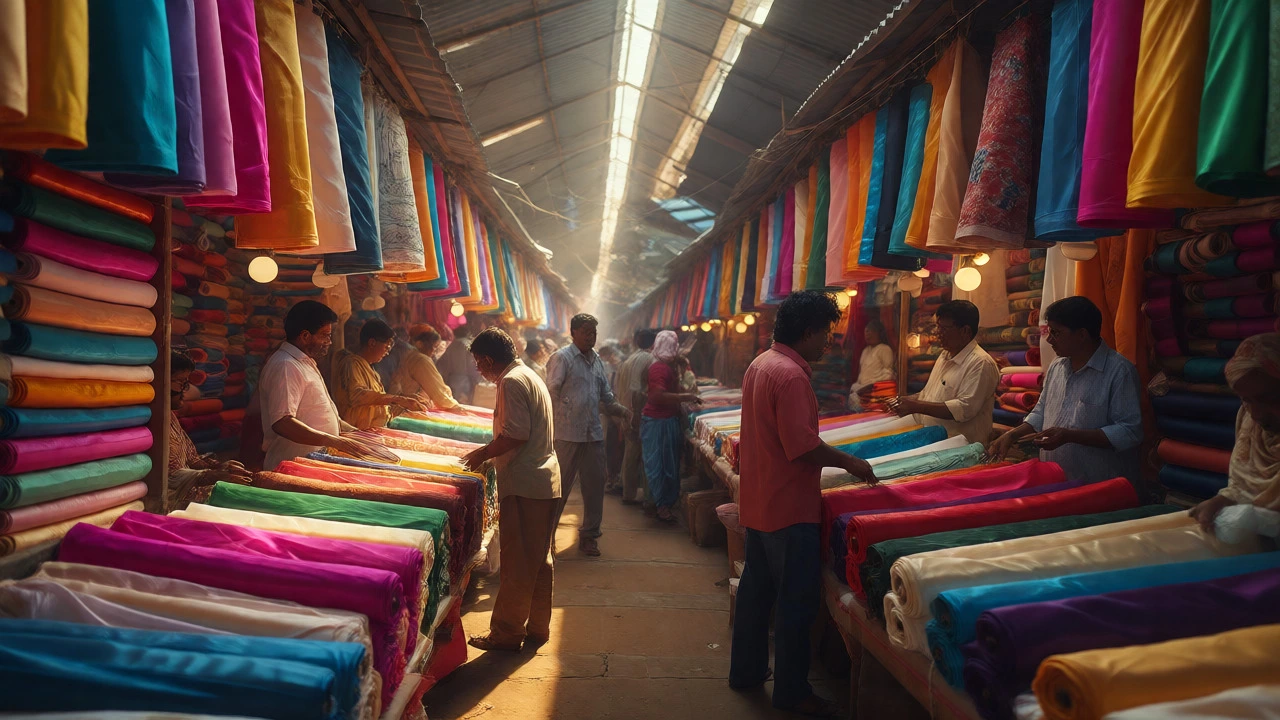
If you visit Surat, you won’t find one big building. You’ll find clusters. The main hubs include Ring Road, Sahara Darwaja, and New Textile Market. These aren’t just shops; they are ecosystems. Thousands of small traders operate out of tiny stalls, often no bigger than 10x10 feet. Yet, these stalls handle orders worth millions of rupees daily.
The buying process here is intense. Buyers from across India, Africa, and Southeast Asia descend upon these markets. They inspect rolls of fabric, negotiate prices per meter, and arrange immediate shipping. Cash flow is rapid. Credit terms are short. If you are new to this, you need local agents. Language barriers can be tricky, though Hindi and English are common among exporters. But for deep bargaining, Gujarati is key.
One thing to watch out for: quality variance. Since many units are unorganized, consistency can vary. A batch of polyester satin might look perfect on Monday and slightly off-white on Tuesday. Smart buyers always keep physical swatches and conduct third-party inspections before bulk payment. Don’t trust photos alone.
The Shift Toward Sustainability
Historically, Surat faced criticism for environmental pollution. Dyeing houses dumped chemicals into local rivers. But things are changing. In recent years, the government has enforced stricter effluent treatment norms. Many large mills now use recycled water systems. There is also a growing trend toward organic cotton blends and eco-friendly dyes, driven by European demand.
Brands like H&M and Zara have started sourcing from Surat again after moving away due to compliance issues. They are attracted by the combination of low cost and improving sustainability standards. If you are looking to source sustainable fabrics without paying premium Italian prices, Surat is becoming a viable option. Look for mills with OEKO-TEX certification. Not every stall has it, so ask for proof.
How to Source From Surat Effectively
So, you want to buy from Asia’s largest textile market. How do you actually do it? First, define your niche. Are you buying saree borders? Suiting fabric? Lining material? Surat excels in specific categories. Trying to buy everything at once will overwhelm you.
- Start Small: Order samples first. Never commit to a container load based on a WhatsApp video.
- Verify GST Registration: Ensure the supplier is registered under India’s Goods and Services Tax. This protects you from fraud.
- Use Incoterms Correctly: Specify EXW (Ex Works) or FOB (Free on Board). Clarify who pays for transport to the port of Mundra or Kandla.
- Hire a Local QC Agent: Pay someone $100-$200 to check the goods before they leave the factory. It saves thousands in returns.
Payment terms are usually 30% advance, 70% against bill of lading copy. Some established exporters offer letters of credit, but smaller traders prefer wire transfers. Be wary of suppliers asking for 100% upfront payment via Western Union. That’s a red flag.
Challenges and Risks
No market is perfect. Surat faces power cuts during peak summer months, though industrial generators mitigate this. Infrastructure bottlenecks exist at ports during festive seasons. Also, intellectual property theft is a risk. If you design a unique print, register it immediately. Copycats in Surat can replicate a pattern in 48 hours.
Currency fluctuation is another factor. The Indian Rupee can swing against the Dollar or Euro. Lock in exchange rates early if your order is large. Additionally, regulatory changes in India regarding minimum export prices for certain textiles can impact margins. Always stay updated on Ministry of Textiles notifications.
Final Thoughts on Sourcing
Surat isn’t going anywhere. As long as there is demand for affordable synthetic fabrics, this city will thrive. It offers unmatched scale and speed. For small businesses, it’s a goldmine. For large brands, it’s a strategic backup to China. The key is diligence. Do your homework, verify suppliers, and respect the local business culture. If you navigate the chaos well, you get access to the cheapest high-volume fabric supply chain in Asia.
Is Surat really larger than Chinese textile markets?
In terms of total textile value, China is still larger. However, for Man-Made Fiber (MMF) fabric production volume, Surat surpasses most individual Chinese cities. It is the largest single-city hub for synthetic fabric weaving in Asia.
What types of fabric is Surat famous for?
Surat specializes in polyester, nylon, viscose, and georgette. It is particularly known for saree fabrics, dress materials, and lining cloths. Cotton is produced but is secondary to synthetics.
Can I buy retail quantities in Surat?
Yes, but it is primarily a wholesale market. Retailers may charge higher prices. For best deals, buy in lots of 100+ meters. Some markets like Millennium Market cater to retail tourists too.
Which port is used for exporting from Surat?
Most exports go through Kandla Port or Mundra Port, both located in Gujarat. These are major international ports with direct connections to Europe, Africa, and the Americas.
Is it safe to send money to Surat suppliers?
Generally yes, if you deal with registered businesses. Use bank transfers (SWIFT) rather than cash couriers. Always verify the company’s GST number and check online reviews or trade references before sending large sums.